 EN
EN  EN
EN  RU
RU  ES
ES  KO
KO  JA
JA  PT
PT  IT
IT  DE
DE  FR
FR  NL
NL 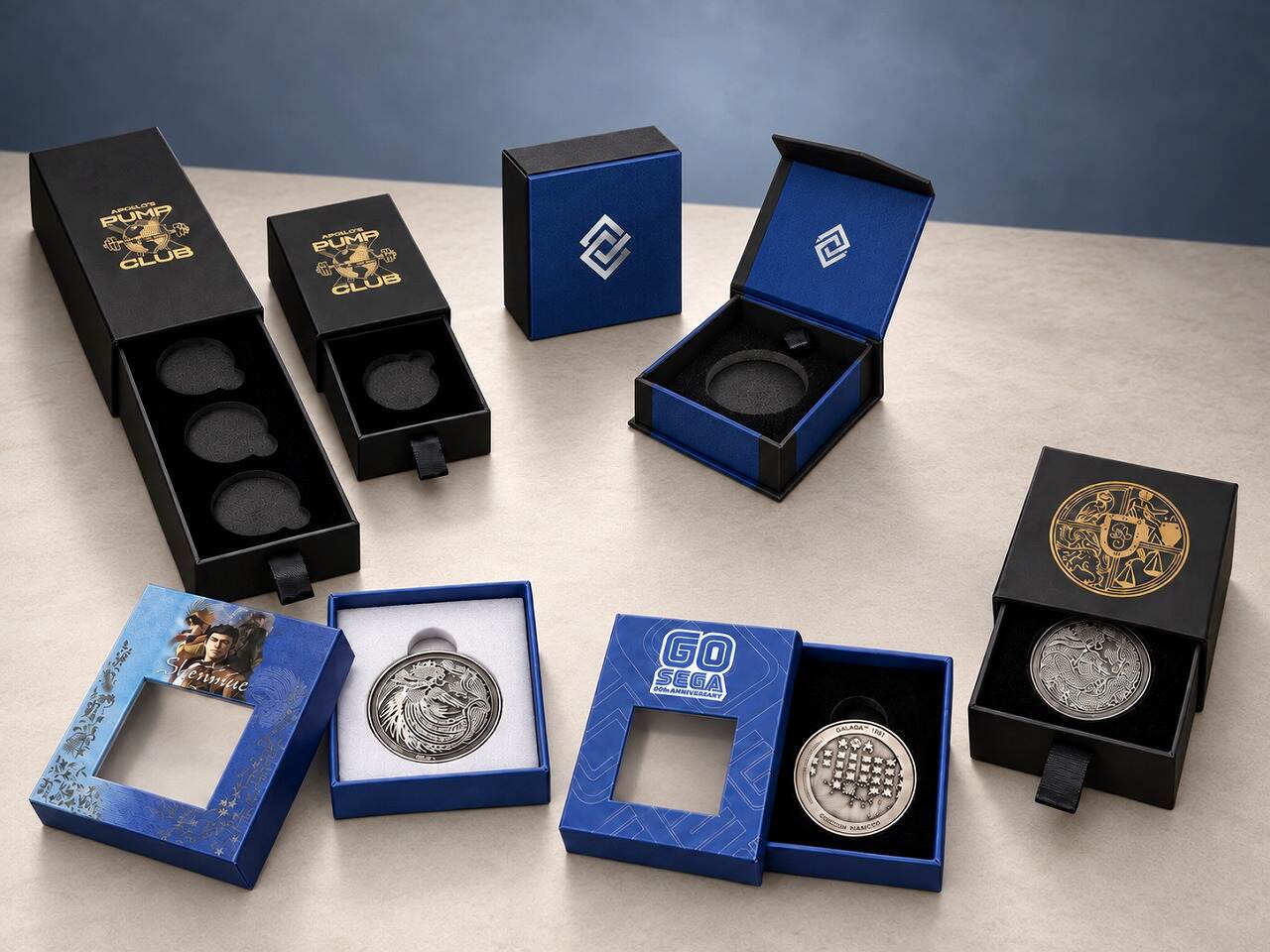
Configuration 01
Single-Coin Collector Edition
Hinged rigid box, one capsule-fit cavity, finger notch or ribbon lift, inside-lid certificate pocket and restrained foil branding.

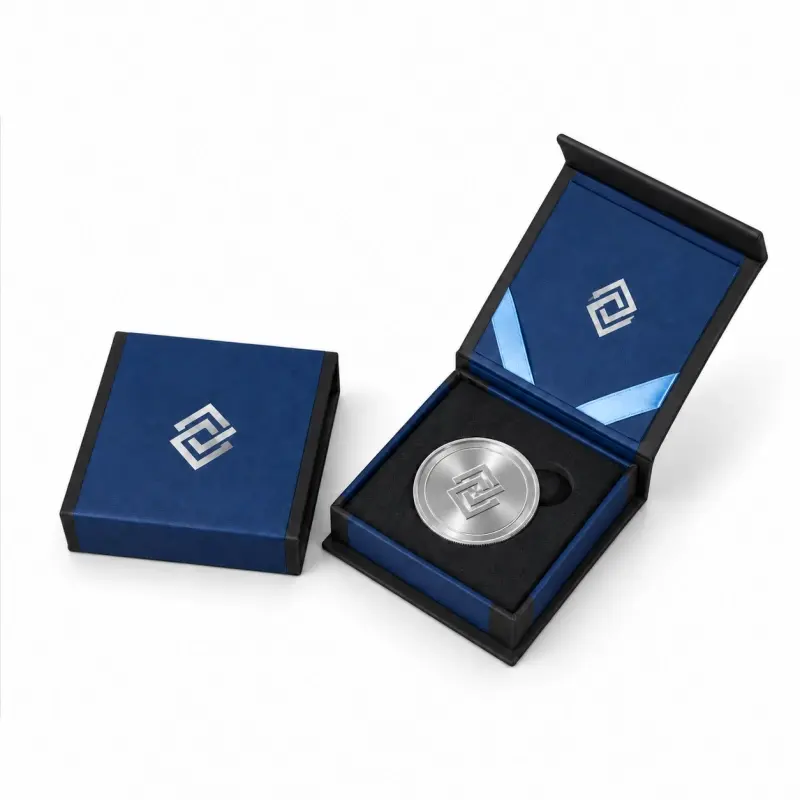
A premium coin box is not selected from diameter alone. Its structure must be coordinated with the complete packed item: the coin or medal, protective capsule, capsule rim, extraction feature, certificate, booklet and outer distribution pack.
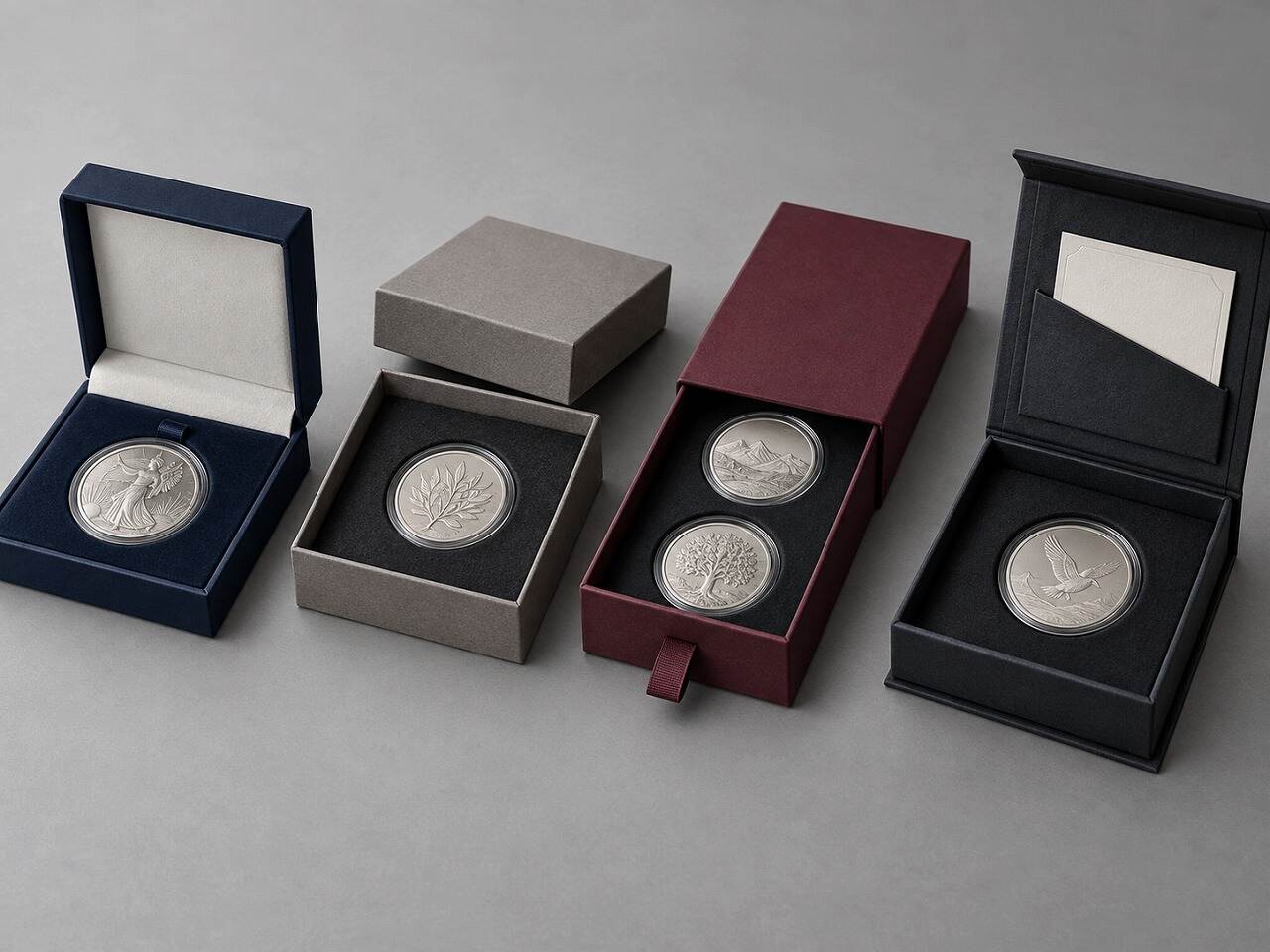
The correct structure depends on how the set is opened, displayed, repacked and shipped. Decoration should support that structure rather than compensate for an unsuitable format.
Hinged-lid box: controlled reveal and convenient inside-lid space for a story panel or certificate pocket.
Two-piece lid-and-base box: classic silhouette with strong top branding and simple assembly.
Drawer box: staged opening with space for a ribbon pull, sleeve graphics or serialized information.
Book-style box: broad communication area and a formal, editorial presentation.
The nominal coin diameter is only one input. Reliable fit requires the maximum measured envelope of the item that will sit in the insert.
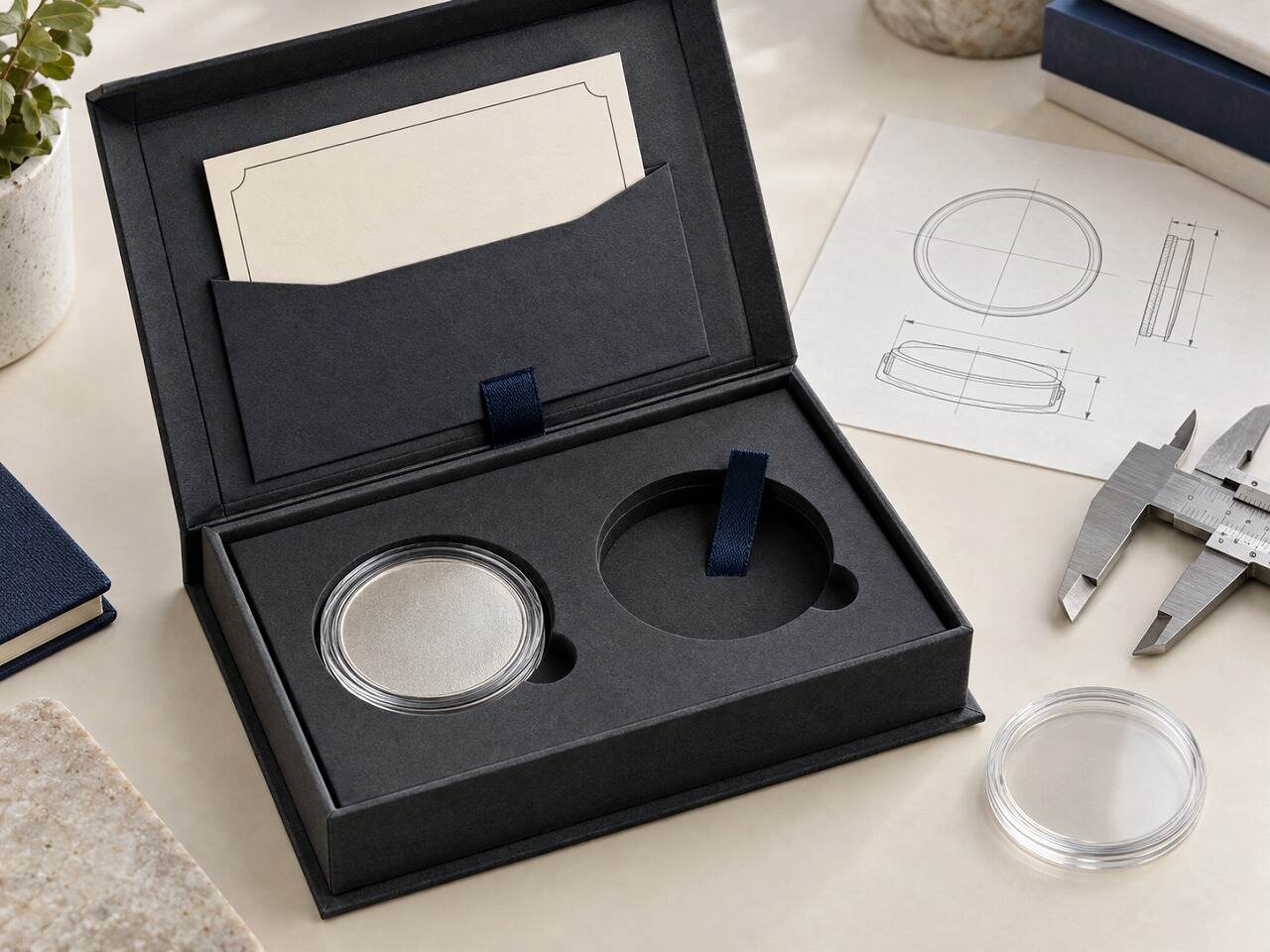
Maximum diameter, thickness and weight
Capsule outside diameter, total height and rim profile
Any hinge, tab, projection or protective film
Coin count, orientation and visible face
Approved physical sample or controlled drawing
Does the capsule remain seated during normal handling?
Can the buyer remove it without excessive force?
Does the insert mark, abrade or distort the capsule?
Is clearance adequate when the lid closes?
Does the packed set remain visually aligned?
The insert is the interface between the collector item and the box. Its cavity geometry, surface material, extraction feature and bonding method should be reviewed as one system.
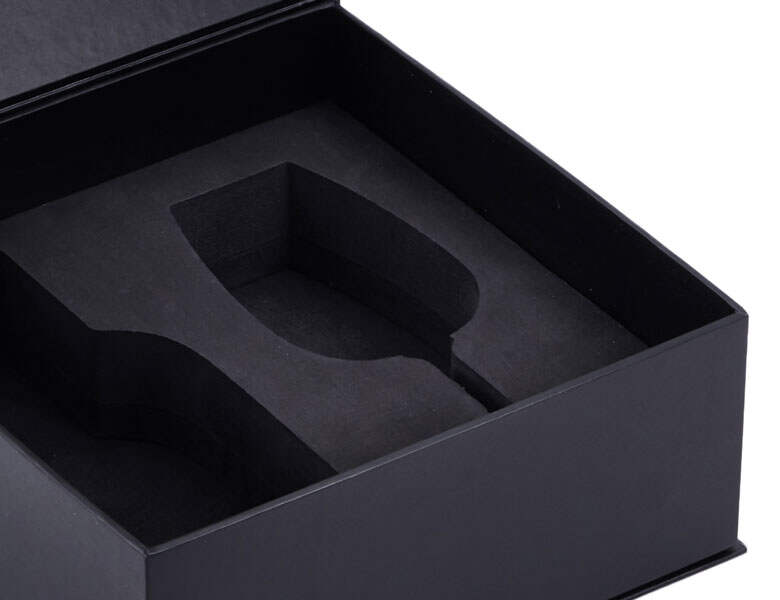
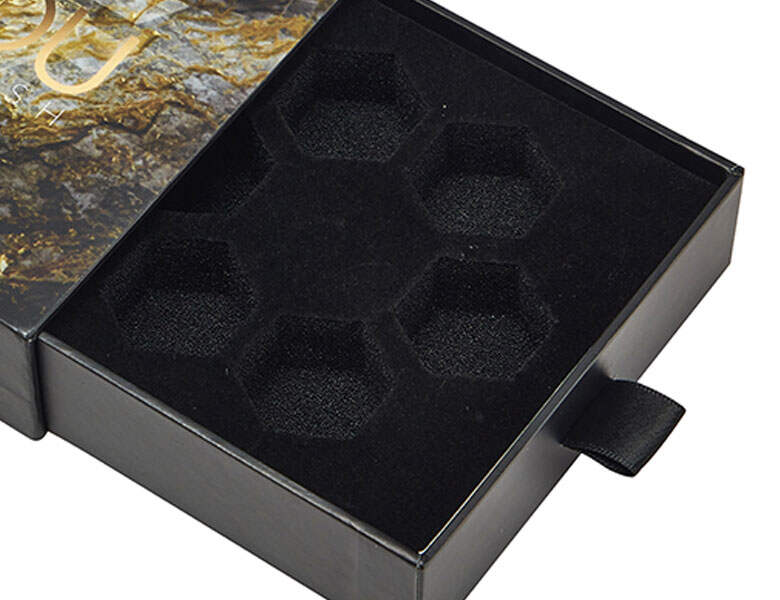
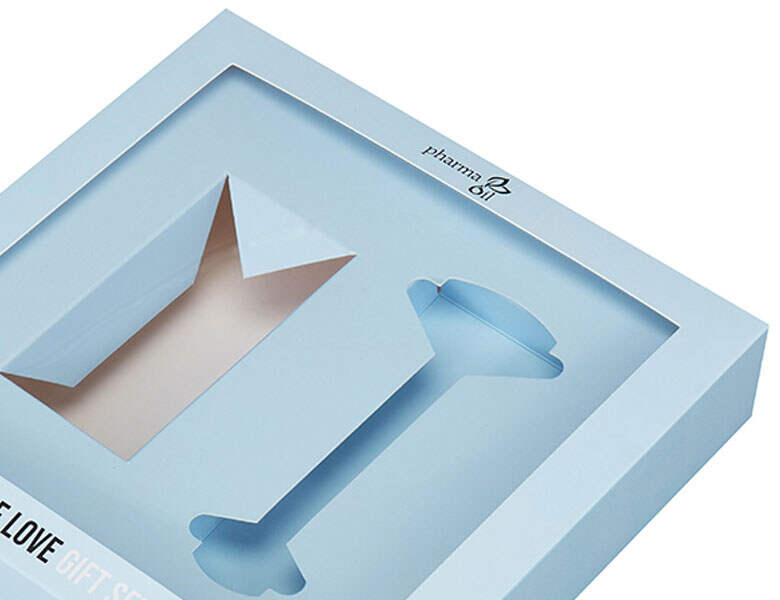
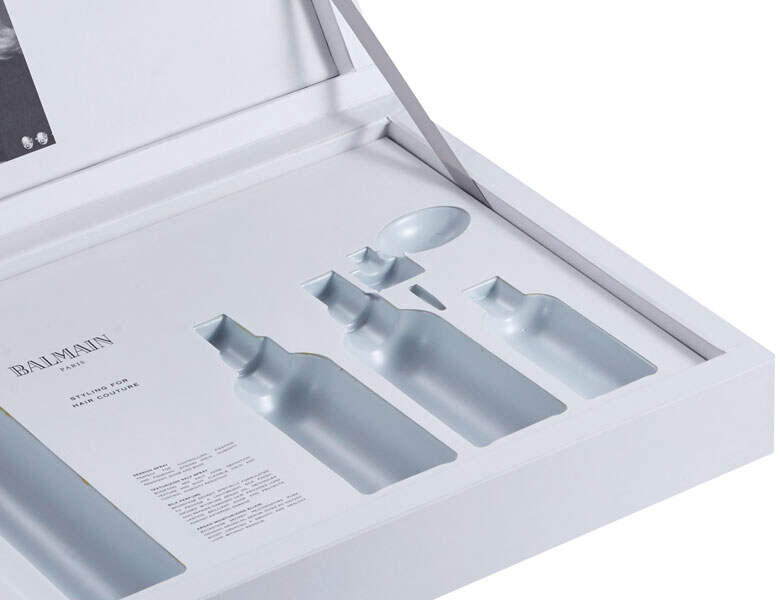
EVA or engineered foam: clean precision-cut cavities and repeatable multi-item layouts.
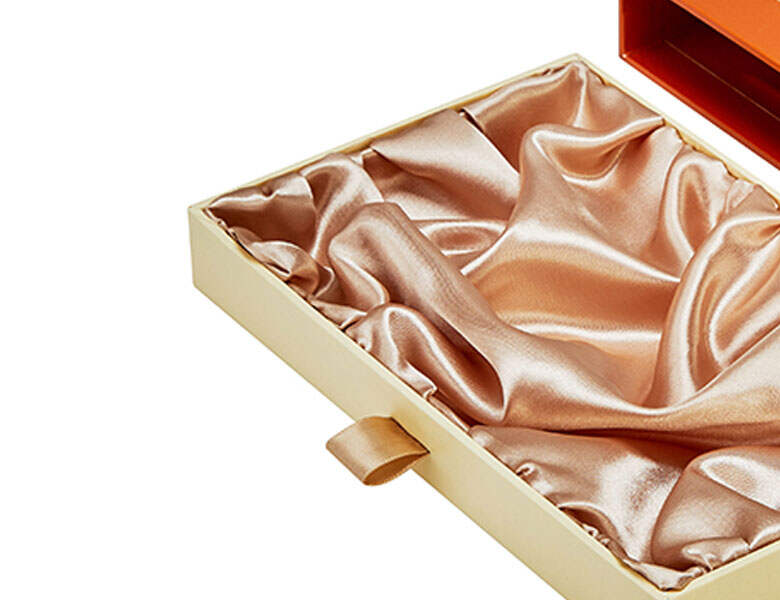
Flocked or fabric-covered insert: softer visual presentation when surface appearance is a priority.
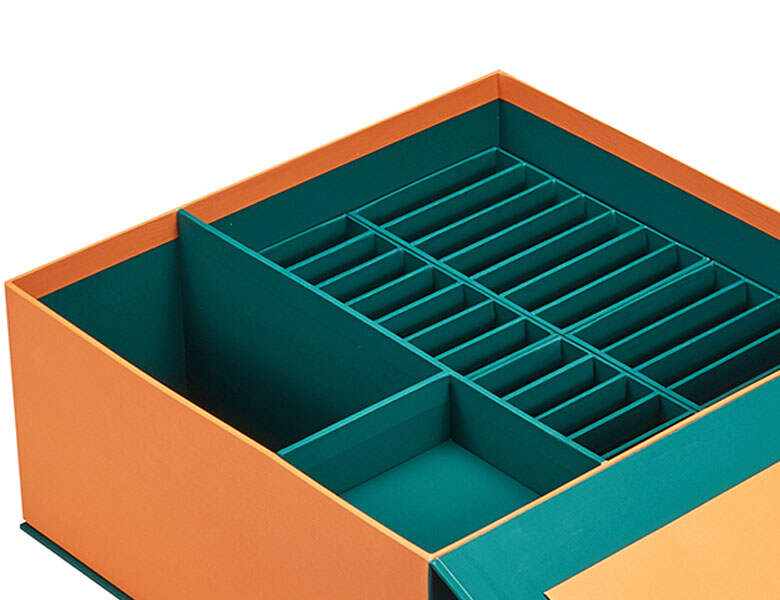
Paperboard platform: paper-forward construction for lighter items and controlled folds.
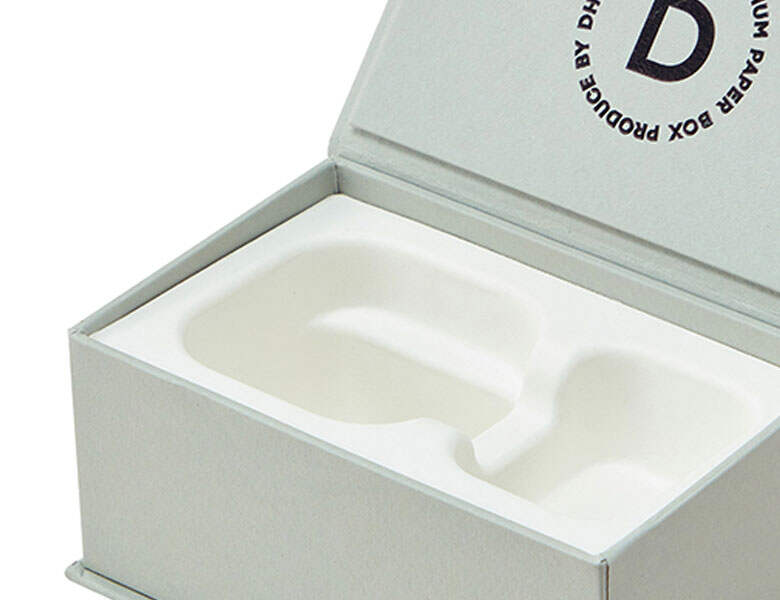
Molded pulp: formed cavities and a visibly fiber-based presentation where geometry permits.
Certificates can sit in an inside-lid pocket, under a ribbon, in a recessed well or beneath a removable tray. Confirm finished certificate size, stock thickness, fold direction and whether serial numbers must remain visible.
Program or collection name
Short historical or institutional story
Coin specifications and issue details
Certificate or serialized edition information
Issuer, authentication and care information
Authentication language should identify the actual issuer or authority. The packaging itself should not imply certification that it does not provide.
A convincing collector box usually needs one clear material story and a disciplined finish hierarchy, not every decorative process on the same surface.
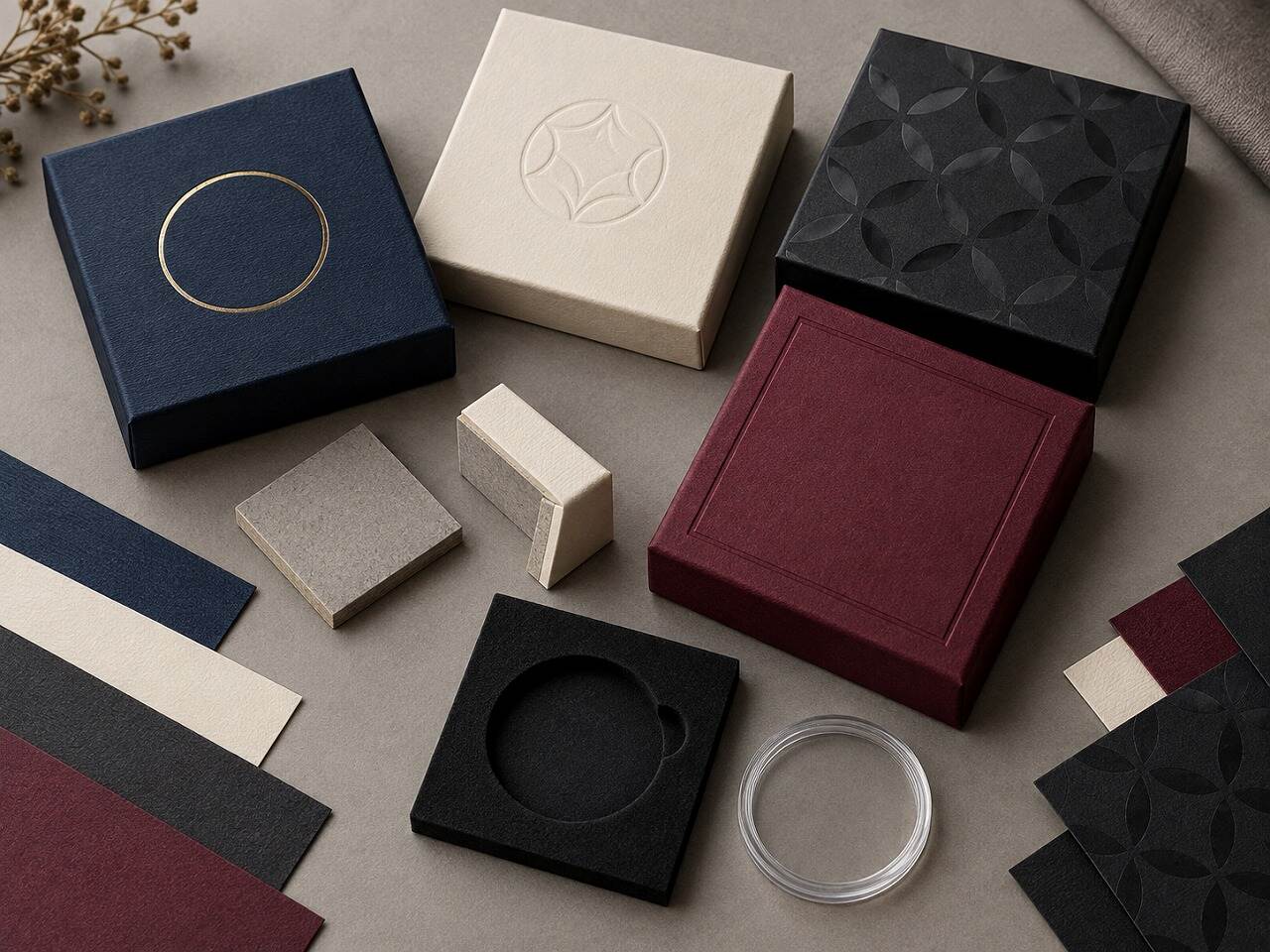
| Design layer | Common choices | Approval focus |
|---|---|---|
| Rigid core and wrap | Greyboard with printed, dyed, textured or specialty paper | Edge coverage, wrap alignment, corner formation and rub resistance |
| Offset or suitable specialty-paper printing | Color target, fine text, gradients and cross-panel consistency | |
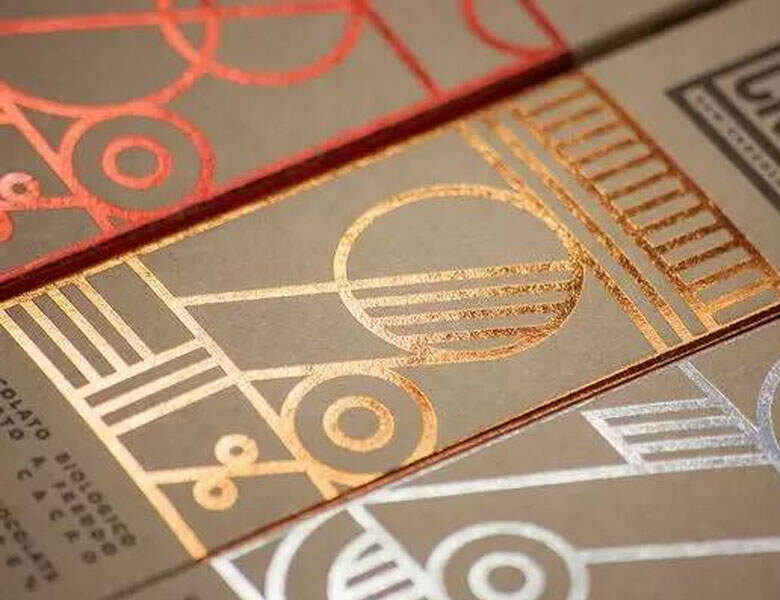
| Metallic detail | Hot foil in gold, silver or project-specific shades | Foil shade, registration, edge definition and filling in fine areas |
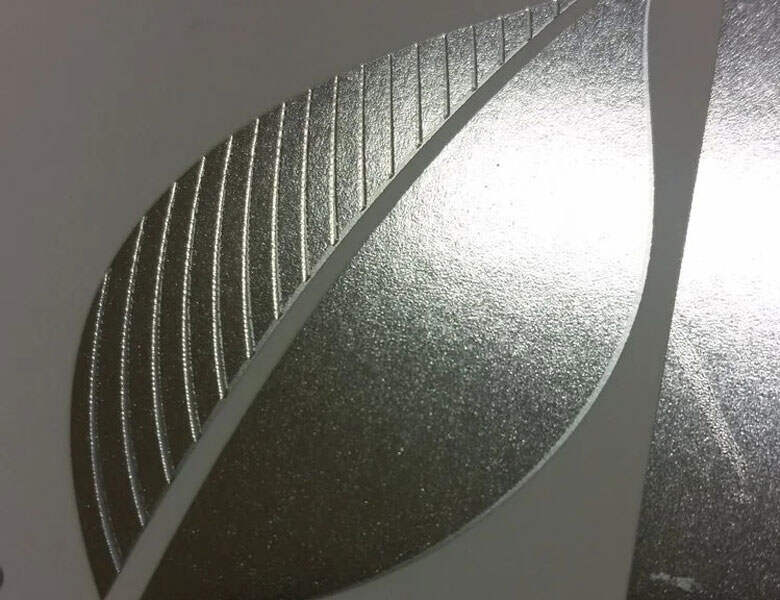
| Relief and gloss | Embossing, debossing and spot gloss | Depth, pressure, cracking risk and registration to print |
These configurations are starting briefs. Final dimensions and material specifications are established from the packed-item sample and approved artwork.
Hinged rigid box, one capsule-fit cavity, finger notch or ribbon lift, inside-lid certificate pocket and restrained foil branding.
Book-style or two-piece box, aligned capsule recesses, removable tray, printed story panel and compartment for a booklet or COA.
Deep hinged or drawer box, precision insert for the medal and ribbon, identity panel and protective outer sleeve for presentation handling.
The sample sequence should answer different questions in order. Separating fit, appearance and production approval reduces late structural changes.
GPLPAK service pages outline support for packaging consultation, design validation for manufacturing and development sampling.
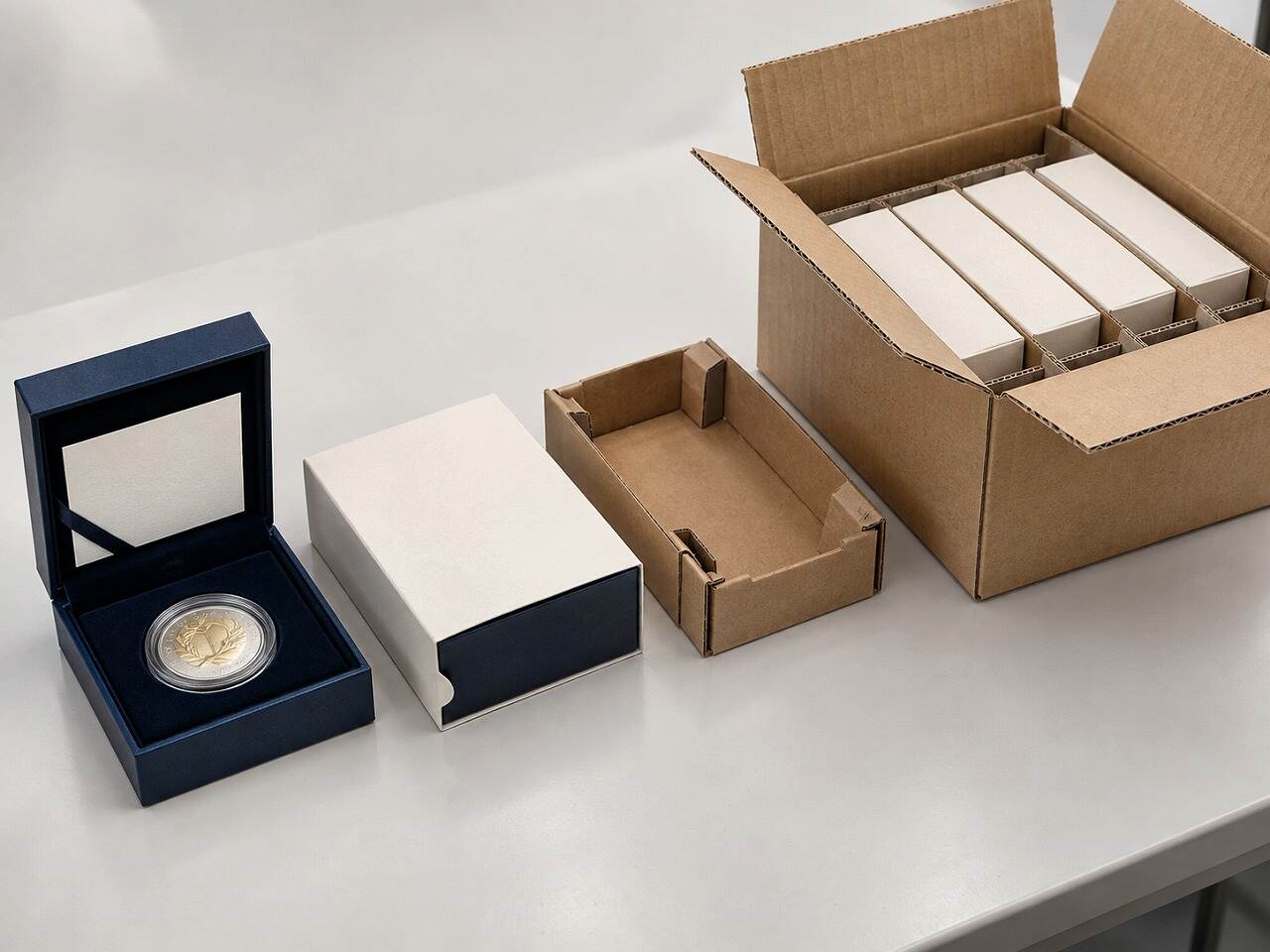
A visually approved box can still fail during packing or distribution. The purchase specification should connect appearance, fit and pack-out requirements.
Box dimensions, squareness, lid alignment and opening action
Insert position, cavity fit, adhesion and extraction performance
Print color, foil registration, embossing position and surface condition
Certificate count, orientation and correct artwork version
Unit protection, carton quantity, pallet plan and route-specific testing
If testing is required, define the packed configuration, distribution route, procedure and pass/fail criteria before testing. A presentation box alone should not be treated as a qualified shipping system.
Complete inputs allow the packaging team to assess construction, tooling, sample scope and pack-out without guessing.
No. The package should be engineered from the complete packed item. Provide the capsule outside diameter, overall height, rim or hinge profile, weight and an approved sample or controlled drawing.
Yes. Common arrangements include an inside-lid pocket, ribbon-retained card, recessed well or compartment beneath a removable tray. The finished card size and insertion sequence must be confirmed.
Book-style, hinged-lid and two-piece rigid boxes all work. The choice depends on set weight, reveal sequence, tray depth, certificate position, display expectation and shipping method.
The rigid box is presentation packaging and secondary physical protection. Tarnish or corrosion performance depends on the entire holder, contact-material and storage system, so such claims require specific material evidence and system validation.
Approve the packed-item fit, box construction, insert and extraction method, artwork revision, color references, finish positions, certificate layout, packing method and measurable acceptance criteria.
Box dimensions, structure, wrap material, insert construction, print coverage, finishing processes, tooling, number of artwork versions, order quantity and packing method all affect the quotation. MOQ and lead time should therefore be confirmed for the specific design.
Send the capsule or medal dimensions, set layout, certificate details, artwork, quantity and destination. GPLPAK can review the brief and define the next sampling step.
Send Your Packaging Brief


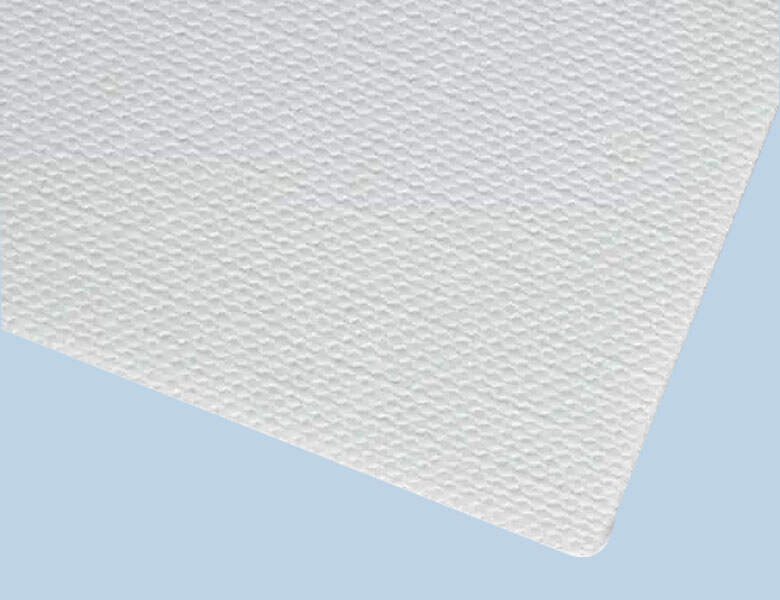

Process colors are based on the CMYK printing system, using layered dots of cyan, magenta, yellow, and black at varying densities to reproduce a full range of colors and smooth gradients.
In packaging production, CMYK printing is achieved through separate print towers, with each tower dedicated to one color. Together, the four towers work in sequence to accurately build the final image and color output.

Spot colors use pre-mixed inks that are printed directly, requiring only a single print tower. Because the color is predetermined, it ensures consistent results across different machines, suppliers, and production runs.
Unlike process colors, spot colors appear uniform even under close inspection, without visible CMYK dot patterns, delivering cleaner and more precise color reproduction.





A single platform to get quotes and place orders, with dedicated
support every step of the way.
Go to the gplpak platform to customize the size, materials, print, and finishes of your rigid boxes.
Compare packaging quotes and get a sample of your rigid box before starting a production order.
Choose a preferred shipping method and even set up split shipments to get some packaging delivered quicker.
Add your artwork to the dieline template that we tailor make to your box specifications.
Get full visibility on the progress of samples, production, and shipping.
Discover premium packaging solutions from Dongguan Xinglan Packaging Products Co., Ltd. Specializing in innovative, durable, and custom packaging products for diverse industries.
GPLPAK is committed to delivering manufacturing excellence.