 EN
 EN
 RU
 ES
 KO
 JA
 PT
 IT
 DE
 FR
 NL
QSR & delivery
Consistent counts, fast dispensing and performance that lasts through the real delivery window.
- Rice, noodles, salads, sides and combo meals
- Individual wraps or custom meal kits
- Delivery-dwell and hot-wet checks


Foodservice & Hospitality
Paper forks, knives, spoons and coffee stirrers for QSR, delivery, catering, hotels and institutional dining—available in foodservice-ready pack configurations and specified by real use conditions.
Built for real service environments
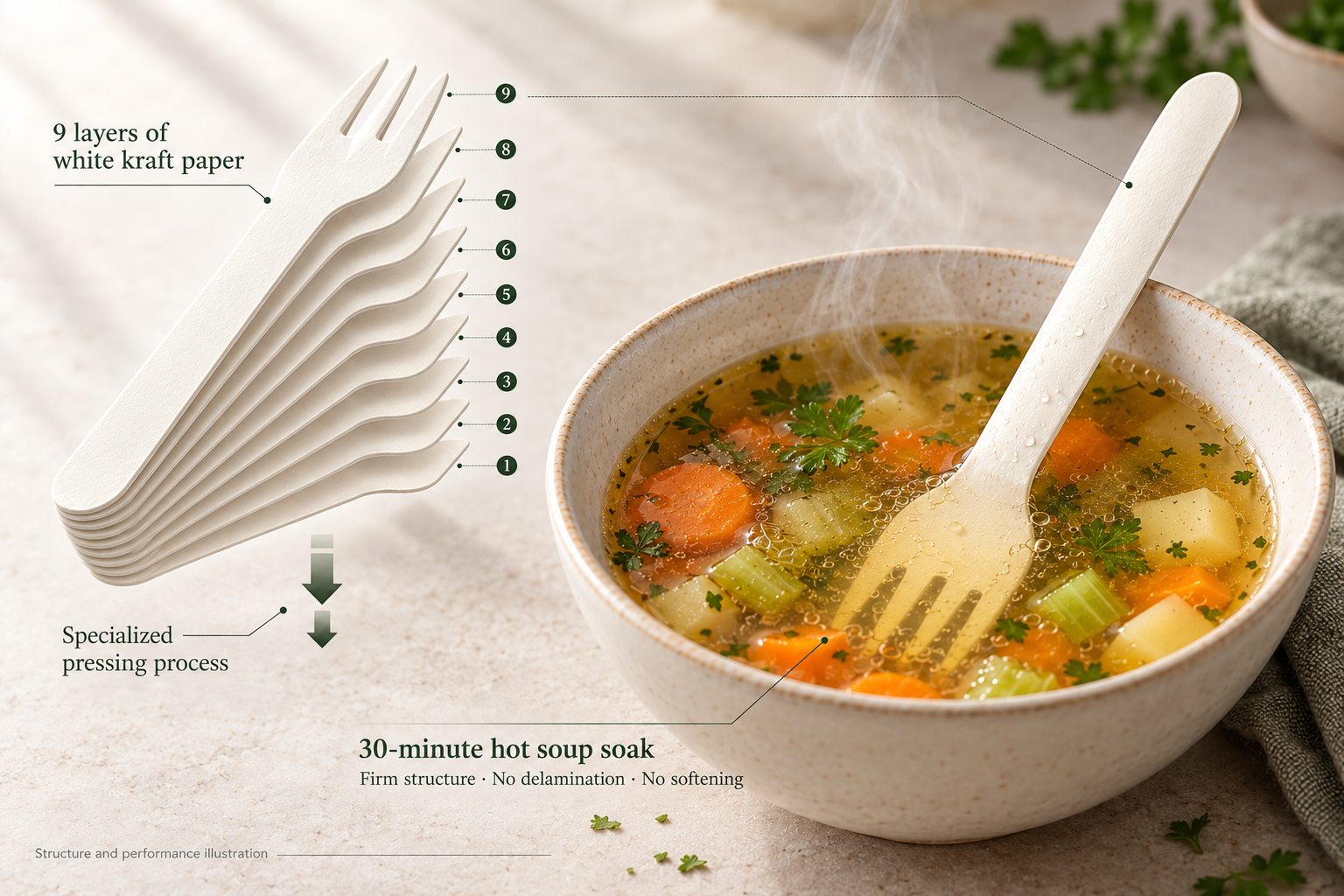
A delivery spoon may sit in hot food for 30 minutes; a wholesale carton needs clear counts and repeatable replenishment; an airline set must fit the tray and arrive hygienically wrapped. We define the job first, then develop the utensil and pack around it.
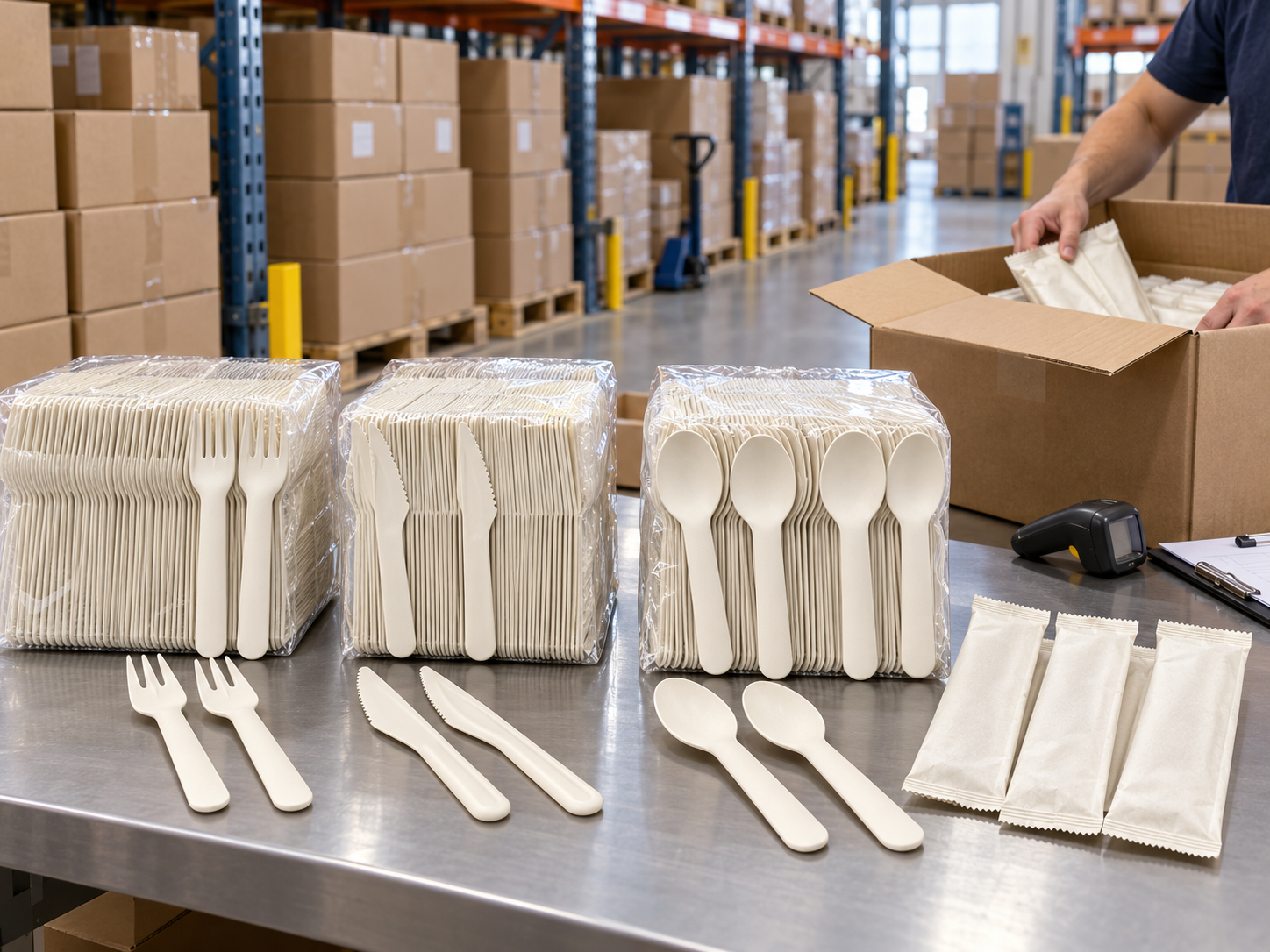
Consistent counts, fast dispensing and performance that lasts through the real delivery window.
 02
Clear SKU separation, repeatable case counts and private-label pack options for efficient wholesale distribution.
 03
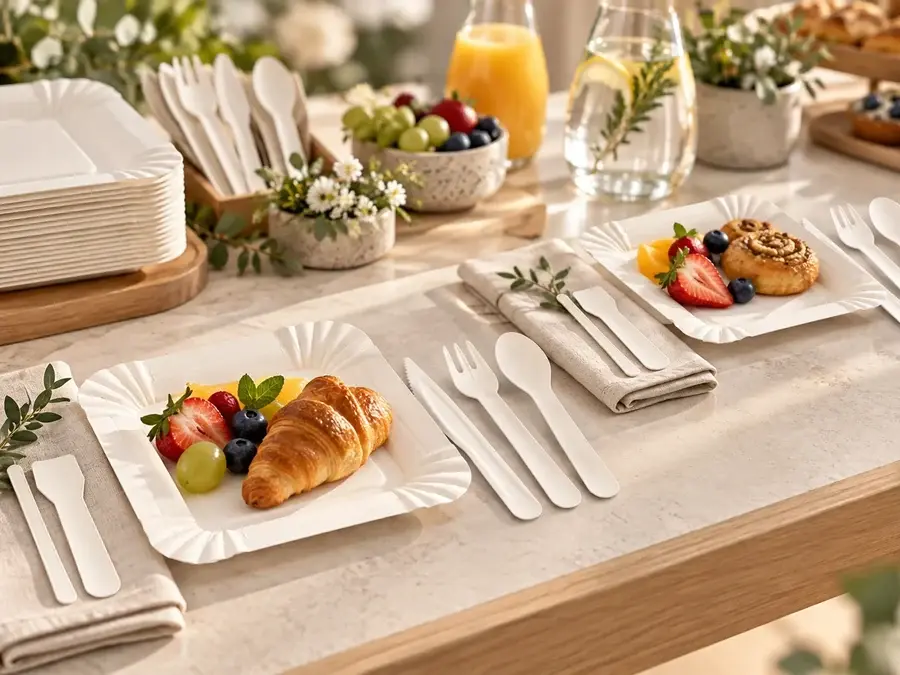
A refined hand-feel and quiet, clean presentation for breakfast, room service and takeaway.
 04
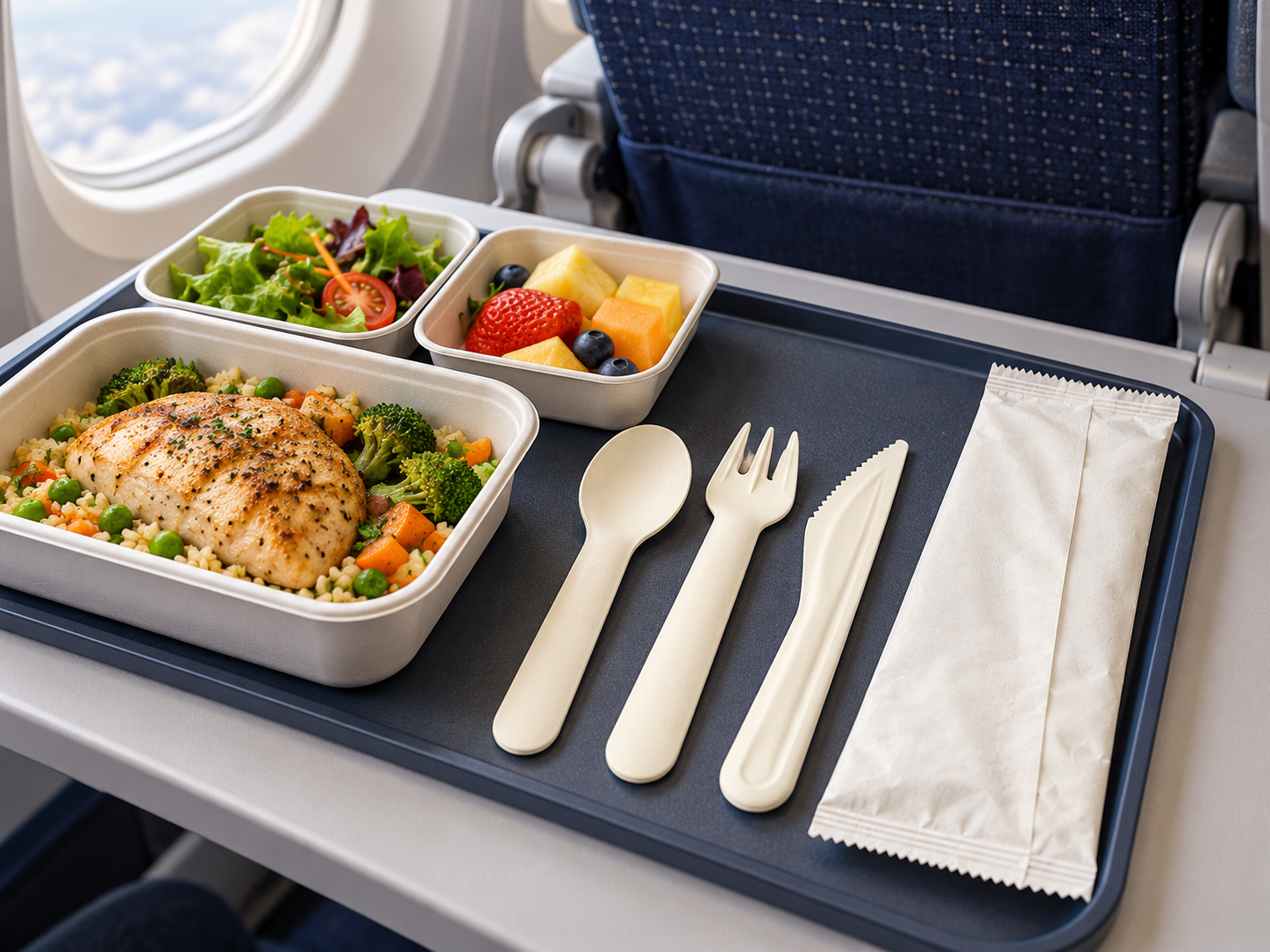
Compact, hygienic paper cutlery configurations planned around meal trays, galley handling and cabin service.
Product and service gallery
These application views show GPLPAK paper utensils as a complete four-product family, an individually wrapped kit and in two common foodservice environments. Final geometry and pack details are confirmed against the approved SKU.

Paper forks, knives, spoons and coffee stirrers can be developed as a visually consistent foodservice program.
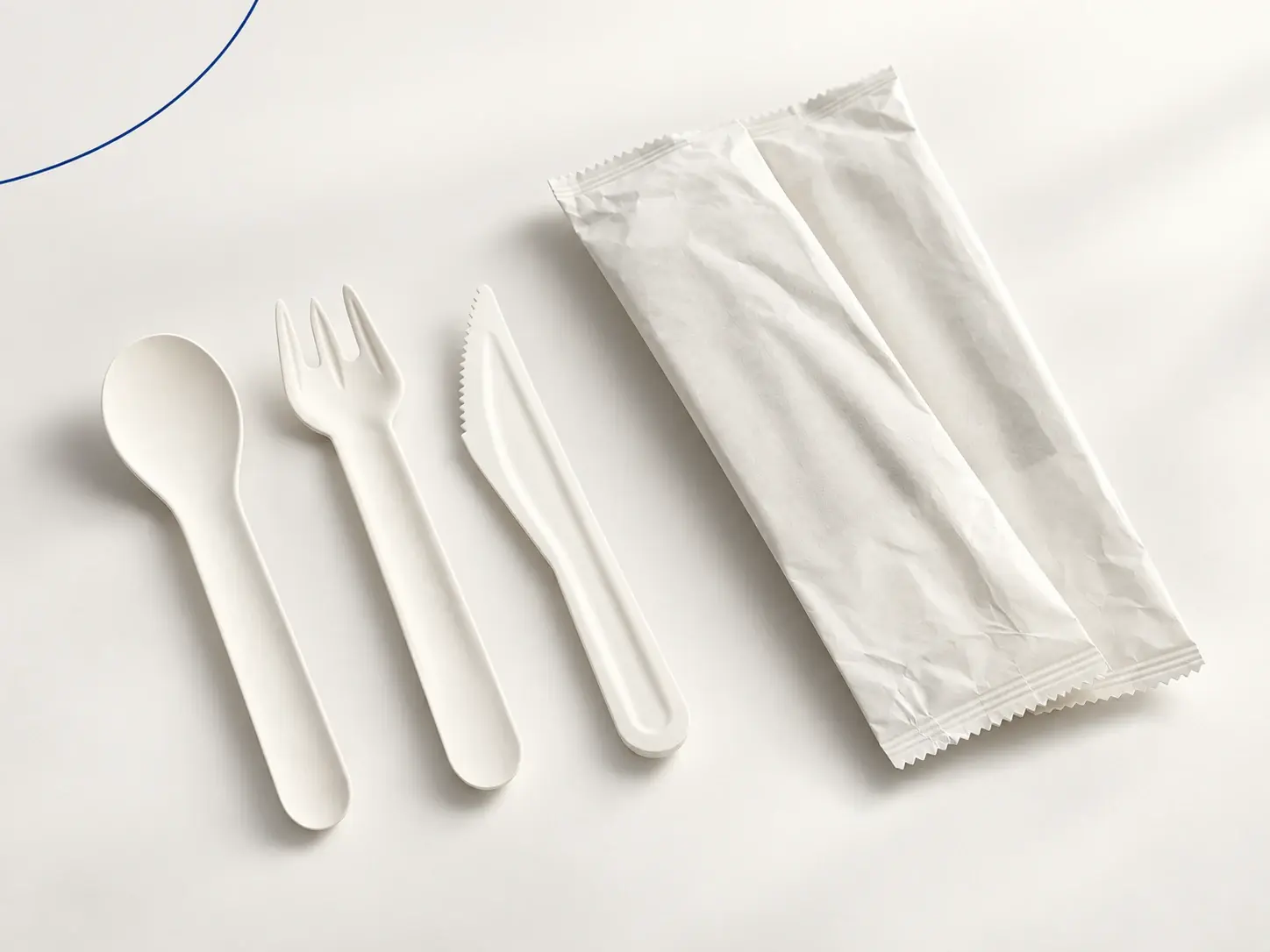
Specify set contents, wrapper stock, seal, print, count and dispensing method as one system.
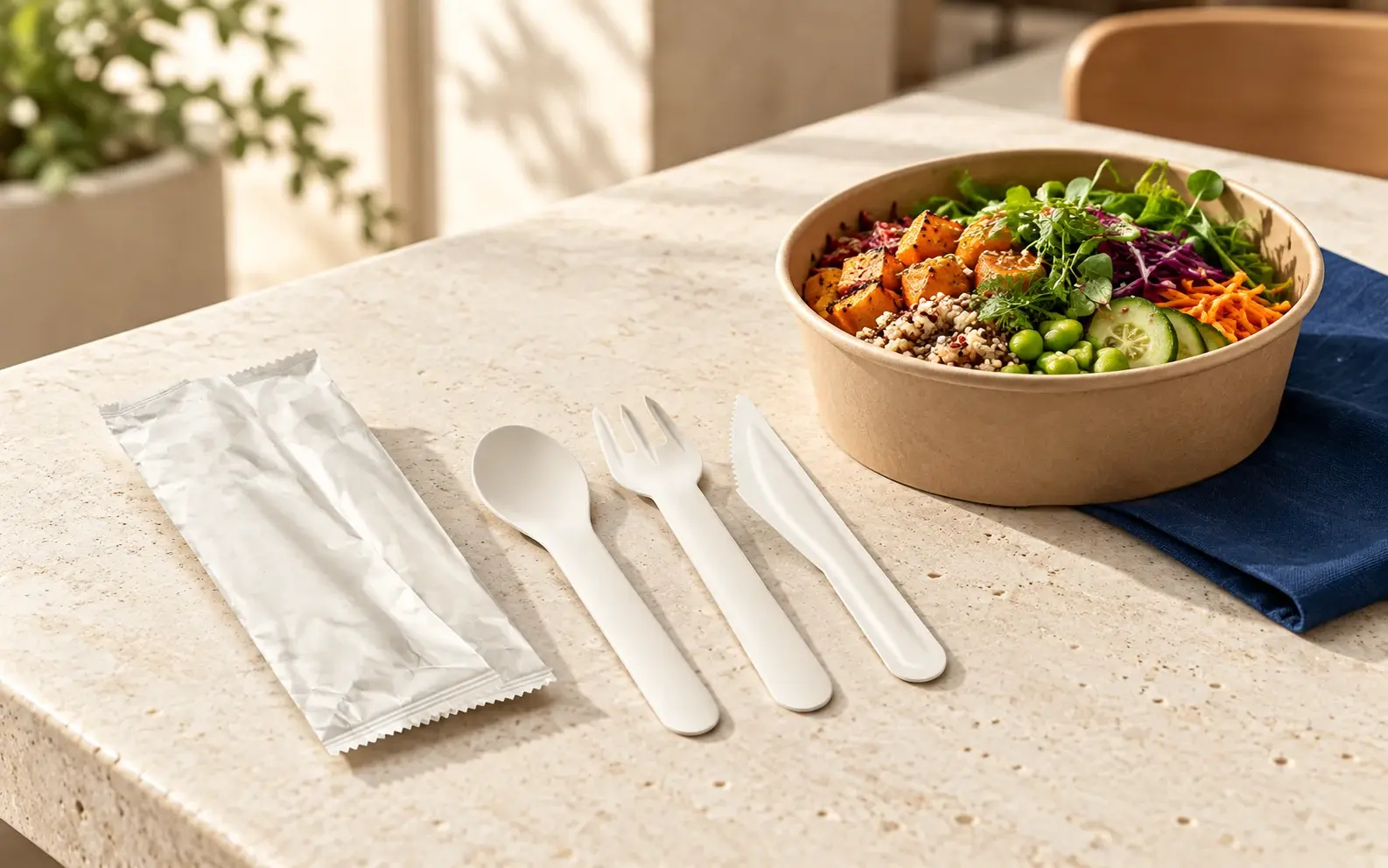
Menu texture, temperature and delivery dwell define the functional target—not the category name alone.
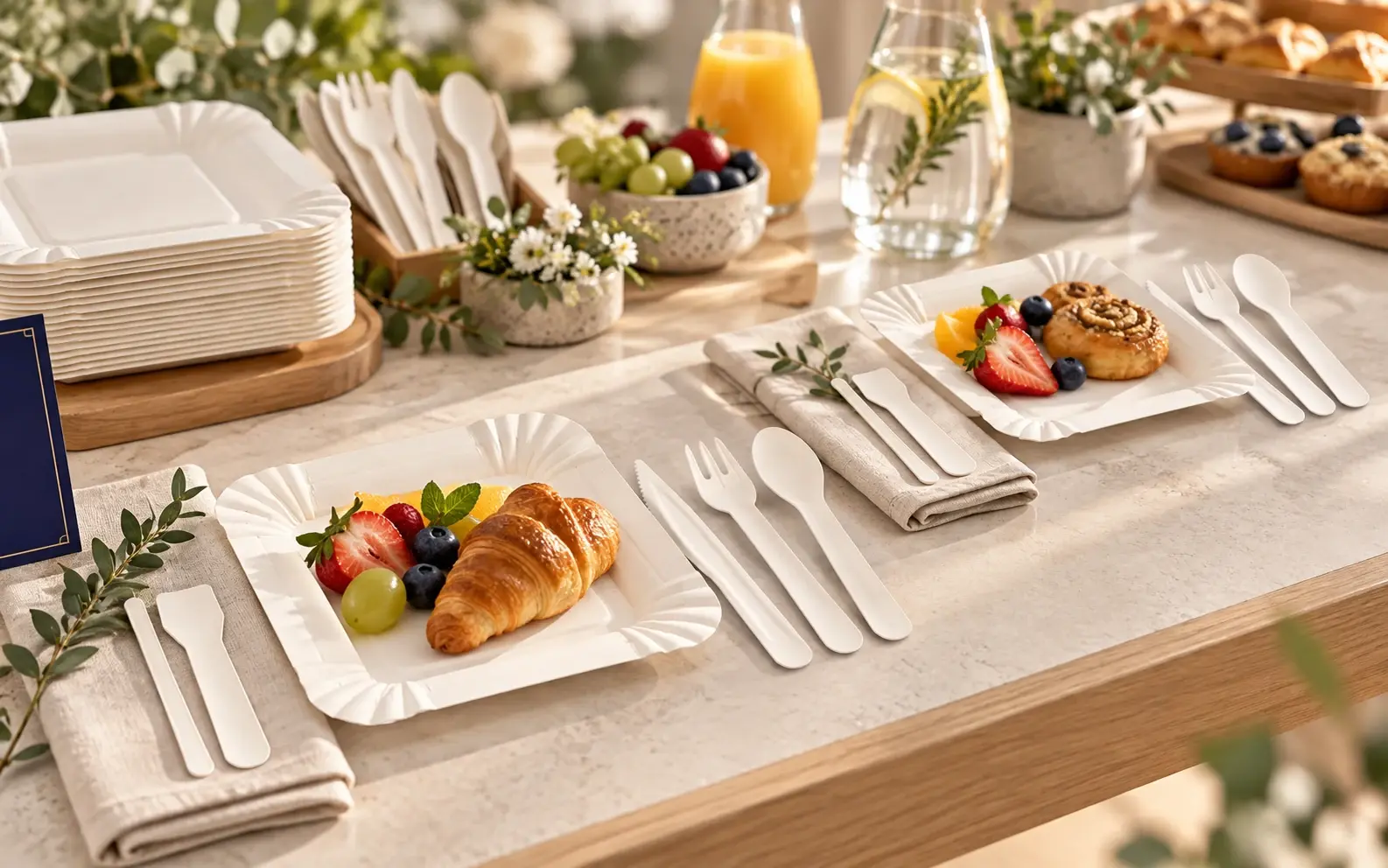
Refined color, smooth edges and coordinated packs support breakfast, events and room-service programs.
Product-scope note: plates, bowls, cups, food containers and other tableware shown in styled service scenes are contextual props only and are not part of the GPLPAK product line presented here. Our offered product families are paper forks, knives, spoons and coffee stirrers; wrapped kits are packaging configurations. Product dimensions, finish and verified performance are controlled by the approved sample and order specification.
The GPLPAK specification method
Reliable performance starts with a clear service brief.Define the food type, serving temperature, contact time and eating task so we can recommend and validate the right cutlery solution.
Aqueous, oily, acidic, fatty, dry, dense or frozen—and the actual menu item where possible.
Temperature at first contact plus any holding, transport or reheating condition.
How long the utensil must remain usable from pack opening through the final bite.
Piercing, cutting, scooping and torsion demands based on the actual food texture.
Self-service, delivery, tray assembly, buffet, room service, retail or dispenser operation.
The decision rule
Material story earns attention. Validated function earns the reorder.
Solution platform
Each utensil family is developed around a different failure mode and set of critical-to-quality checks.
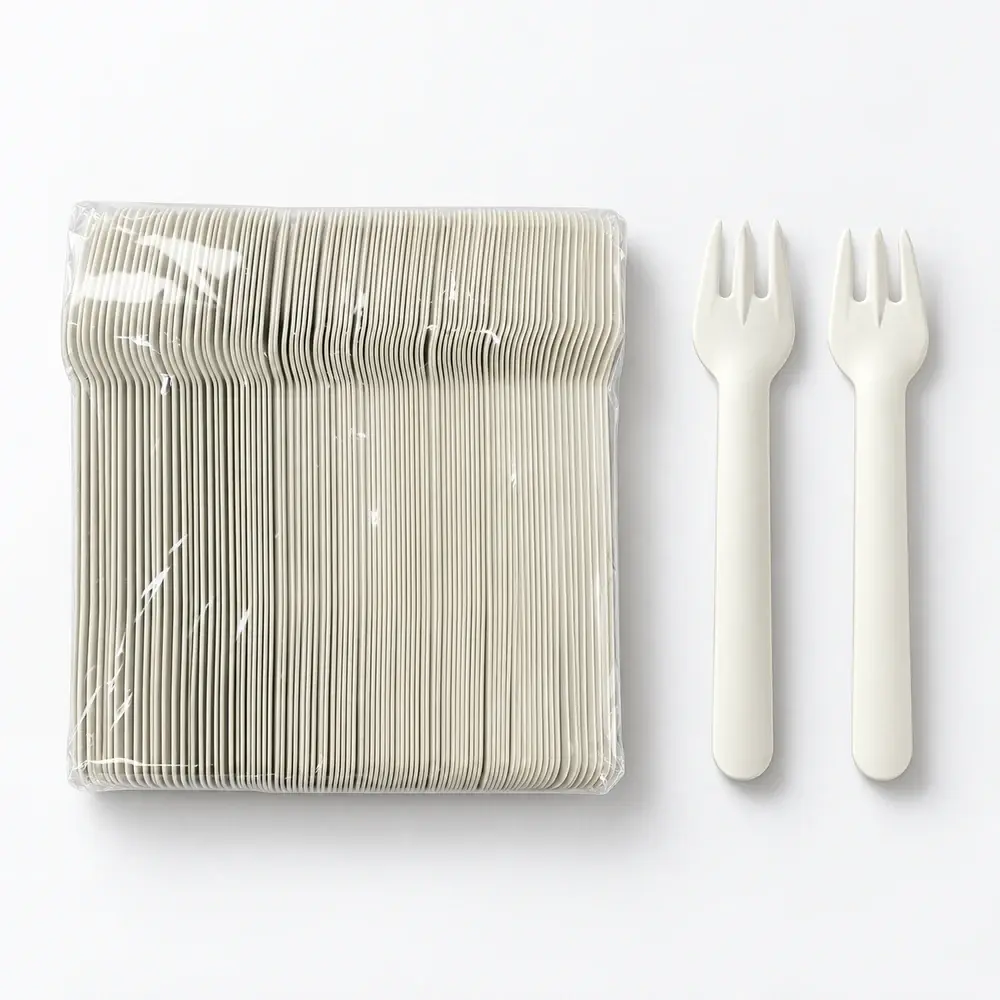
Pierce & lift
For salads, rice, noodles, pasta, pastries and plated meals.
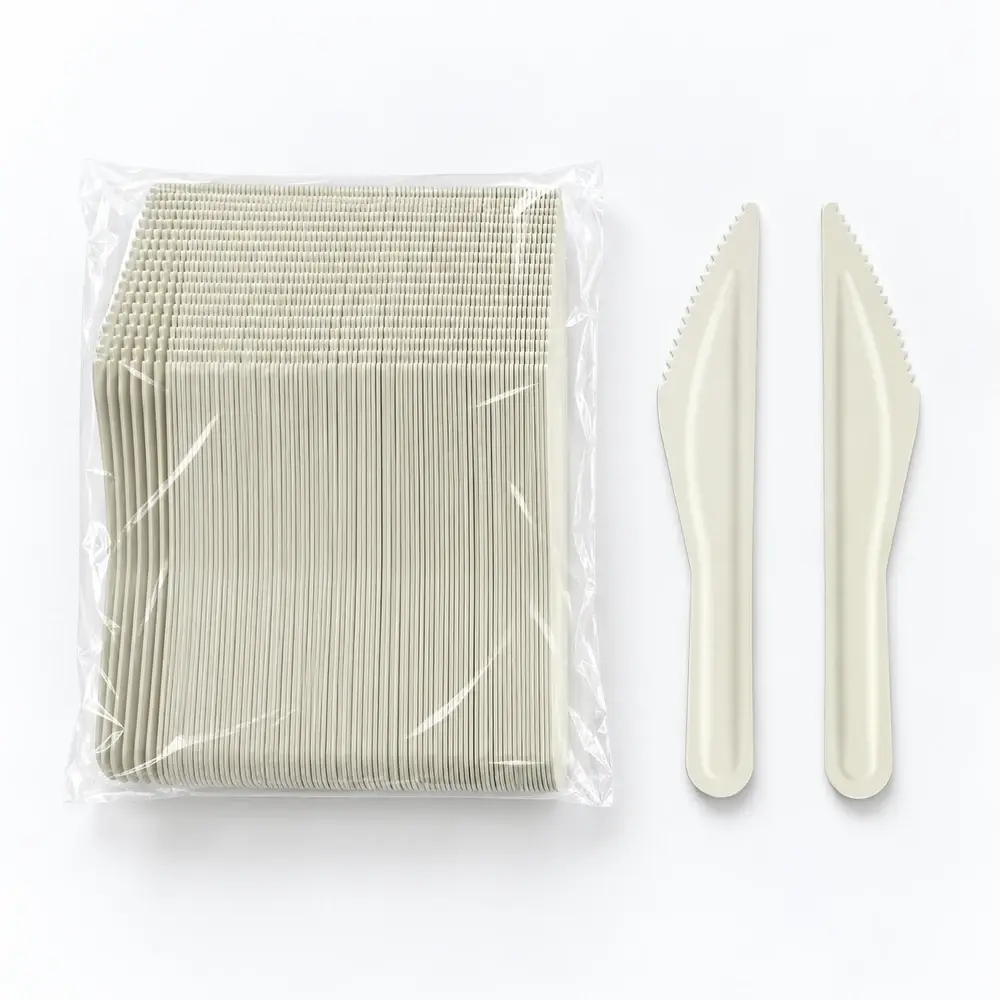
Cut & portion
For softer proteins, baked foods, fruit, pancakes and event service.
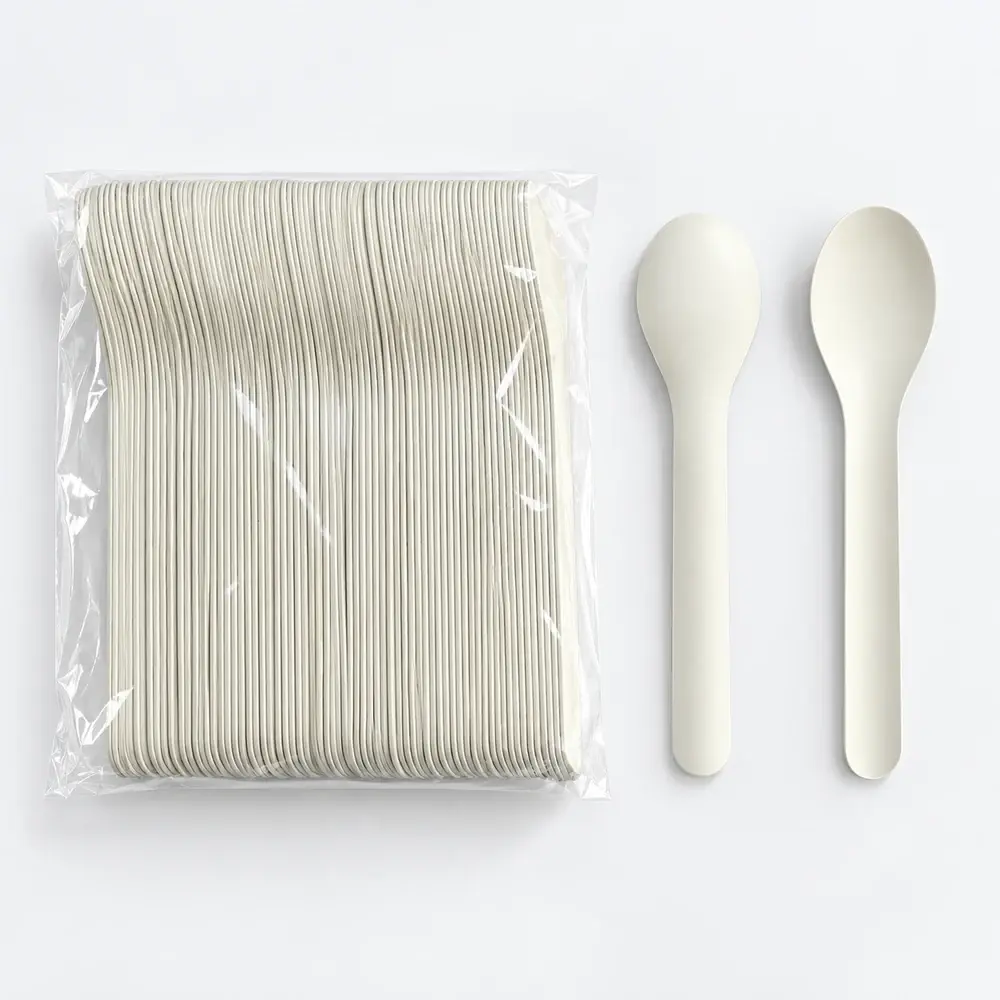
Scoop & retain
For desserts, porridge, sauces and selected hot-food applications.
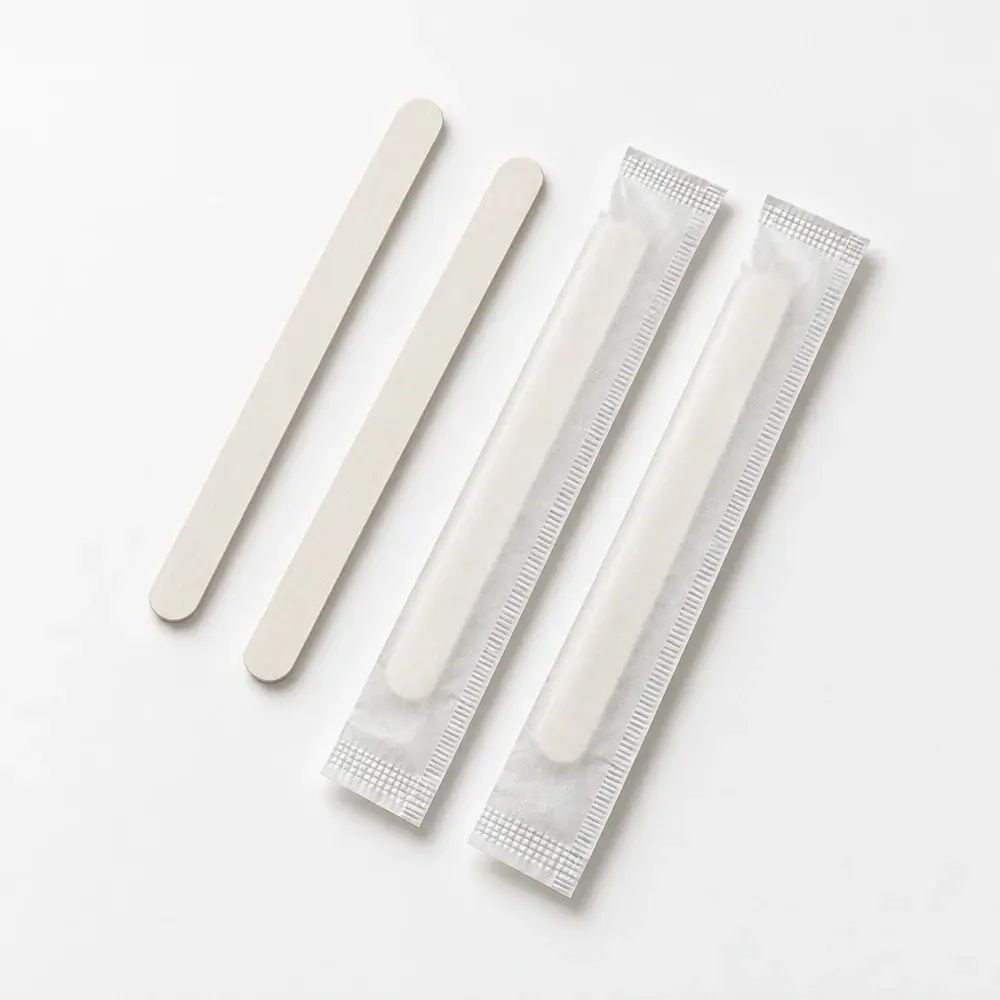
Stir & serve
For coffee, tea, cocoa and selected hot or cold beverage programs.
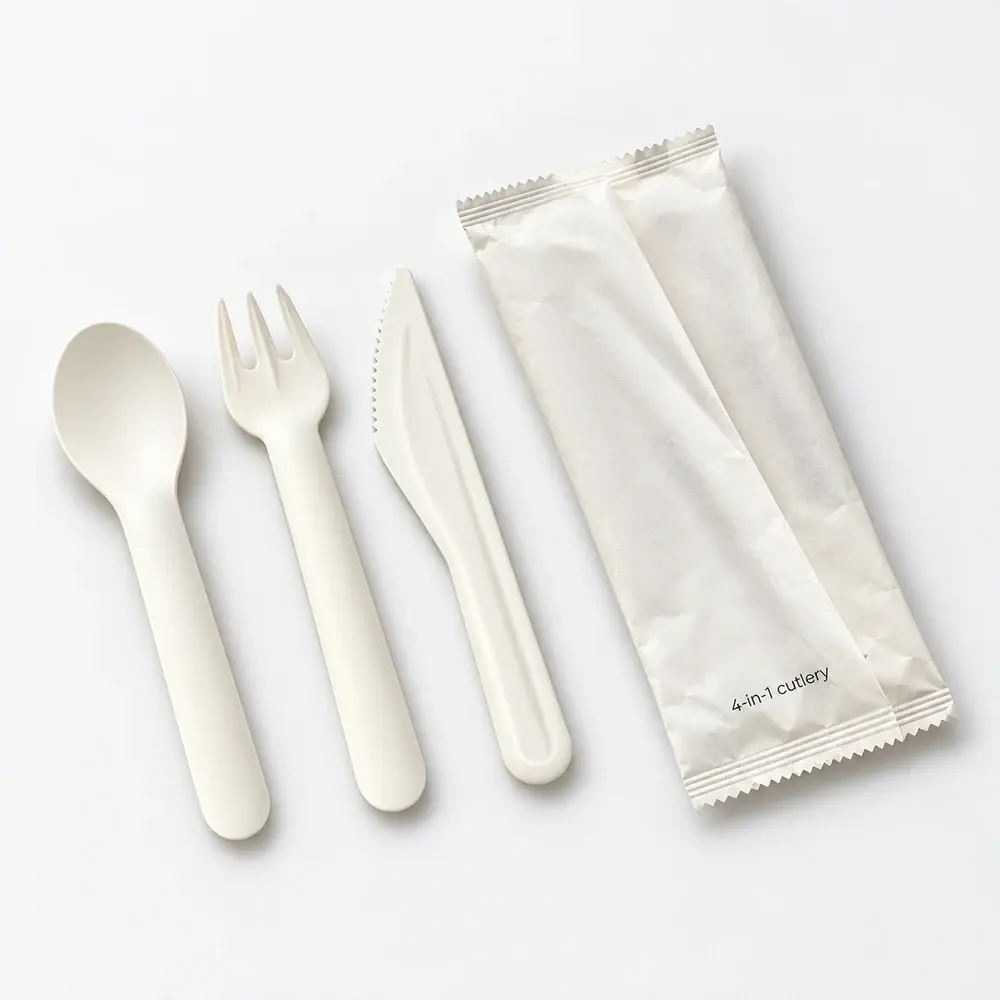 Pack configuration
Combine & pack
A hygienic, service-ready set for delivery, catering, hospitality and institutional dining.
9-layer white kraft construction
Selected GPLPAK disposable cutlery constructions combine nine layers of food-grade white kraft paper with an advanced controlled-pressing process. Consolidating the layers into one dense profile is designed to improve stiffness, wet integrity and resistance to edge lift or delamination during use.
A practical alternative to bamboo & wood
From storage and taste to packing and delivery, our pressed paper cutlery is designed around the practical needs of foodservice businesses.
01 Storage
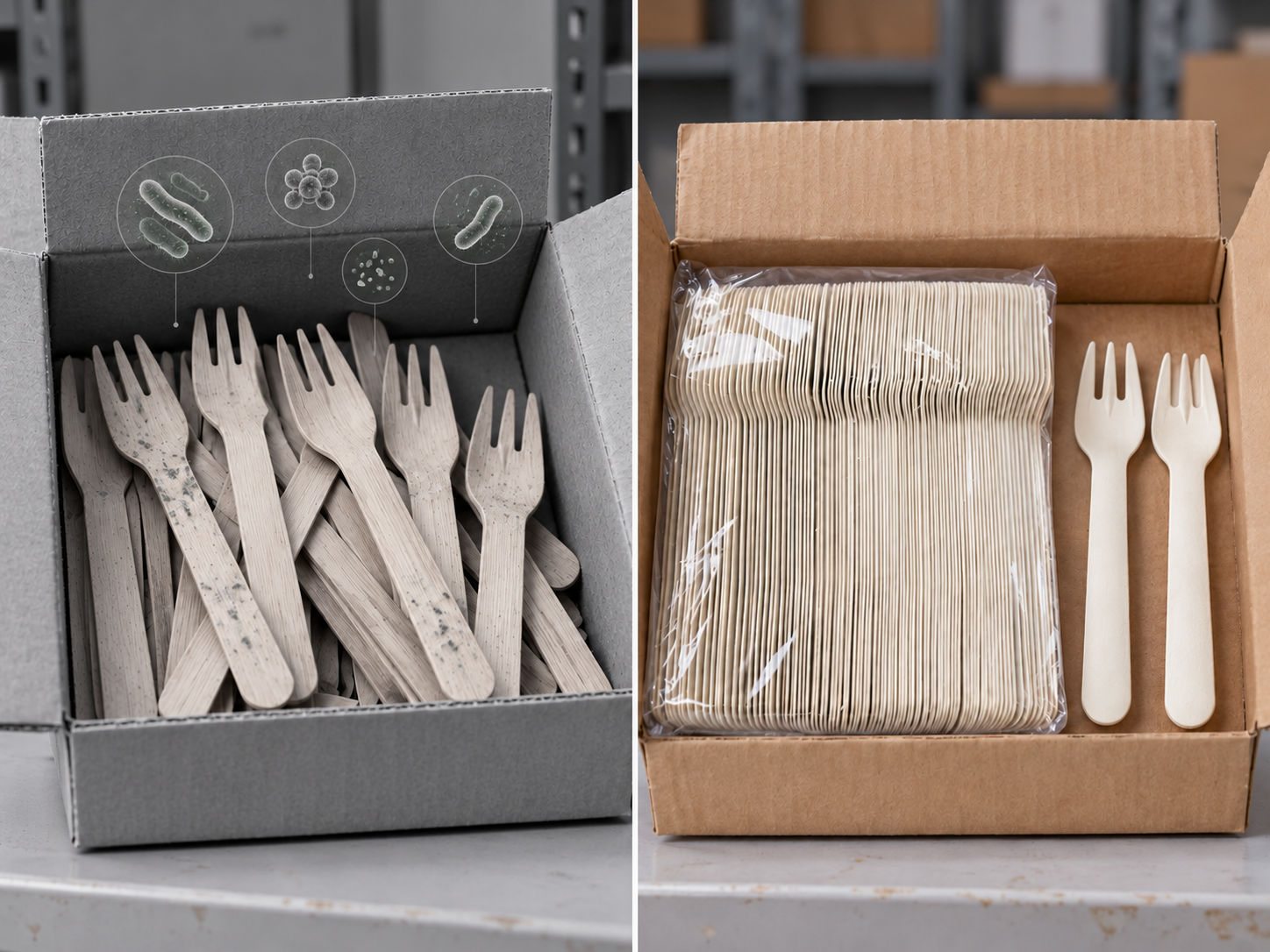
Bamboo and wooden cutlery can develop mold when exposed to moisture during storage. Our paper cutlery is thoroughly dried before packing to help control residual moisture. When kept sealed in its original packaging and stored under the recommended dry conditions, it can remain free from visible mold for up to two years.
Thoroughly dried. Sealed for storage.
Illustrative storage scenarios, not a controlled comparison. Storage performance depends on packaging integrity and storage conditions; confirm the two-year supplier statement for the selected SKU before purchase.

02 Dining experience
Some diners notice a bamboo or woody note when using plant-based utensils. Our paper cutlery offers a low-odor alternative, helping keep attention on the food—from delicate desserts to freshly prepared meals.
Low odor. A more neutral dining experience.
03 Packing & logistics
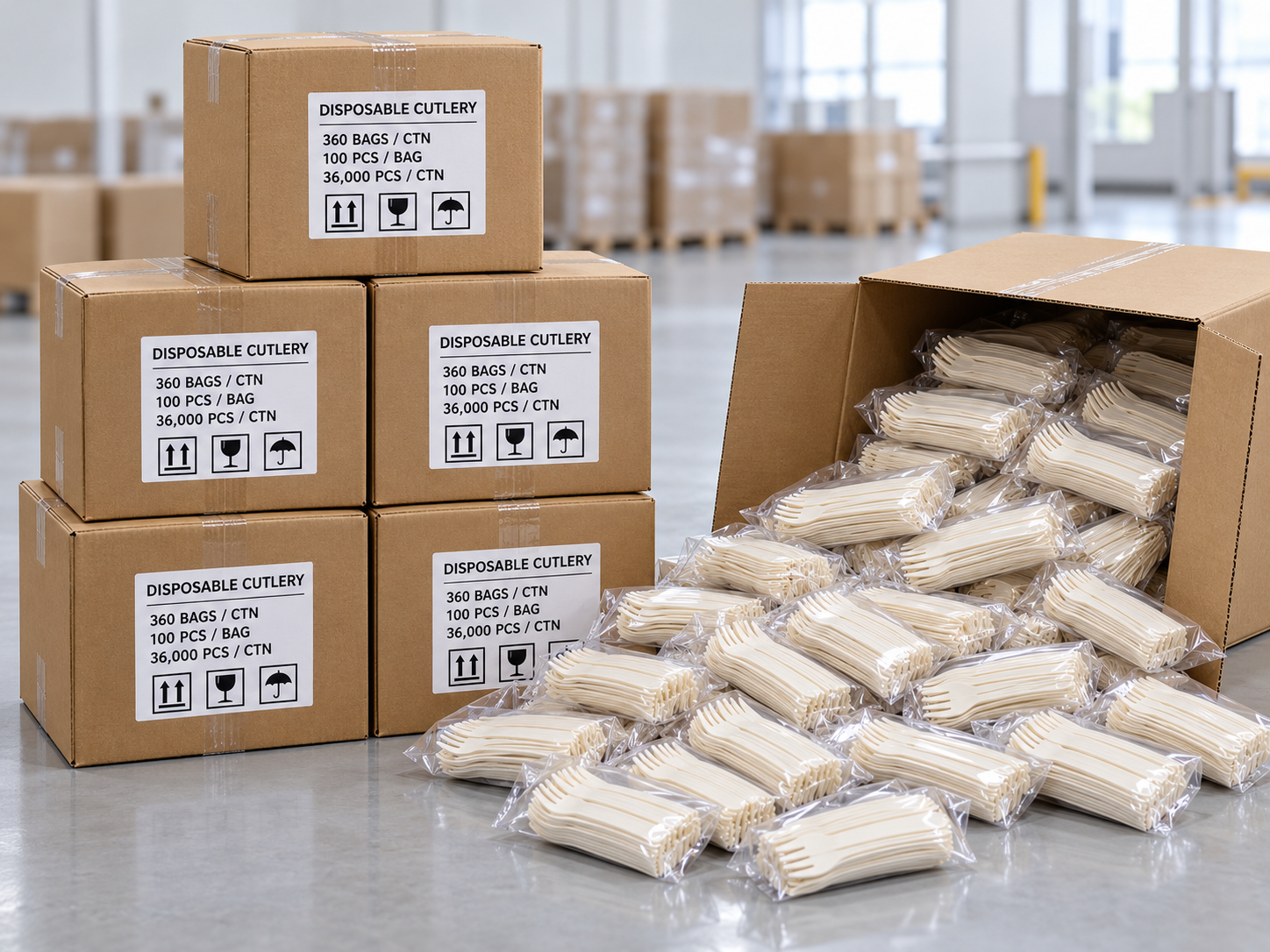
One paper-fork packing configuration holds 360 bags of 100 forks—36,000 pieces per carton. Compared with a bulkier bamboo-fork pack, this higher piece density can let buyers move more forks for the same freight spend when carton size and shipping terms are comparable.
36,000 paper forks per carton. More pieces per shipment.
This count applies to the stated fork configuration only. Carton capacity and freight efficiency vary by product size, packing format and shipping route.
Request samples and packing specifications to evaluate the feel, weight and storage requirements for your business.
Brand and print customization
Specify the cutlery dimensions for the meal and service format, then make the outer packaging distinctly yours. Length and print are reviewed together in the approved sample.
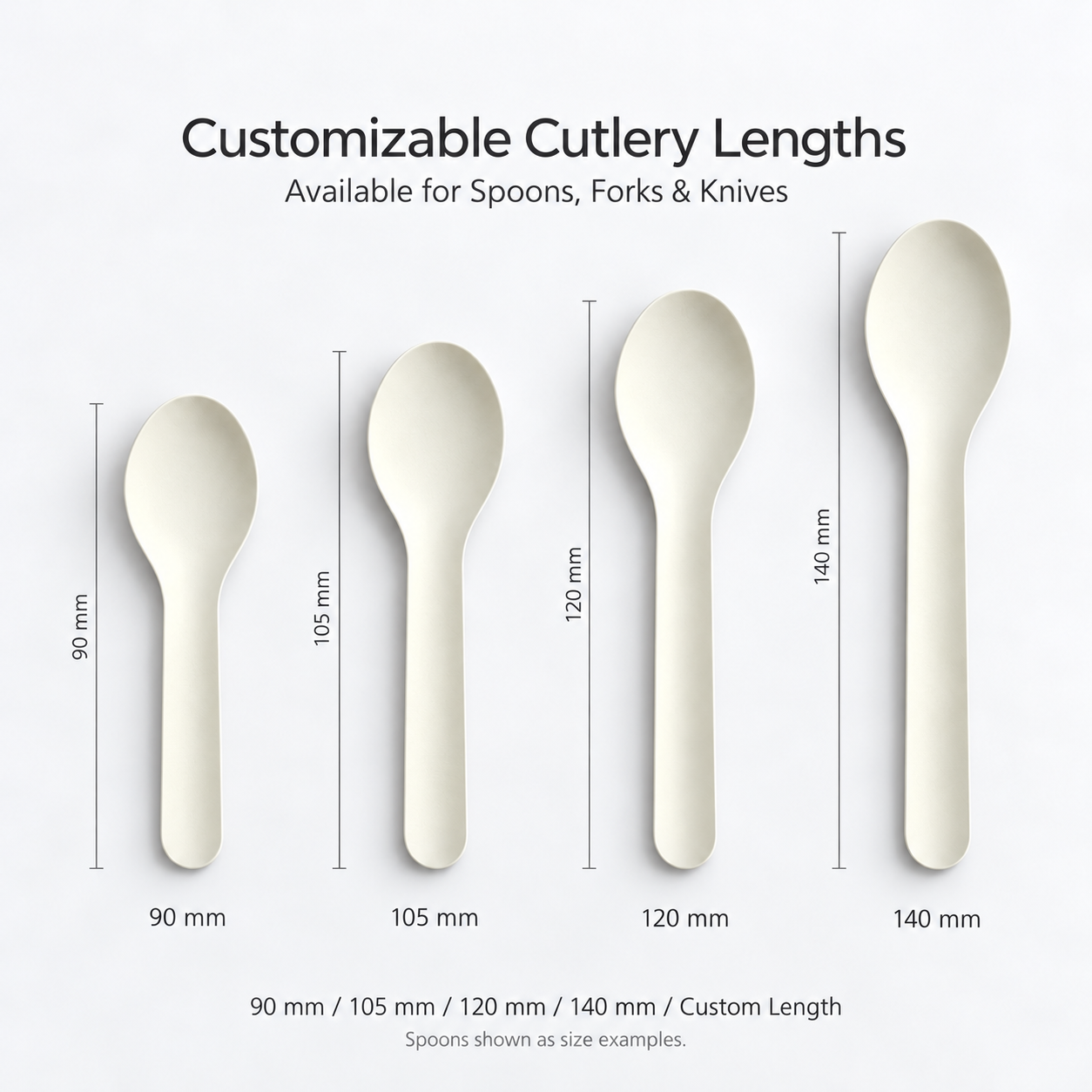
Match the fork, knife or spoon length to your menu, portion, tray and pack format. The pictured spoons show size examples; confirm available lengths, tolerances and tooling for each selected utensil.
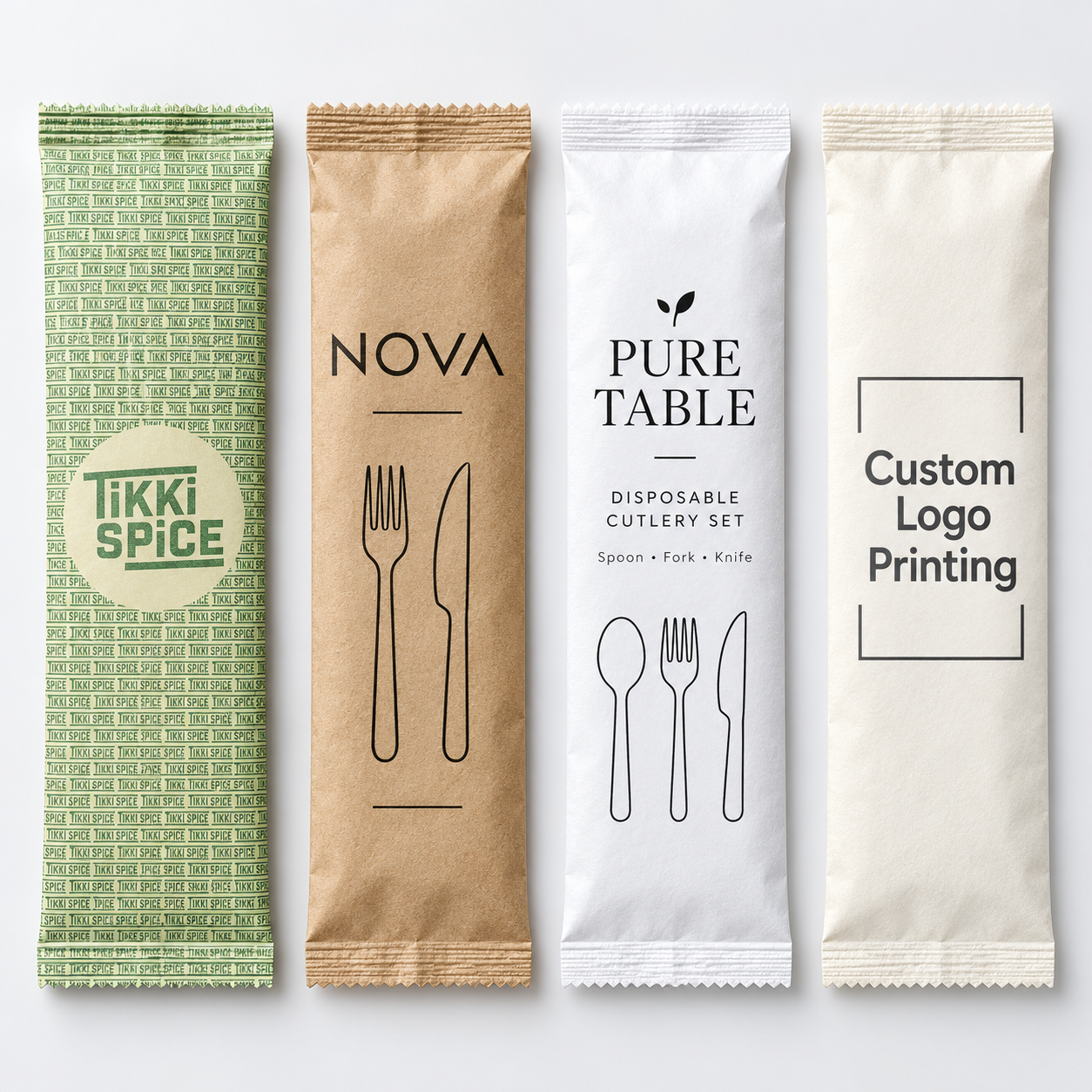
Put your logo, brand colors, graphics or required product information on an individual sleeve or presentation pack. Select the wrapper stock and print coverage, then approve a physical printed sample before production.
Share target dimensions and the food or beverage use.
Define individual sleeves, set packs and required pack counts.
Provide an editable logo, color references and required copy.
Confirm utensil length and printed packaging before mass production.
Final sizes, wrapper materials, print colors and minimum order quantities depend on the selected SKU and production feasibility.
Buyer and operator priorities
Use this matrix to align procurement, culinary, operations, quality and brand teams before samples are made.
| Environment | Operating reality | Specify and test | Commercial opportunity |
|---|---|---|---|
| QSR & delivery | High throughput; 20–45 minute delivery window; mixed hot and cold meals | Dispensing, count consistency, menu fit, wrap need, functional dwell | Custom kits, recurring volume, operator standardization |
| Catering & events | Mixed menus, extended service, guest-facing presentation, deadline sensitivity | Stackability, buffet handling, carton efficiency, appearance, backup volume | Branded wraps, coordinated kits, event colors |
| Hotels & hospitality | Room service, breakfast, takeaway and amenity presentation | Mouthfeel, smooth edges, quiet handling, private-label pack finish | Premium sets, printed sleeves, guest-experience programs |
| Institutional dining | Repeat menus, tenders, large user populations and high complaint exposure | Traceability, rounded edges, documentation, supply continuity, cost in use | Standardized SKUs, call-off orders, scheduled replenishment |
| Airline & rail | Limited tray space, low weight, hygiene and assembly constraints | Tray fit, wrapper integrity, controlled sharpness, automated pack compatibility | Compact kits, low-cube cartons, preassembled configurations |
Menu validation protocol
A controlled sample, documented test conditions and agreed pass criteria give the buyer and factory one repeatable production baseline.
Generic claims such as “strong,” “heat-resistant” or “suitable for all hot foods” are not specifications. Conditions and evidence make them useful.
Store and handle them as the buyer will before the trial.
Test the actual food at the worst-case serving temperature.
Include holding and delivery time—not only the first minute.
Record bending, breakage, tine collapse, cutting and spillage.
Evaluate taste, odor, edge feel and user comfort.
Approve the specification, artwork, report and retained golden sample.
Controlled manufacturing
Production settings, hygienic handling, pack-out controls and recorded inspection should all trace back to the approved SKU. These three control points show how a paper-fork program moves from the line to a shipment-ready case.
 01
Roll-fed paper is converted and formed under controlled settings while operators monitor fork shape, alignment and line stability.
 02
Finished forks are counted, sealed in hygienic inner packs and loaded into cases against the approved packing specification.
 03
Samples are reviewed for dimensions, tine symmetry, lamination integrity, bending response and defined wet-use conditions.
Share the utensil, target pack count, intended menu and acceptance criteria so production and inspection can be built around one clear brief.
Evidence, not a logo wall
Paper, adhesive, coating or treatment, ink, wrapper, food type, temperature and contact time can all change the evidence required. Documentation should match the final SKU and intended use.
Define the destination market and applicable food-contact framework before testing.
US FDA 21 CFR 176.170 ↗Review overall food-contact safety and manufacturing obligations for the intended EU use.
EC 1935/2004 ↗Match simulant, food type, temperature and contact duration to the intended application.
Define intended use →Qualify recyclable, compostable, PFAS and certified-fiber claims; confirm scope and current supporting records.
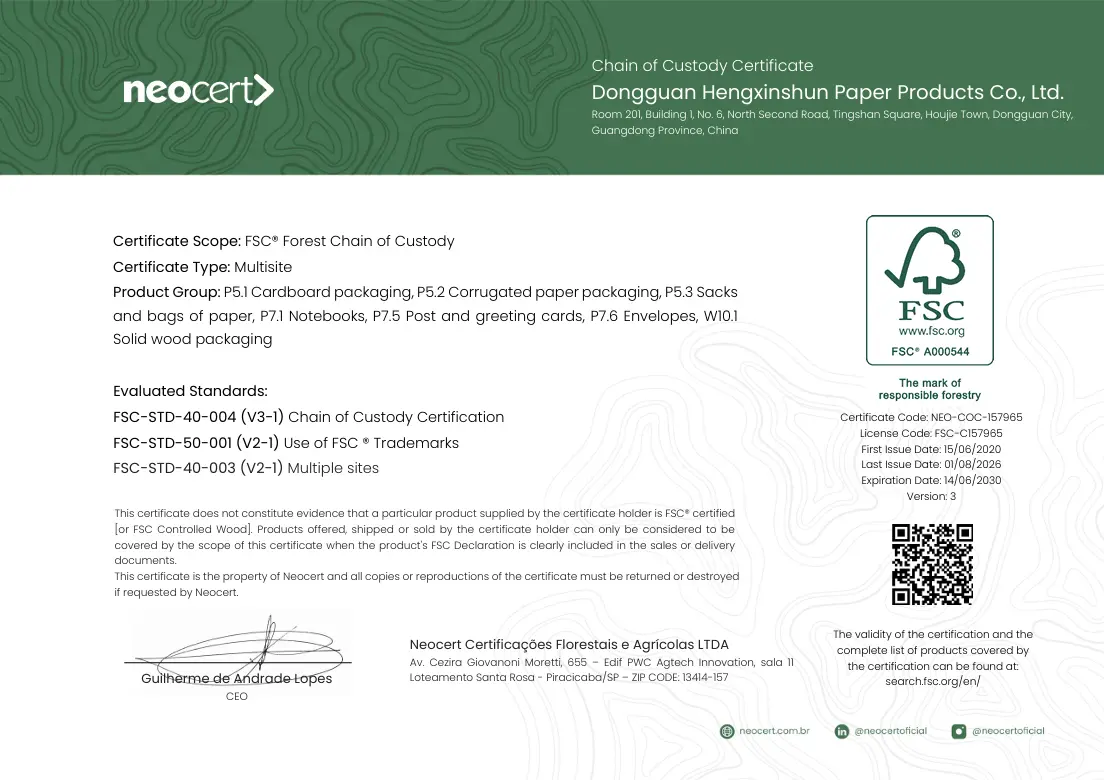
FSC chain of custody ↗Selected supporting records
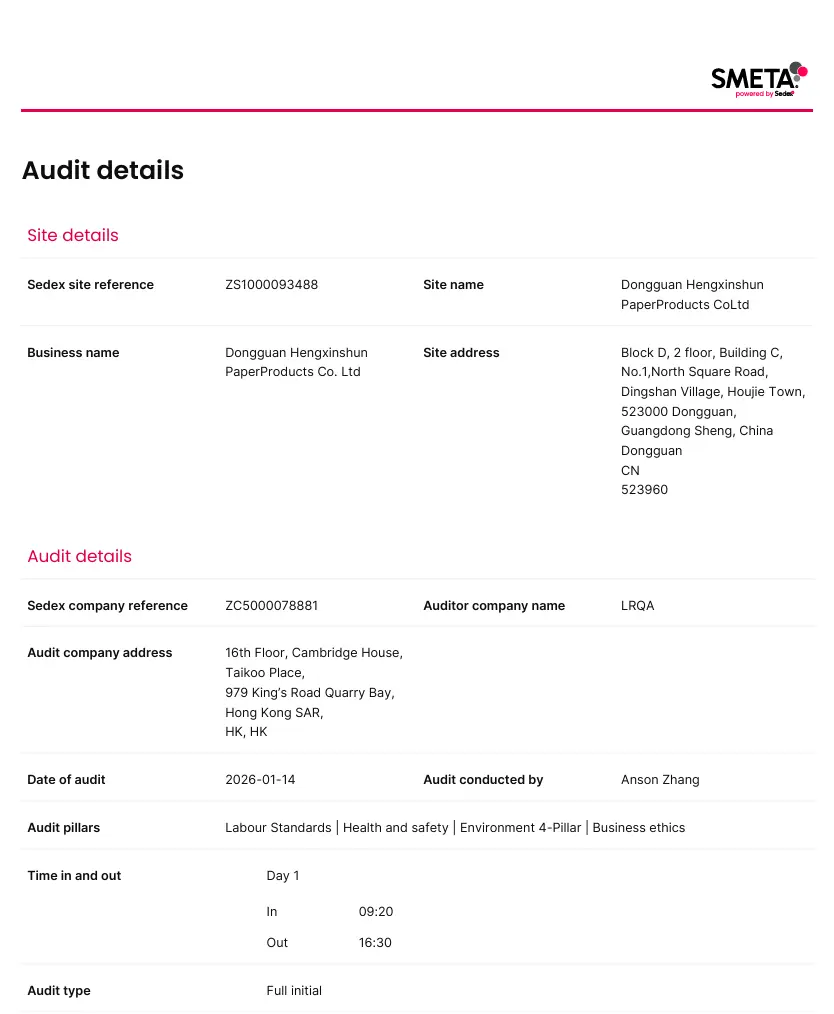
Preview the available files below, then confirm the certificate holder, scope, validity and applicability to the exact product and destination market.

Documentation on request
Match the paperwork and test scope to the approved utensil, its packaging and the destination market.
For products within scope, request relevant fiber-origin and due-diligence supporting records for your supply-chain review.
Check EU product scope ↗Request applicable technical records and test reports for EU-bound cutlery wrappers and outer packaging, including food-contact packaging where relevant.
Review the EU regulation ↗We can provide samples at no charge for buyer-arranged total-fluorine and targeted-PFAS testing. Confirm any “fluorine-free” or “PFAS-free” statement against the selected SKU’s laboratory results and reporting limits.
Request test samples ↗Scope matters. A supplier certificate, test report or regulatory reference is relevant only when the company name, product construction, test conditions, standard, issuing body and validity are applicable to the order being approved.
Pack architecture
The inner pack, wrapper, case, pallet and shipping marks affect hygiene, labor, waste, loadability and landed cost.
Plan your pack configuration →From brief to repeat order
Market, menu, channel, volume and timing.
Dimensions, construction, pack and claims.
Feasibility sample and real-menu trial.
Golden sample, artwork and tolerances.
Production checks and pre-shipment inspection.
Complaint evidence, forecast and reorder learning.
Quotation-ready project brief
Our team can translate them into a clear sampling and quotation brief—with assumptions visible before production.
Buyer FAQ
Clear answers reduce sampling loops, quotation surprises and avoidable production changes.
Discuss your cutlery project ↓Start with the actual food or beverage, serving temperature, expected contact or delivery time, eating or stirring force and service format. Validate the selected fork, knife, spoon or coffee stirrer against the worst-case use before approval.
This page covers paper forks, paper knives, paper spoons and paper coffee stirrers. Plates, bowls, cups and food containers visible in service photography are contextual props only and are not products offered in this range.
Suitability depends on the exact utensil construction, food type, temperature and contact time. Request a defined hot-wet test and a menu trial instead of relying on a generic “heat-resistant” claim.
Yes. Fork, knife, spoon and coffee-stirrer combinations can be individually wrapped or configured with selected napkins and condiment components. Printed wrappers, dispenser packs, private-label cartons and shipping marks are subject to feasibility and order requirements. Kits are packaging configurations, not a separate utensil family.
Request documents matching the exact SKU, paper, adhesive, coating or treatment, food type, intended temperature and contact duration, destination market and current production scope. A logo or generic certificate alone is not sufficient.
Approve a controlled specification, artwork and retained golden sample after real-menu testing. Record test conditions and pass criteria so production and pre-shipment inspection use the same baseline.
Share destination market, annual volume, first-call quantity, utensil mix, food task, packaging format, customization, required documents, delivery location and target timing. This makes price, tooling, MOQ, lead time and freight assumptions comparable.
Paper cutlery project inquiry
Share a few details about the paper cutlery you are sourcing. We can use your product, size, volume and timing to shape a relevant quotation and sampling discussion.
Not sure which length fits your menu? Choose Need Consultation and we will discuss the application with you.
Fields marked * are required.
Discover premium packaging solutions from Dongguan Xinglan Packaging Products Co., Ltd. Specializing in innovative, durable, and custom packaging products for diverse industries.
GPLPAK is committed to delivering manufacturing excellence.

Copyright © 2026 Dongguan Xinglan Packaging Products Co., Ltd. All rights reserved Foodservice hospitality