 英語
 EN
 RU
 ES
 KO
 JA
 PT
 IT
 DE
 FR
 NL
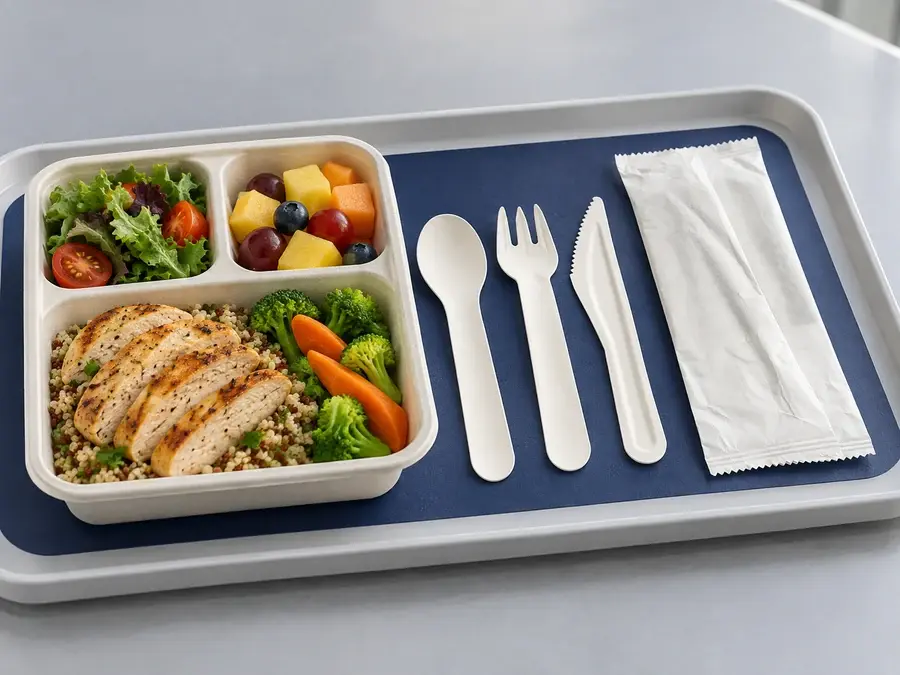
QSR & delivery
Consistent counts, fast dispensing and performance that lasts through the real delivery window.
- Rice, noodles, salads, sides and combo meals
- Individual wraps or custom meal kits
- Delivery-dwell and hot-wet checks

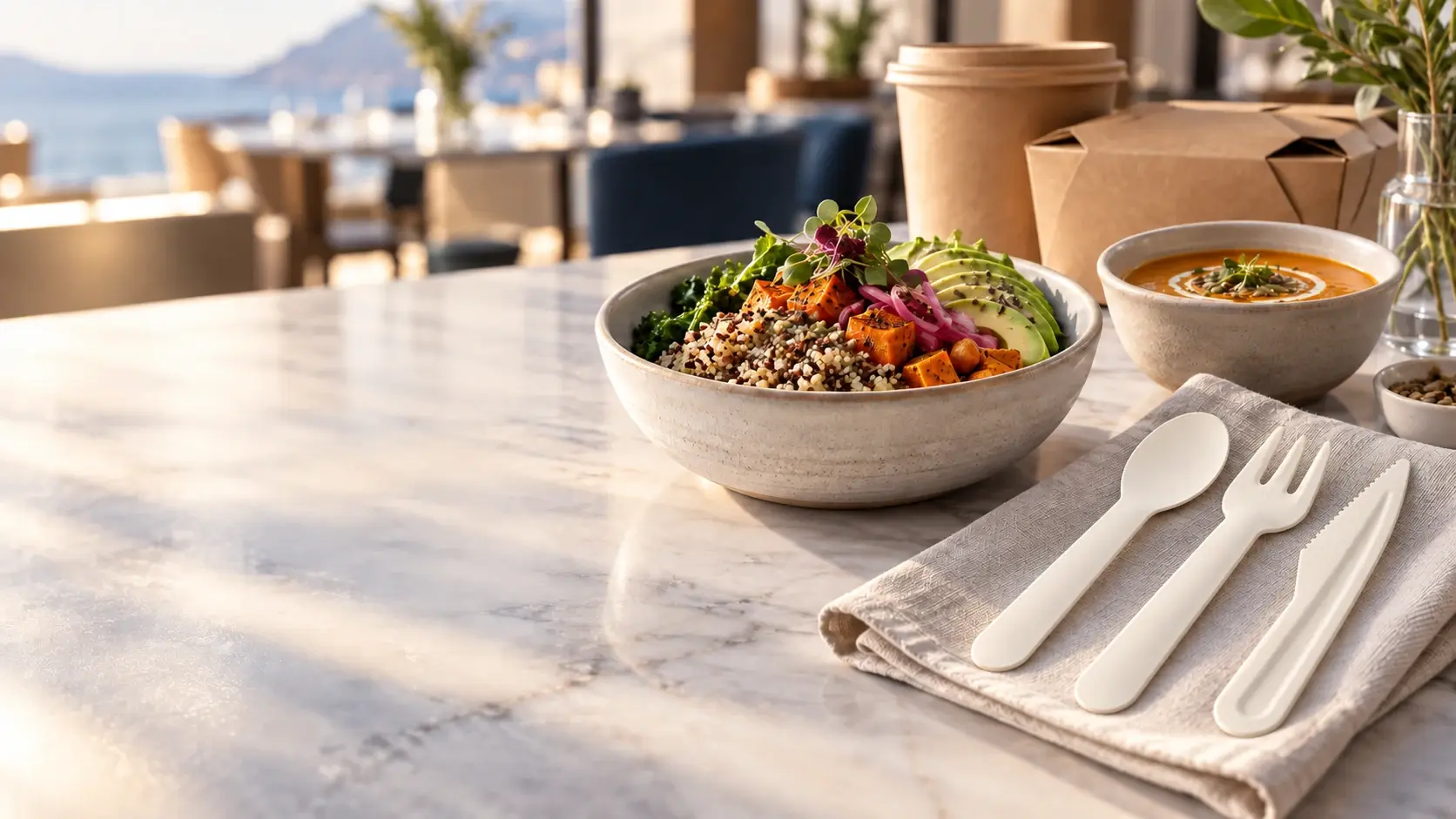
Foodservice & Hospitality
Paper forks, knives, spoons and coffee stirrers for QSR, delivery, catering, hotels and institutional dining—available in foodservice-ready pack configurations and specified by real use conditions.
Built for real service environments
A delivery spoon may sit in hot food for 30 minutes; an event fork must move quickly through a buffet line; a hotel kit must look refined at room service. We define the job first, then develop the utensil and pack around it.
Consistent counts, fast dispensing and performance that lasts through the real delivery window.
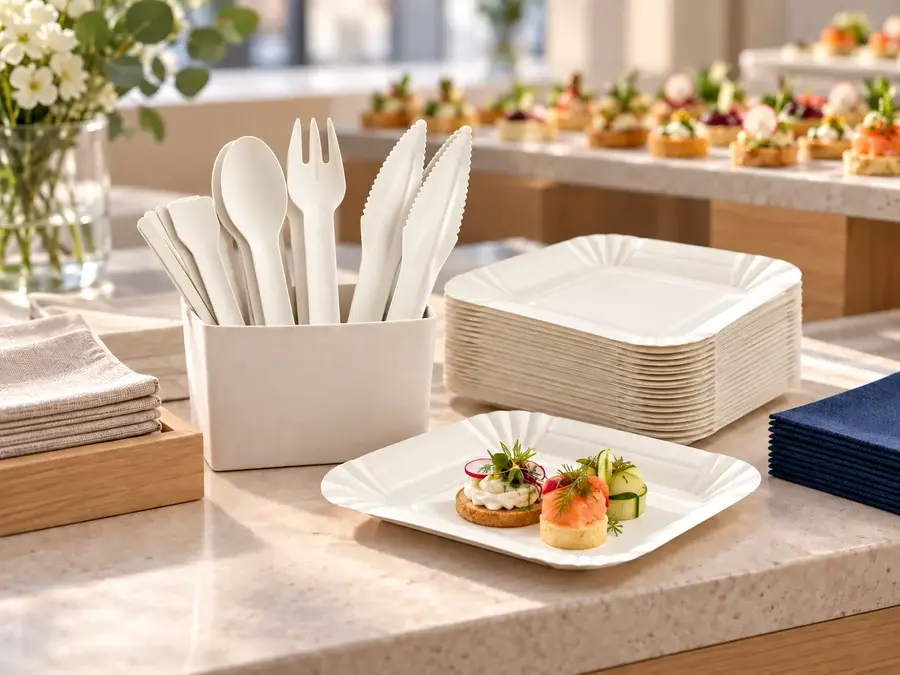 02
Presentation, stackability and reliable carton planning for mixed menus and changing guest counts.
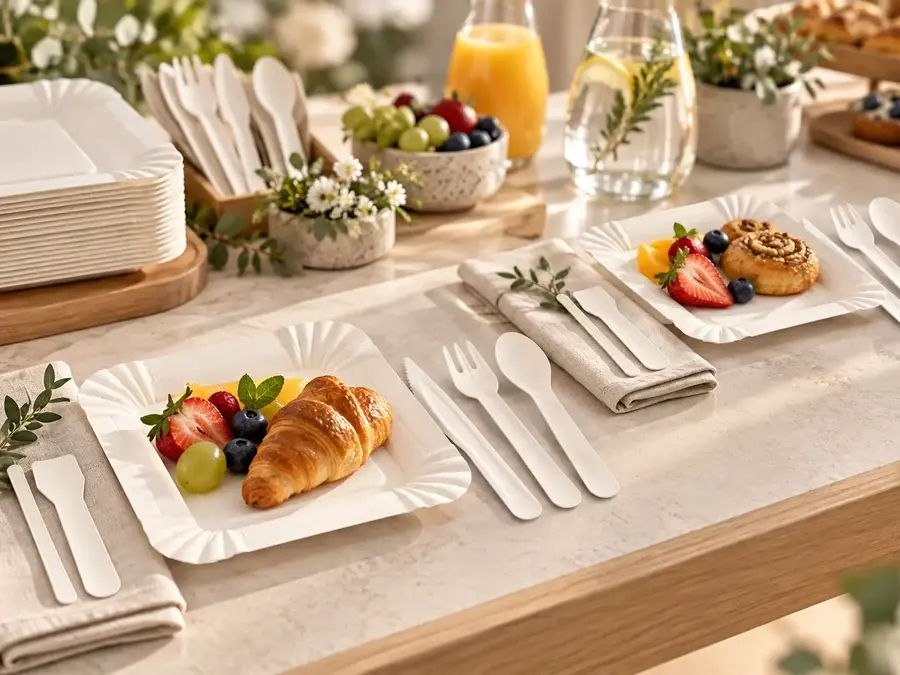 03
A refined hand-feel and quiet, clean presentation for breakfast, room service and takeaway.
 04
Standardized SKUs, traceability and pack compatibility for repeat service at scale.
Product and service gallery
These application views show GPLPAK paper utensils as a complete four-product family, an individually wrapped kit and in two common foodservice environments. Final geometry and pack details are confirmed against the approved SKU.

Paper forks, knives, spoons and coffee stirrers can be developed as a visually consistent foodservice program.
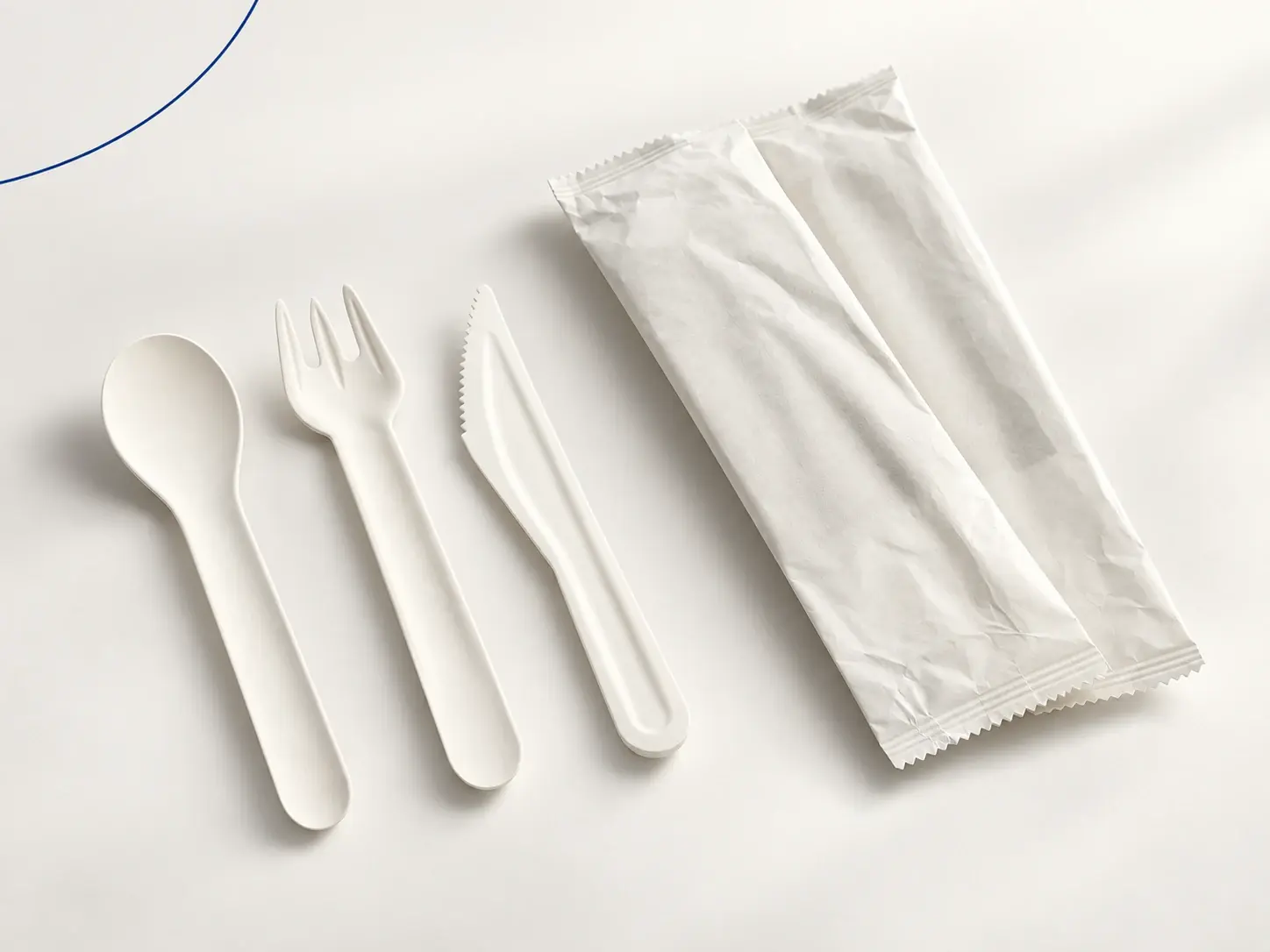
Specify set contents, wrapper stock, seal, print, count and dispensing method as one system.
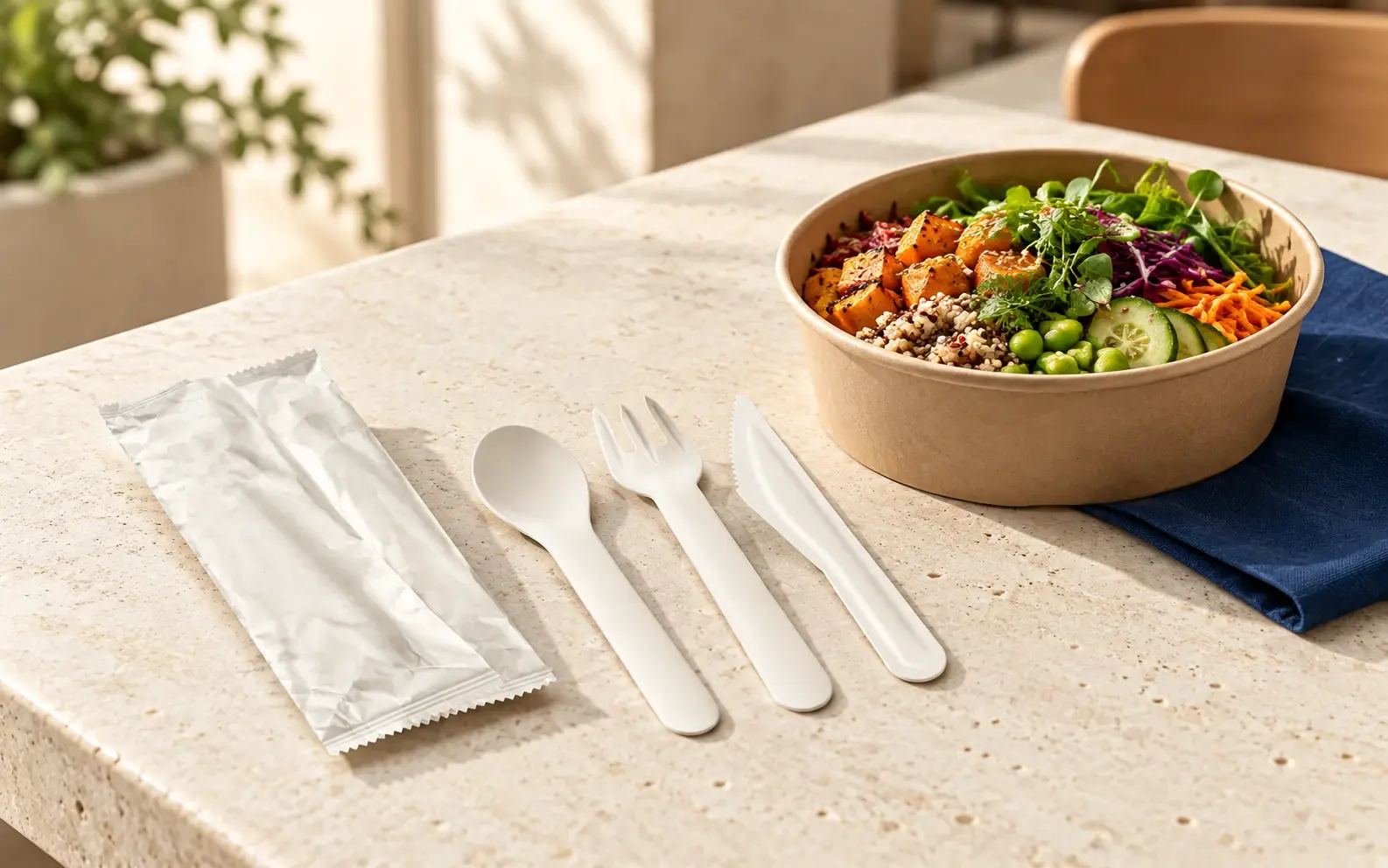
Menu texture, temperature and delivery dwell define the functional target—not the category name alone.
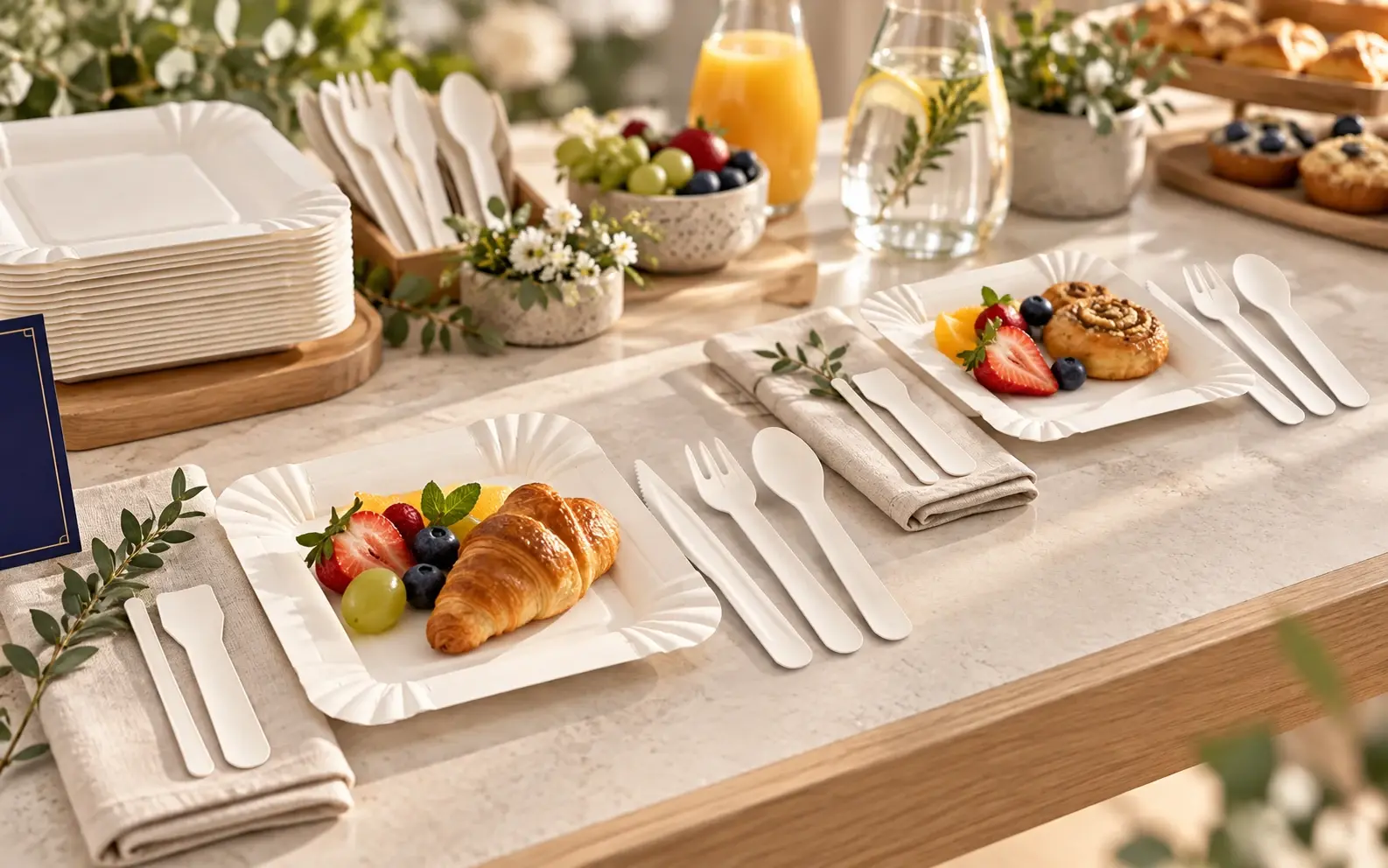
Refined color, smooth edges and coordinated packs support breakfast, events and room-service programs.
Product-scope note: plates, bowls, cups, food containers and other tableware shown in styled service scenes are contextual props only and are not part of the GPLPAK product line presented here. Our offered product families are paper forks, knives, spoons and coffee stirrers; wrapped kits are packaging configurations. Product dimensions, finish and verified performance are controlled by the approved sample and order specification.
The GPLPAK specification method
Reliable performance starts with a clear service brief.Define the food type, serving temperature, contact time and eating task so we can recommend and validate the right cutlery solution.
Aqueous, oily, acidic, fatty, dry, dense or frozen—and the actual menu item where possible.
Temperature at first contact plus any holding, transport or reheating condition.
How long the utensil must remain usable from pack opening through the final bite.
Piercing, cutting, scooping and torsion demands based on the actual food texture.
Self-service, delivery, tray assembly, buffet, room service, retail or dispenser operation.
The decision rule
Material story earns attention. Validated function earns the reorder.
Solution platform
Each utensil family is developed around a different failure mode and set of critical-to-quality checks.
Pierce & lift
For salads, rice, noodles, pasta, pastries and plated meals.
Cut & portion
For softer proteins, baked foods, fruit, pancakes and event service.
Scoop & retain
For desserts, porridge, sauces and selected hot-food applications.
Stir & serve
For coffee, tea, cocoa and selected hot or cold beverage programs.
Combine & pack
A hygienic, service-ready set for delivery, catering, hospitality and institutional dining.
Brand and print customization
Use the wrapper for expressive print. Keep the utensil mark short, simple and compatible with the strength-critical handle geometry.
Supply editable artwork and define the required brand-color reference.
Bold letterforms and uncomplicated symbols reproduce more consistently.
Keep the mark inside the approved handle zone and away from stress points.
Confirm print, relief depth, legibility and hand-feel before mass production.
An ink-free relief mark can avoid added handle printing, but environmental benefit depends on the complete material and packaging system, manufacturing choices and local collection or disposal conditions.
Buyer and operator priorities
Use this matrix to align procurement, culinary, operations, quality and brand teams before samples are made.
| Environment | Operating reality | Specify and test | Commercial opportunity |
|---|---|---|---|
| QSR & delivery | High throughput; 20–45 minute delivery window; mixed hot and cold meals | Dispensing, count consistency, menu fit, wrap need, functional dwell | Custom kits, recurring volume, operator standardization |
| Catering & events | Mixed menus, extended service, guest-facing presentation, deadline sensitivity | Stackability, buffet handling, carton efficiency, appearance, backup volume | Branded wraps, coordinated kits, event colors |
| Hotels & hospitality | Room service, breakfast, takeaway and amenity presentation | Mouthfeel, smooth edges, quiet handling, private-label pack finish | Premium sets, printed sleeves, guest-experience programs |
| Institutional dining | Repeat menus, tenders, large user populations and high complaint exposure | Traceability, rounded edges, documentation, supply continuity, cost in use | Standardized SKUs, call-off orders, scheduled replenishment |
| Airline & rail | Limited tray space, low weight, hygiene and assembly constraints | Tray fit, wrapper integrity, controlled sharpness, automated pack compatibility | Compact kits, low-cube cartons, preassembled configurations |
Menu validation protocol
A controlled sample, documented test conditions and agreed pass criteria give the buyer and factory one repeatable production baseline.
Generic claims such as “strong,” “heat-resistant” or “suitable for all hot foods” are not specifications. Conditions and evidence make them useful.
Store and handle them as the buyer will before the trial.
Test the actual food at the worst-case serving temperature.
Include holding and delivery time—not only the first minute.
Record bending, breakage, tine collapse, cutting and spillage.
Evaluate taste, odor, edge feel and user comfort.
Approve the specification, artwork, report and retained golden sample.
Evidence, not a logo wall
Paper, adhesive, coating or treatment, ink, wrapper, food type, temperature and contact time can all change the evidence required. Documentation should match the final SKU and intended use.
Define the destination market and applicable food-contact framework before testing.
US FDA 21 CFR 176.170 ↗Review overall food-contact safety and manufacturing obligations for the intended EU use.
EC 1935/2004 ↗Match simulant, food type, temperature and contact duration to the intended application.
Define intended use →Qualify recyclable, compostable, PFAS and certified-fiber claims; confirm scope and current supporting records.
FSC chain of custody ↗Scope matters. A supplier certificate, test report or regulatory reference is relevant only when the company name, product construction, test conditions, standard, issuing body and validity are applicable to the order being approved.
Pack architecture
The inner pack, wrapper, case, pallet and shipping marks affect hygiene, labor, waste, loadability and landed cost.
Plan your pack configuration →From brief to repeat order
Market, menu, channel, volume and timing.
Dimensions, construction, pack and claims.
Feasibility sample and real-menu trial.
Golden sample, artwork and tolerances.
Production checks and pre-shipment inspection.
Complaint evidence, forecast and reorder learning.
Quotation-ready project brief
Our team can translate them into a clear sampling and quotation brief—with assumptions visible before production.
Buyer FAQ
Clear answers reduce sampling loops, quotation surprises and avoidable production changes.
Discuss your cutlery project ↗Start with the actual food or beverage, serving temperature, expected contact or delivery time, eating or stirring force and service format. Validate the selected fork, knife, spoon or coffee stirrer against the worst-case use before approval.
This page covers paper forks, paper knives, paper spoons and paper coffee stirrers. Plates, bowls, cups and food containers visible in service photography are contextual props only and are not products offered in this range.
Suitability depends on the exact utensil construction, food type, temperature and contact time. Request a defined hot-wet test and a menu trial instead of relying on a generic “heat-resistant” claim.
Yes. Fork, knife, spoon and coffee-stirrer combinations can be individually wrapped or configured with selected napkins and condiment components. Printed wrappers, dispenser packs, private-label cartons and shipping marks are subject to feasibility and order requirements. Kits are packaging configurations, not a separate utensil family.
Request documents matching the exact SKU, paper, adhesive, coating or treatment, food type, intended temperature and contact duration, destination market and current production scope. A logo or generic certificate alone is not sufficient.
Approve a controlled specification, artwork and retained golden sample after real-menu testing. Record test conditions and pass criteria so production and pre-shipment inspection use the same baseline.
Share destination market, annual volume, first-call quantity, utensil mix, food task, packaging format, customization, required documents, delivery location and target timing. This makes price, tooling, MOQ, lead time and freight assumptions comparable.
Discover premium packaging solutions from Dongguan Xinglan Packaging Products Co., Ltd. Specializing in innovative, durable, and custom packaging products for diverse industries.
Copyright © 2026 Dongguan Xinglan Packaging Products Co., Ltd. All rights reserved Foodservice hospitality
