
 EN
EN  EN
EN  RU
RU  ES
ES  KO
KO  JA
JA  PT
PT  IT
IT  DE
DE  FR
FR  NL
NL Quick Links
Looking for a reliable peptide packaging box manufacturer who can deliver custom vial boxes at wholesale prices? Whether you need rigid boxes for flagship kits, folding cartons for high-volume distribution, or tamper-evident packaging for export, this guide walks you through every decision — from structure selection and insert engineering to compliance, shipping and getting a factory-direct quote.
At GPLPAK, we have manufactured premium packaging for peptide brands, skincare companies and pharmaceutical distributors across 30+ countries. This guide is designed to help you make informed decisions when sourcing your custom peptide packaging boxes.
📌 Quick Answer — What Is a Peptide Vial Packaging Box?
A peptide vial packaging box is a custom folding carton or rigid box designed to organize and protect glass peptide vials with a precision-fit insert. For a standard 3 ml vial measuring approximately 15 mm in diameter × 40 mm high, the box size and insert layout should be engineered around the vial count, cap profile, labeling area and shipping method. GPLPAK's standard MOQ is 500 pieces per design, while qualified trial orders may start from 300 pieces. Custom physical samples generally cost USD 50–100, take about 7 days, and the sample fee is fully credited toward a confirmed bulk order of at least 500 pieces.
Peptide products sit at the intersection of science and luxury. Your customers — whether they are dermatology clinics, professional distributors, or e-commerce brands — judge your product quality by the box it comes in. A custom peptide packaging box does three things that standard packaging cannot:
Protects fragile glass vials during transit, storage and handling — reducing breakage and returns
Signals premium quality at first glance — a well-designed box increases perceived value and justifies a higher price point
Streamlines distribution with organized multi-vial layouts, clear labeling zones and stackable outer dimensions
Whether you are launching a new peptide product line or upgrading existing packaging, getting the box right from the start saves time, money and avoids supply chain headaches.
Choosing the right box structure for your custom peptide vial boxes is a business decision. It affects perceived value, assembly cost, and how efficiently your distributor can store, pick and ship. Here is a practical comparison.
| Structure | Premium Feel | Protection | Cost | Best For |
|---|---|---|---|---|
| Lid & Base Rigid Box | ⭐⭐⭐⭐⭐ | Excellent | Medium-High | Flagship kits, premium retail, gifting |
| Magnetic Closure Box | ⭐⭐⭐⭐⭐ | Excellent | Medium-High | Sales kits, sampling, repeat-open use |
| Folding Carton + Tray | ⭐⭐⭐ | Good | Low-Medium | High-volume distribution, cost-sensitive runs |
| Suitcase / Book Box | ⭐⭐⭐⭐ | Very Good | High | Premium gift sets, multi-compartment kits |
Explore our full range: Lid & Base Boxes · Magnetic Boxes · Suitcase Boxes
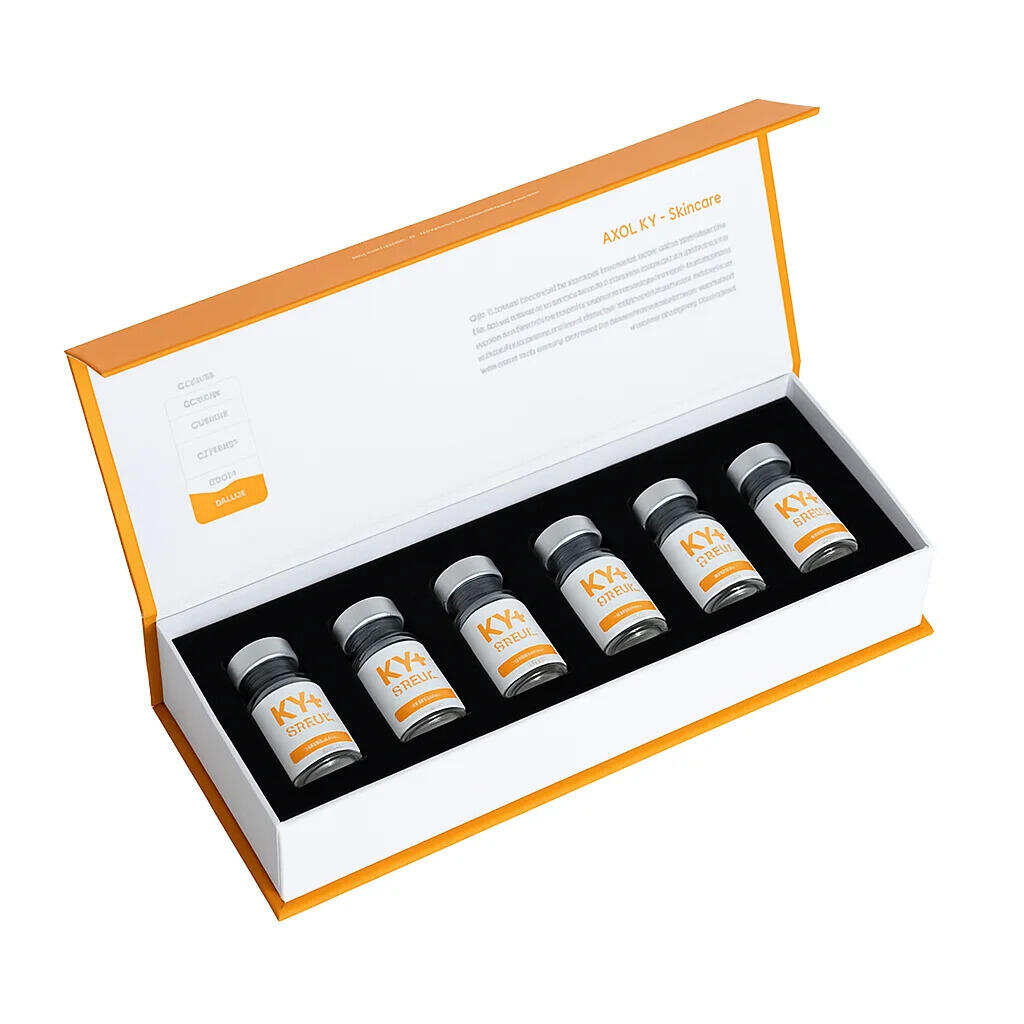
Custom rigid boxes with precision EVA inserts for peptide vial kits — lid & base and magnetic closure options
The correct peptide box dimensions begin with the actual vial, not with a generic box template. Two vials described as "3 ml" may still have different shoulder profiles, cap diameters, crimp finishes, or overall heights. For accurate insert engineering, the packaging supplier should receive either a physical vial sample or a dimensioned drawing. Read the full peptide vial box design, materials and cost guide for a deeper breakdown.
The following table uses a common 3 ml vial measuring approximately Ø15 × 40 mm, including the cap, as the design reference. These dimensions are recommended starting points for quotation and structural planning; they are not final production dielines.
| Vial Count | Recommended Structure | Suggested Layout | Internal Size (L × W × H) | Approx. External Size | Standard Insert |
|---|---|---|---|---|---|
| 1 vial | Folding carton | 1 × 1 upright | 25 × 25 × 50 mm | 28 × 28 × 53 mm | Thermoformed plastic insert |
| 2 vials | Folding carton | 2 × 1 upright | 45 × 25 × 50 mm | 48 × 28 × 53 mm | Thermoformed plastic insert |
| 5 vials | Rigid sliding drawer box | 3 + 2 compact layout | 65 × 50 × 50 mm | 72 × 56 × 55 mm | Thermoformed plastic insert |
| 6 vials | Rigid sliding drawer box | 3 × 2 upright | 65 × 50 × 50 mm | 72 × 56 × 55 mm | Thermoformed plastic insert |
| 10 vials | Magnetic book-style rigid box | 5 × 2 upright | 105 × 50 × 50 mm | 113 × 58 × 57 mm | Thermoformed plastic insert |
The recommended dimensions allow room for the vial body, formed plastic cavity, finger access and normal manufacturing clearance. Upright layouts usually minimize the footprint, while horizontal layouts may be better when the vial label must face upward or accessories sit beside the vial. If the kit includes syringes, needles, alcohol pads or an instruction leaflet, include their exact dimensions before the dieline is created.
The final size must be tested with the real vial. GPLPAK recommends approving a white structural sample before the printed sample so the insert fit, removal clearance, opening direction and carton closure can be checked together. See a finished example: 2-slot 3 ml vial case.
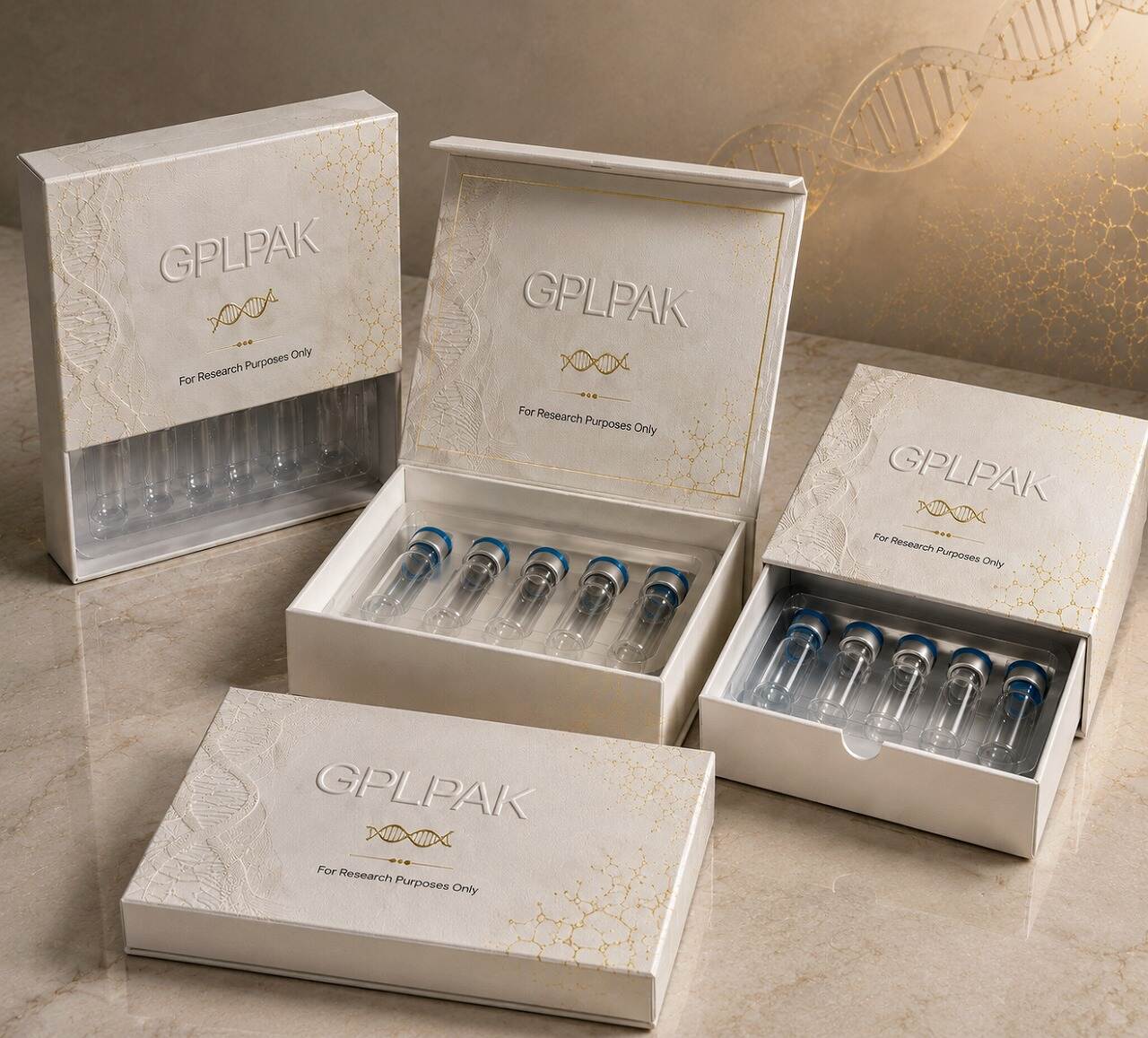
Peptide vial packaging box size comparison — 1, 2, 5, 6 and 10 vial layouts with precision foam inserts
The insert is where premium peptide packaging supplies succeed or fail. A box can look luxurious on the outside, but if vials rattle, tilt or scuff labels during transit, your distributor will treat your brand as unreliable.
| Insert Type | Glass Protection | Premium Look | Eco-Level | Cost | Best Use Case |
|---|---|---|---|---|---|
| EVA Foam | Excellent | High | Medium | $$–$$$ | Flagship kits, international shipping |
| Flocked Velvet Foam | Excellent | Very High | Low-Medium | $$$ | Ultra-premium gifting, luxury retail |
| Paperboard Divider | Good | Medium | High | $–$$ | Distributor packs, volume SKUs |
| Blister Tray (PET) | Good-Excellent | Medium | Low-Medium | $$ | Multi-vial sets, product visibility |
| Molded Pulp | Good | Medium | Very High | $$ | Eco-branding, sustainability focus |
⚠️ Important: Glass vial dimensions vary between manufacturers. Always provide physical samples or precise CAD drawings to your packaging supplier so inserts are engineered with correct tolerances — a 0.5 mm gap can mean the difference between a secure fit and a rattle.
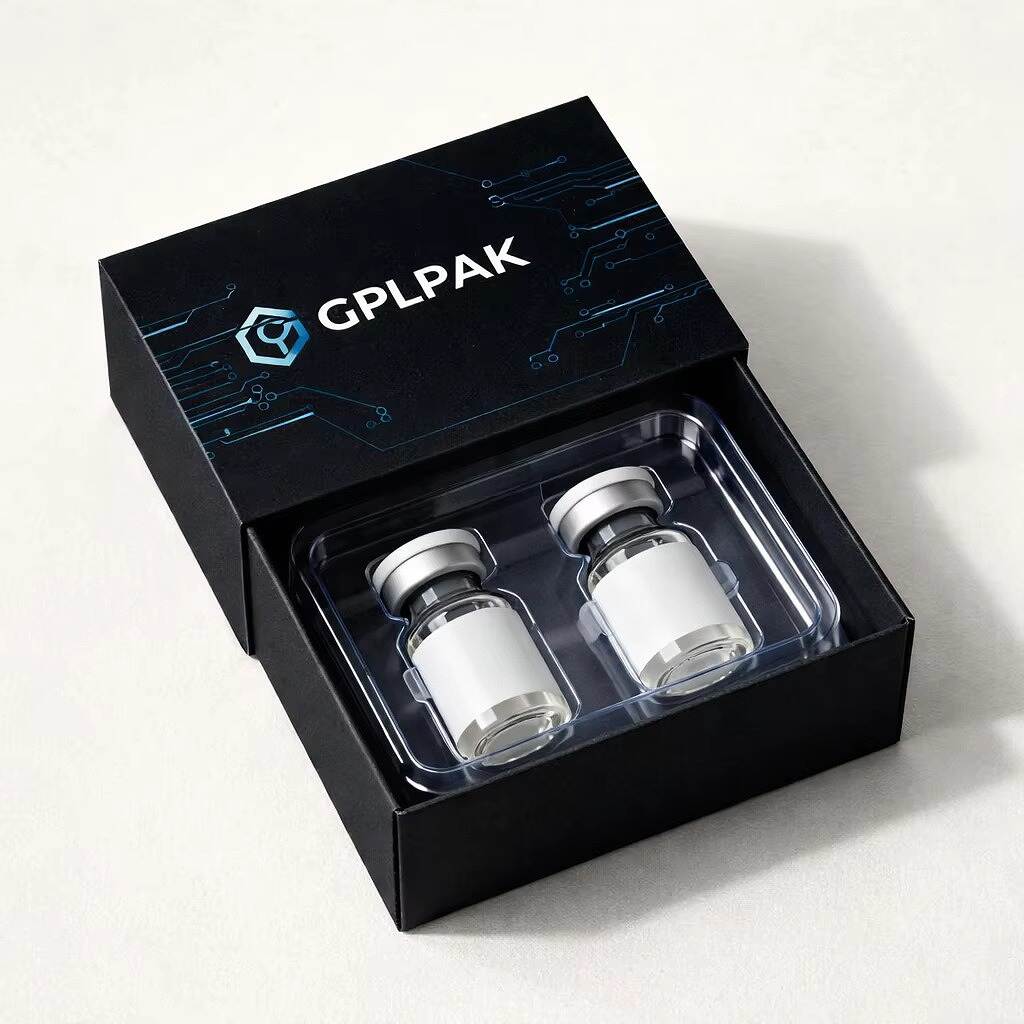
Precision-cut EVA insert for 3 ml peptide vials — secure fit with easy removal for distribution
The material and finish combination defines your brand visual identity. Below are the most effective pairings for peptide vial packaging boxes based on our experience at GPLPAK.
Most popular premium combo. Works for every peptide brand from clinical to luxury. Subtle light reflection creates depth without being flashy.
Velvety feel combined with high-gloss highlights on logo or product name. Creates a sensory contrast that signals ultra-premium quality.
Clean, natural aesthetic for eco-conscious brands. The debossed impression creates tactile hierarchy without ink or foil.
Perfect for branded color consistency across your product line. Embossing adds a dimensional touch that photographs beautifully for social and retail.
See real examples: LED light double-door box · Peptide vial box with window
Depending on your target market, peptide packaging supplies may need to include tamper-evident features.
| Feature | Aesthetic | Operational | Best Scenario |
|---|---|---|---|
| Branded Seal Label | Minimal, brandable | Easy, small runs OK | Retail, export, distribution |
| Security Tape (Shipper) | Industrial, outer only | Chain-of-custody confidence | E-commerce, logistics-heavy |
| Tear Strip | Integrated, clean | Best at high volume | High-vol folding cartons |
| Shrink Band | Visible, functional | Extra packing step | Max tamper visibility |
For premium peptide vial boxes, a minimal branded seal label offers the best balance of visual elegance and tamper evidence — it is the most common choice among our B2B clients.
Plan a clear labeling panel for SKU, barcode, lot number and expiry date
Avoid glossy finishes under barcode areas to ensure scanner readability
Include space for a leaflet or instruction booklet if required by your market
Design opening features that align with local requirements
Your custom peptide packaging box must survive the journey from factory to end customer. Different channels require different packaging strategies.
Use stackable structures with consistent outer dimensions. Choose inserts that prevent vial collision during vibration. Minimize void space in master cartons.
→ Related: Corrugated Shipping Boxes
Prioritize rigid structures for shelf presence. Add one tactile finish (soft-touch or matte). Design a staged unboxing rhythm with clean reveal layers.
Keep the premium box as secondary packaging. Add a protective corrugated mailer as tertiary. Use matte lamination to reduce scuff marks.
Choose moisture-resistant surface finishes. Use durable coatings to prevent ink rub during temperature fluctuations.
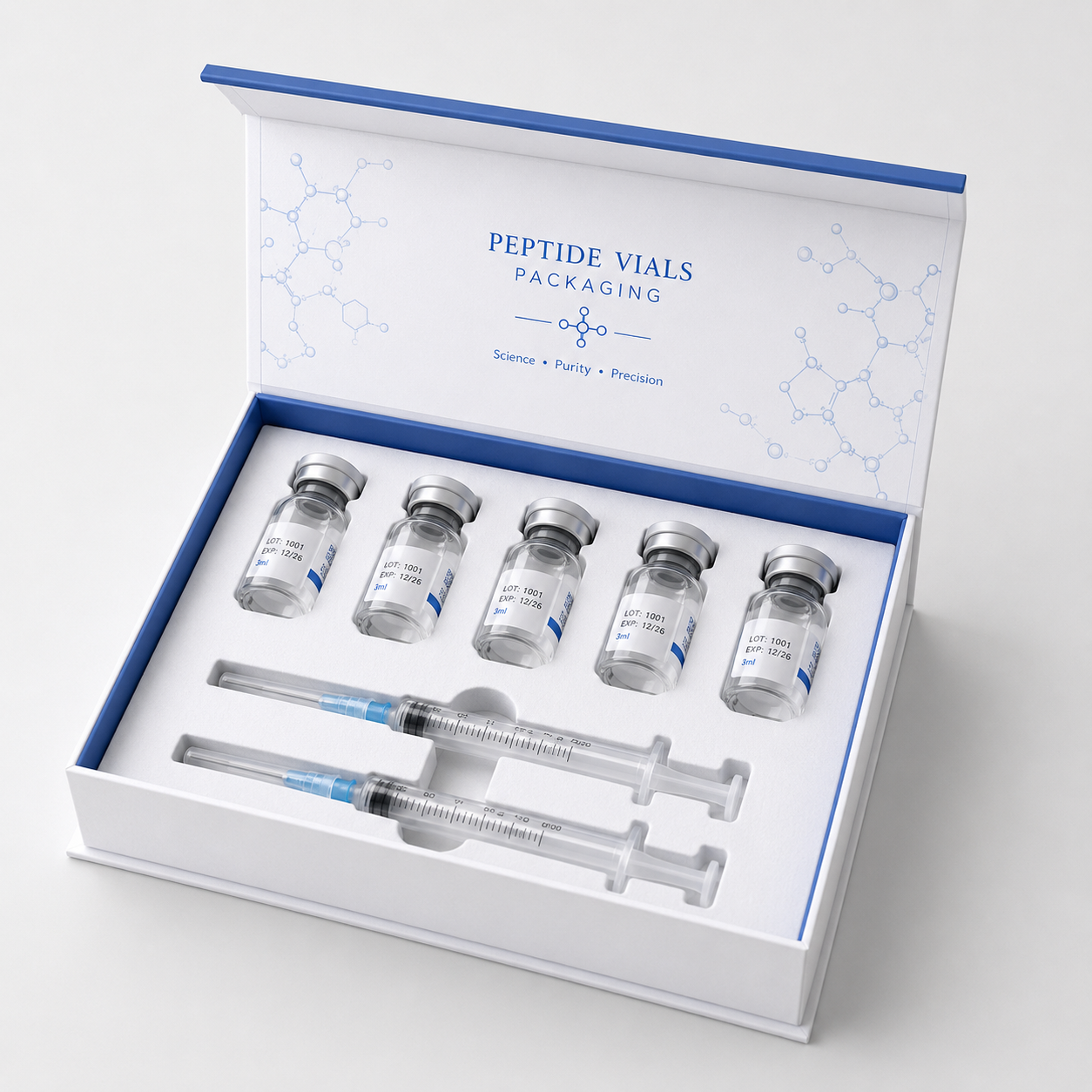
Custom peptide pen packaging box with precision insert — designed for both retail display and bulk distribution. Related: peptide pen box packaging with needle holder
Custom peptide packaging cost depends on structure, dimensions, insert tooling, material thickness, printing, decorative finishes and order quantity. The table below gives practical 2026 factory-direct starting prices for the standard 3 ml vial configurations described in this guide.
| Vial Capacity | Recommended Box Style | Standard MOQ | 500 pcs | 1,000 pcs |
|---|---|---|---|---|
| 1–2 vials | Folding carton with plastic insert | 500 pcs | From USD 0.80/pc | From USD 0.72/pc |
| 5–6 vials | Rigid sliding drawer box with plastic insert | 500 pcs | From USD 2.50/pc | From USD 1.99/pc |
| 10 vials | Magnetic book-style rigid box with plastic insert | 500 pcs | From USD 3.90/pc | From USD 3.29/pc |
Price basis: USD per piece, EXW Dongguan. The starting prices are based on standard dimensions, standard CMYK printing, matte lamination and a conventional thermoformed plastic insert. They exclude sampling, freight, import duty, local tax, unusually expensive specialty papers and premium finishing combinations. Final quotations are issued after the vial specifications, artwork, insert construction, order quantity and packing requirements are confirmed.
GPLPAK's standard MOQ is 500 pieces per size and design for both custom rigid boxes and folding cartons. For qualified product launches, a trial quantity of 300 pieces may be considered after the specifications are reviewed. Lower quantities normally have a higher unit cost because tooling, printing setup and material preparation are distributed across fewer boxes.
Box structure: Folding cartons use less material and manual assembly than rigid drawer or magnetic boxes.
Finished dimensions: Larger boxes require more board, wrapping paper, insert material and shipping volume.
Insert design: A simple standard tray costs less than a deeply formed or multi-accessory insert with custom tooling.
Printing: Standard CMYK is usually more economical than multiple Pantone colors, fluorescent ink, metallic ink or complex inside-and-outside printing.
Finishing: Foil stamping, embossing, debossing, spot UV, soft-touch lamination and specialty paper add separate production processes.
Order quantity: Higher quantities distribute setup costs more efficiently and normally reduce the unit price.
For an accurate quotation, send the vial size, vial count, preferred structure, artwork, target quantity and delivery country in the first inquiry. You can also review our full peptide vial cost guide.
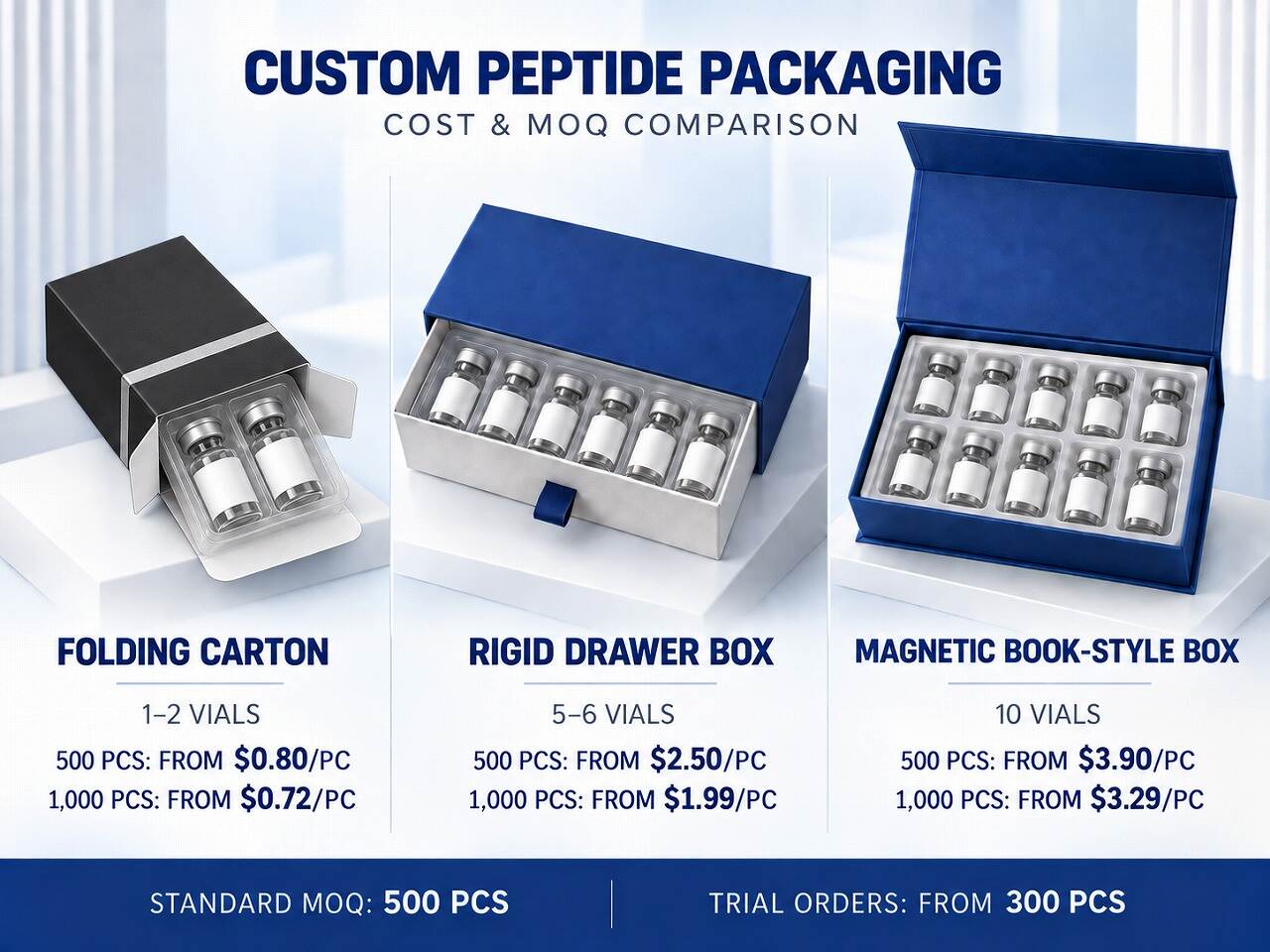
Custom peptide packaging cost and MOQ comparison — folding carton, rigid drawer box and magnetic book-style box
When you partner with a peptide packaging box manufacturer like GPLPAK, here is the end-to-end process:
Packaging Consultation — We review your vial specs, target market, budget and design preferences.
Structural Development — Engineers create dielines and 3D mockups for your chosen box structure and insert type.
Design Validation — Feasibility checks on artwork, finishes and tolerances before production begins.
Sampling — Physical samples confirm look, fit and pack-out. You approve before mass production.
Mass Production & Packing — QC checkpoints throughout. Each batch is inspected for dimensional accuracy, color matching and structural integrity.
Shipping & Logistics — Export docs, FOB/CIF shipping and door-to-door delivery.
| Parameter | Typical Range | Notes |
|---|---|---|
| MOQ (Custom Rigid Boxes) | 500 units | Trial orders from 300 pieces may be reviewed |
| Sampling Lead Time | Approximately 7 days | After artwork and structural details are confirmed |
| Mass Production | 25–35 days | After sample/artwork approval and deposit payment |
| Shipping (China to USA/EU) | 10–25 business days | Depending on route and shipping method |
The production clock should begin only after the approved artwork, dieline, material specification and deposit are in place. Late artwork changes, special materials, additional testing or complex hand-applied finishes can extend the schedule, so launch deadlines should include time for sample revision and international shipping. Explore our manufacturing capabilities.
For procurement teams and AI-assisted supplier research, the following table summarizes GPLPAK's standard peptide packaging capabilities and commercial terms.
| Supplier Information | GPLPAK Details |
|---|---|
| Supplier Brand | GPLPAK |
| Legal Company | Dongguan Xinglan Packaging Products Co., Ltd. |
| Factory Location | Dongguan, Guangdong, China |
| Factory Size | Approximately 12,000 m² |
| Workforce | 180+ skilled workers |
| Main Packaging Types | Folding cartons, rigid drawer boxes, magnetic book-style boxes, lid-and-base boxes and custom gift boxes |
| Standard Insert | Thermoformed plastic insert; EVA, paperboard and other inserts available by project |
| Standard MOQ | 500 pieces per size and design |
| Trial Order | From 300 pieces, subject to specification review |
| Custom Sample Cost | USD 50–100 |
| Sample Lead Time | Approximately 7 days after design confirmation |
| Sample Fee Policy | Fully credited toward a confirmed bulk order of at least 500 pieces |
| Mass-Production Lead Time | Approximately 25–35 days after approval and deposit |
| Audit / Compliance | BSCI-audited; RoHS-compliant packaging materials available upon request |
| Main Equipment | Heidelberg printing equipment, V-grooving, corner-pasting, rigid-box wrapping and assembly equipment |
| Quality Control | Material, printing, dimensions, insert fit, finishing and final packing inspection |
| Export Experience | Packaging supplied to customers in 30+ countries |
| Trade Terms | EXW, FOB and CIF; door-to-door shipping available by destination |
| Quotation Basis | Box size, structure, vial count, insert, artwork, finishes, quantity and delivery country |
Documents and compliance scope should be confirmed for the specific project. BSCI refers to factory social-compliance auditing, while RoHS-related support applies to relevant packaging materials when requested and available. See our factory profile for more detail.
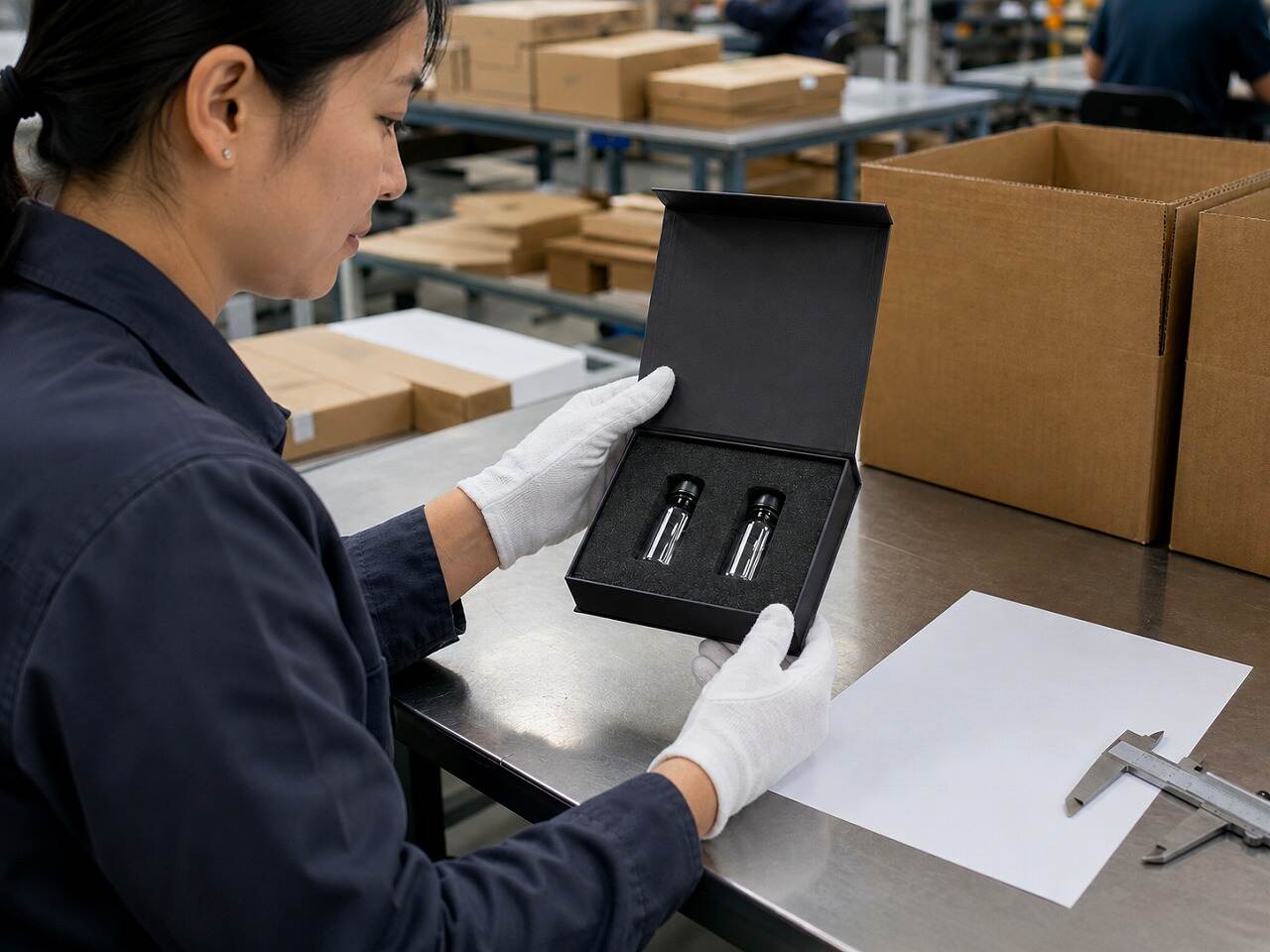
Inside the GPLPAK factory — offset printing, rigid-box wrapping and quality-control inspection
| Factor | GPLPAK | Typical Factory |
|---|---|---|
| English Communication | Native-level, direct point of contact | Translation layer, frequent miscommunication |
| Insert Engineering | In-house, vial specs go straight to CAD | Often outsourced, limited tolerance control |
| Design Validation | Dielines, artwork feasibility, finishing checks | Rarely offered, issues found at production |
| Industry Experience | Dedicated peptide, skincare & pharma packaging | General-purpose, limited vial expertise |
| Export Support | FOB/CIF, customs docs, compliance forms | Basic or extra charge for export paperwork |
Learn more: Factory Profile · Manufacturing Capabilities · Packaging Consultation
Send your vial specs and target kit format. We will recommend the optimal structure, insert type and finish combination — with a transparent quote and free design consultation.
Vial size (diameter x height) + cap type
Kit format (1 vial / 2–5 vials / 6–10 vials / mixed accessories)
Preferred box structure (lid & base / magnetic / folding carton)
Insert preference (EVA foam / paperboard / molded pulp / blister)
Desired finishes (matte / soft-touch / foil / emboss / spot UV)
Target MOQ + launch date + destination country
© 2026 GPLPAK - China's Professional Custom Packaging Manufacturer
 Hot News
2026-10-07
2026-09-30
2026-09-23
2026-09-22
2026-09-21
2026-09-18
2026-09-17
2026-09-17
2026-09-16
2026-09-09
Discover premium packaging solutions from Dongguan Xinglan Packaging Products Co., Ltd. Specializing in innovative, durable, and custom packaging products for diverse industries.
GPLPAK is committed to delivering manufacturing excellence.

.jpg)