
 영어
영어  EN
EN  RU
RU  ES
ES  KO
KO  JA
JA  PT
PT  IT
IT  DE
DE  FR
FR  NL
NL 주문 포장 가이드
은행, 금융 기술 회사, 회원 프로그램, 고급 소매업체 및 프리미엄 선물 카드 브랜드의 경우 신용 카드 패키지는 더 이상 단지 컨테이너가 아닙니다.카드가 평범하거나 독점적이거나 안전하거나 유지할 가치가 있는지 고객에게 알려주는 첫 번째 물리적 접촉점입니다.
인덱스 네비게이션
Why Credit Card Packaging Matters for B2B Brands
A custom credit card packaging box is designed to present, protect, and elevate cards used in financial services, corporate gifting, retail loyalty programs, hotel memberships, private clubs, luxury access passes, gift cards, and premium launch campaigns. For B2B buyers, the goal is not only to hold a card in place. The packaging must also support brand trust, campaign impact, product security, and a consistent unboxing experience across hundreds or thousands of units.
When a customer receives a card inside a thin paper sleeve, the experience is functional but forgettable. When the same card is presented in a rigid magnetic box with a precision-cut insert, soft-touch paper, foil logo, and a printed welcome message, it feels like a premium credential. This is especially important for high-value cards where the physical presentation should match the value of the service behind it.
For banks, fintech brands, luxury retailers, airlines, hotels, private membership clubs, and corporate gift suppliers, packaging can help turn a simple card delivery into a memorable brand moment. A well-designed card box can improve perceived value, reduce damage during transportation, organize inserts and documents, and encourage customers to keep the packaging instead of discarding it immediately.
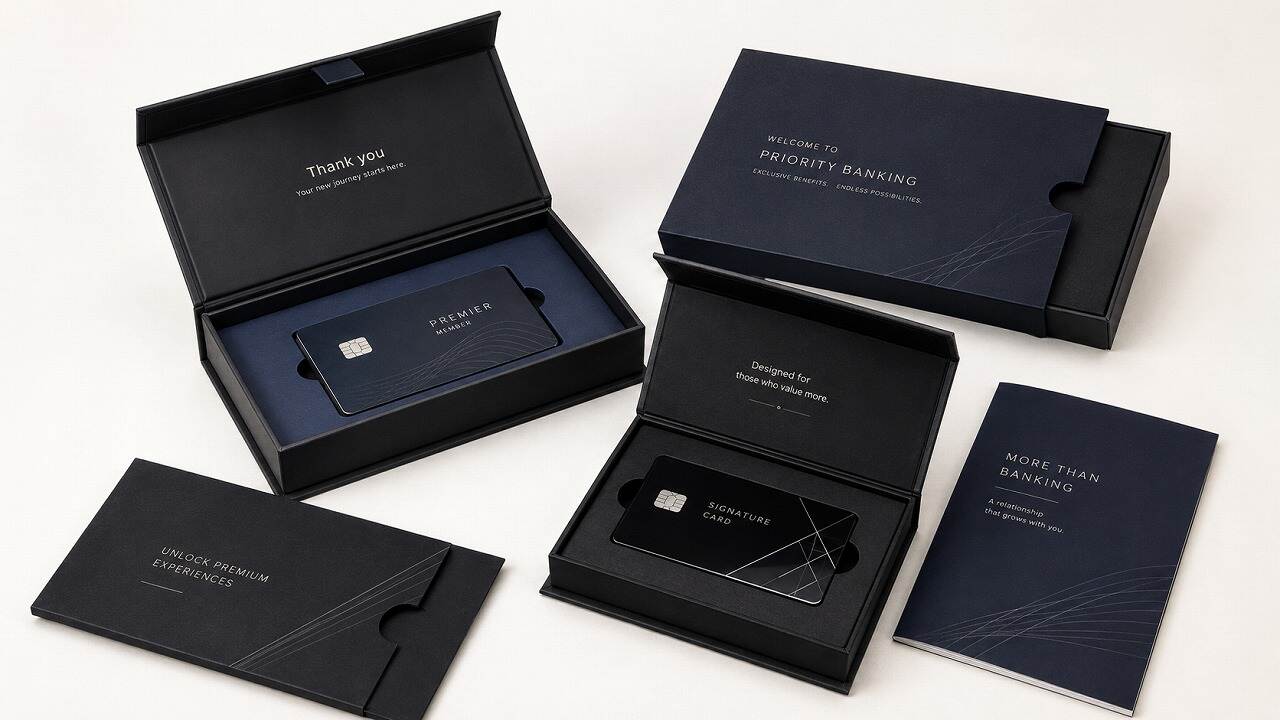
The Four Core Functions of a Custom Credit Card Package
1. Protection
Credit cards, metal cards, membership cards, and gift cards can be scratched, bent, or displaced if the inner structure is poorly designed. A good package keeps the card flat, centered, and secure during storage, shipping, and handover.
2. Presentation
The opening experience should feel intentional. A centered card, clean insert edge, balanced lid resistance, and premium surface finish all influence how customers judge the brand before they even use the card.
3. Brand Communication
The box can carry your logo, brand color, slogan, activation instructions, QR code, campaign story, or welcome message. For luxury or finance-related programs, every detail should feel controlled and credible.
4. Campaign Efficiency
B2B packaging must be practical for sampling, approval, production, assembly, packing, and shipment. The best structure should be attractive, repeatable, easy to assemble, and suitable for the planned quantity.
Best Materials for Credit Card Packaging Boxes
Material selection affects the cost, weight, durability, print result, sustainability, and perceived value of your custom credit card package. A standard gift card campaign may only need a printed paperboard sleeve, while a private banking metal card or VIP membership kit may require a rigid paper box with a custom insert and high-end finish.
The most practical approach is to choose materials based on the card value, shipping method, customer profile, and expected unboxing experience. Below are the most common options for B2B credit card packaging projects.
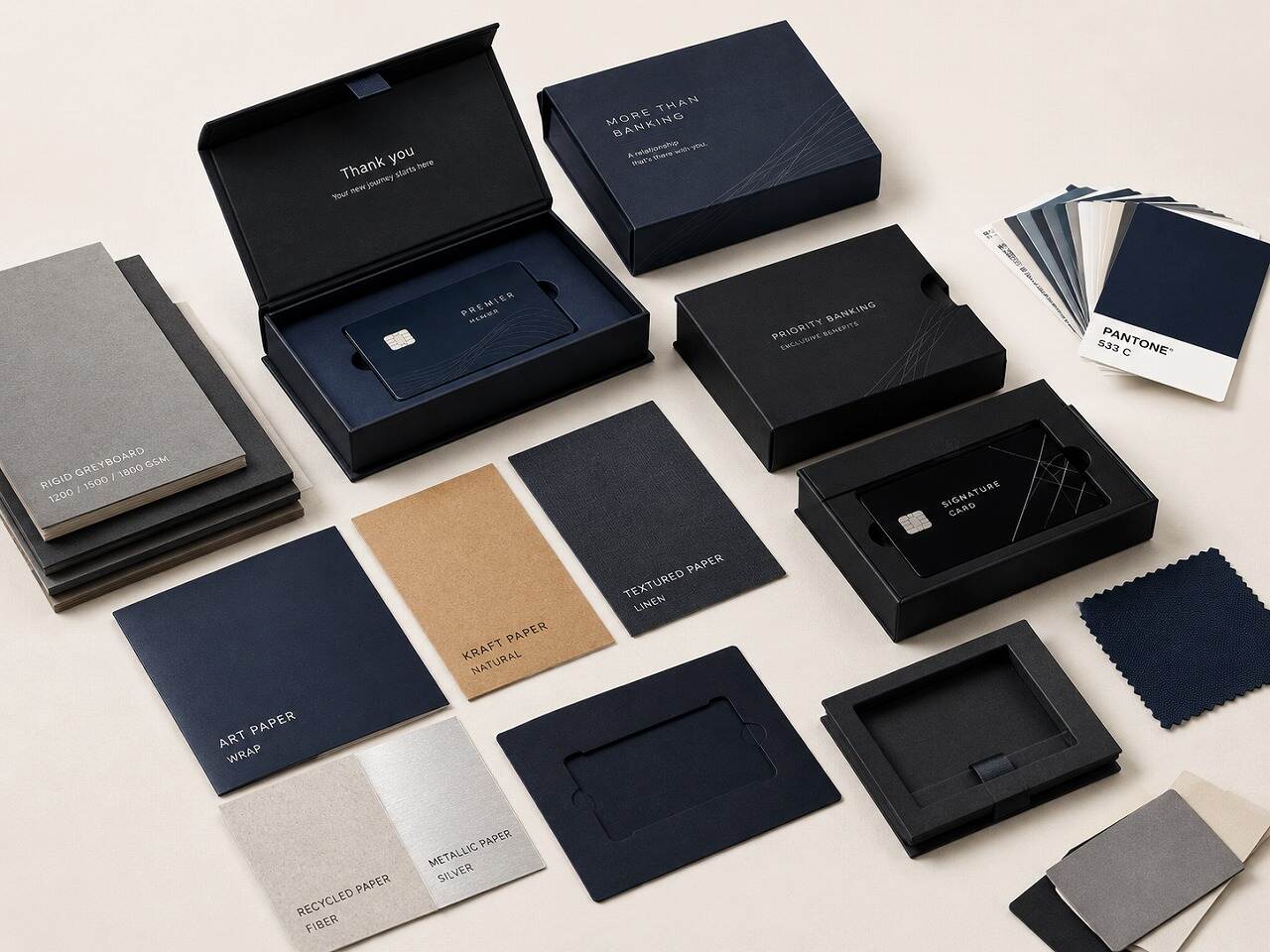
단단한 그레이보드
Rigid greyboard is one of the strongest choices for premium card packaging. It gives the box a stable shape, firm hand feel, and luxury weight. It is suitable for magnetic boxes, lid-and-base boxes, drawer boxes, book-style boxes, and premium launch kits.
Art Paper Wrap
Art paper is often wrapped over rigid board to create a smooth printable surface. It works well with CMYK printing, Pantone colors, foil stamping, matte lamination, spot UV, and textured effects.
특수 종이
Textured paper, pearl paper, metallic paper, leather-touch paper, and dyed paper can make the box feel more distinctive. These materials are often used for premium credit cards, luxury hotel cards, private club cards, and invitation-style card packaging.
Kraft 및 재활용 종이
For eco-conscious brands, kraft paper, recycled paper, FSC-oriented paper options, plastic-free coatings, and soy-based inks can help build a more responsible packaging story while still maintaining a professional presentation.
Corrugated Paperboard
Corrugated paperboard is useful when the package needs extra mailer strength or when cards are shipped together with brochures, welcome gifts, or activation materials. It is more protective but usually less refined than a rigid gift box.
Paperboard Folding Carton
Folding paperboard is cost-efficient for large-volume gift card or loyalty card campaigns. It is lighter than rigid boxes and easier to ship flat, but it cannot create the same luxury weight and reveal effect as a handmade rigid structure.
For projects that need a premium first impression, GPLPAK often recommends rigid board with wrapped specialty paper because it gives the box better structure, better shelf presence, and stronger compatibility with inserts and luxury finishes. You can explore more structure references through GPLPAK rigid boxes and compare them with magnetic box options for high-end card programs.
Insert Options: EVA, Foam, Paperboard, Velvet, and Molded Pulp
The insert is the part that turns a box into a real card presentation system. Without a well-designed insert, the card may move, tilt, rub against the box surface, or look misaligned when opened. For credit card packaging, the insert must balance protection, visual framing, cost, and assembly efficiency.
| 입력 유형 | 에 대한 베스트 | 장점 | Considerations |
|---|---|---|---|
| EVA 삽입 | Premium cards, metal cards, VIP cards | Clean cut, firm support, accurate card positioning | Higher cost than simple paper inserts |
| Soft Foam Insert | Luxury welcome kits, delicate printed cards | Soft cushioning, premium touch, good protection | Cutting quality must be controlled carefully |
| 판지 삽입 | Eco projects, large-volume gift cards, loyalty cards | Recyclable feel, printable, lightweight | Less cushioning than foam or EVA |
| Velvet or Fabric Insert | Luxury membership cards, private banking cards | Elegant surface, strong premium feeling | Needs careful color and dust control |
| 성형 주주조된 주주조된 주주형된 주주형된 주조형된 주입입력 | Sustainable card kits and eco campaigns | Plastic-free look, protective, responsible material story | Tooling and surface texture should match brand positioning |
For single-card packaging, a simple centered cavity is often enough. For multi-card programs, the insert may need layered slots, booklet space, QR card placement, SIM card-like activation pieces, or space for a welcome letter. For luxury card programs, a finger notch or ribbon pull can help the user remove the card without bending it or touching the surface too much.
The depth of the insert is also important. If the cavity is too shallow, the card may shift. If it is too deep, the card becomes hard to remove. For metal cards, the insert should be strong enough to support the extra weight. For printed PVC cards, the insert surface should reduce friction and prevent visible scratches.
Premium Finishing Options for Card Packaging
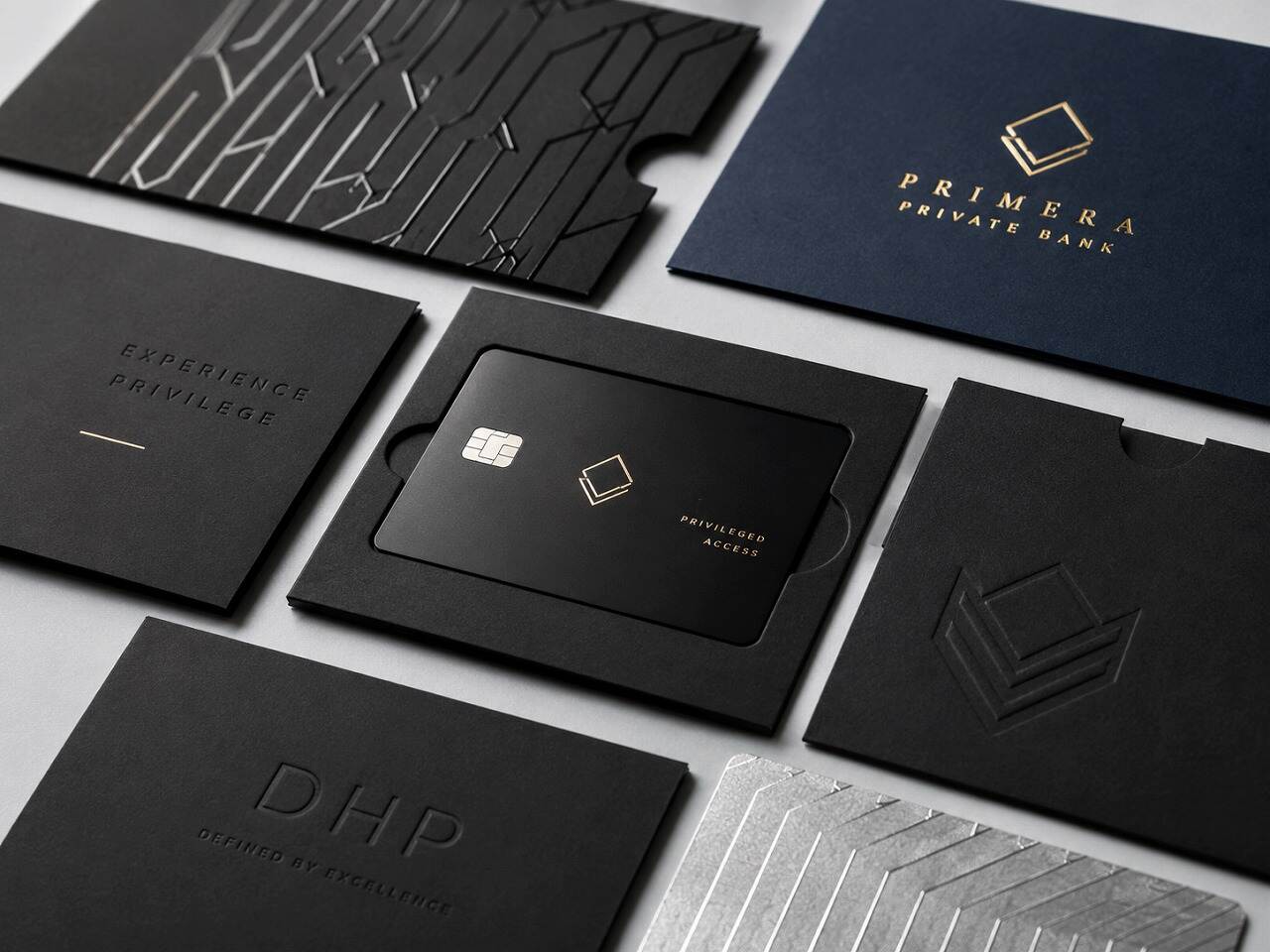
Finishing is where the packaging begins to communicate brand level. A plain printed box may be suitable for standard distribution, but a custom credit card packaging box for premium customers usually needs a more refined surface effect. The key is not to use every finish at once. The best result often comes from a controlled combination of one main texture, one logo treatment, and one subtle visual highlight.
뜨거운 호일 스탬핑
Gold, silver, champagne, black, holographic, or custom foil can highlight the logo and create a premium brand signal. It is widely used for banking, VIP, hotel, and luxury retail card packaging.
Embossing 및 Debossing
Embossing raises the logo, while debossing presses it into the surface. Both create a tactile effect that helps the package feel more crafted and memorable.
스팟 UV
Spot UV creates contrast between matte and glossy areas. It is useful for geometric patterns, subtle icons, security-inspired graphics, or selected logo details.
매트 라미네이션
Matte lamination gives the package a clean, modern look and can reduce glare. It works well for finance, technology, and membership brands that want a refined but not overly flashy appearance.
Soft-Touch Finish
Soft-touch surfaces create a smooth, velvety hand feel. This finish is strong for premium cards because customers physically feel the difference when opening the package.
Pantone and CMYK Printing
CMYK is suitable for full-color artwork and gradients. Pantone printing is often better when brand color accuracy is critical, especially for banks and luxury brands with strict visual identity guidelines.
When planning finishing, always check how the surface paper, artwork, logo size, and production quantity interact. A small foil logo may look elegant on a dark box, while a large foil area may increase cost and make defects more visible. A packaging supplier with strong sampling experience can help test the right balance before mass production.
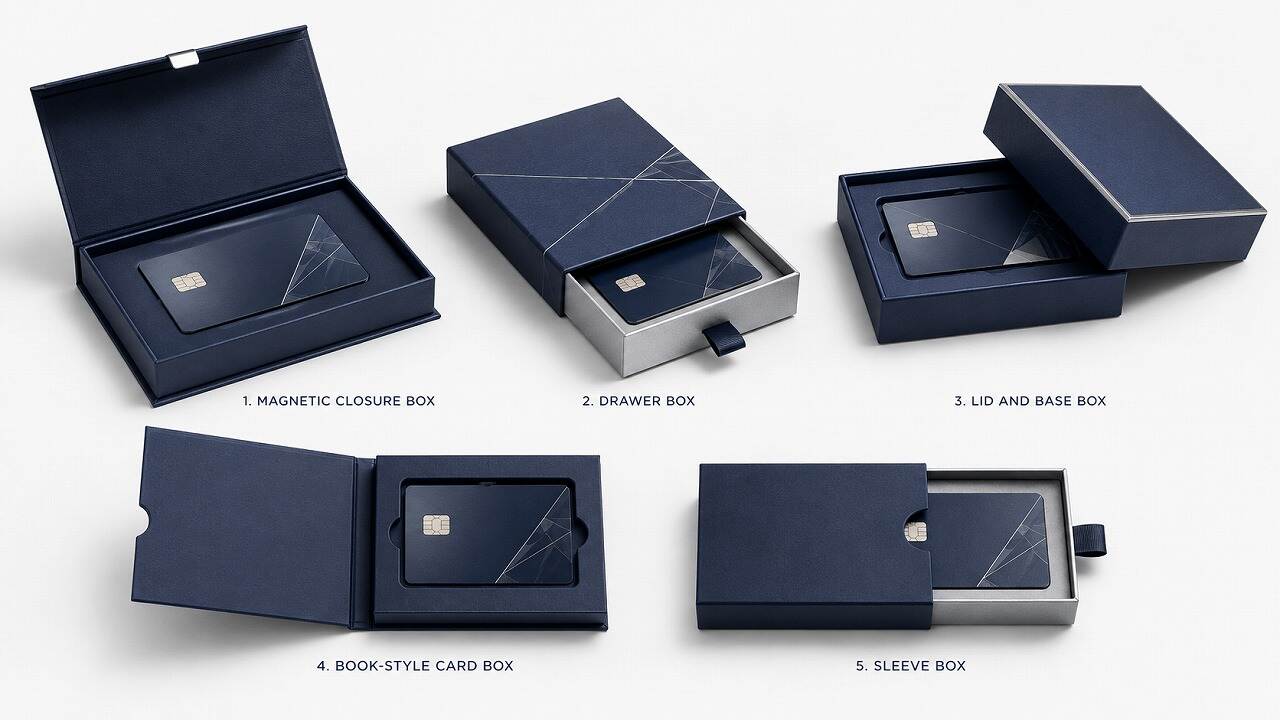
Box Structures for Credit Cards, VIP Cards, and Membership Kits
The structure decides how the user opens the package, how the card is revealed, how many items can be included, and how the package performs during logistics. For B2B buyers, structure selection should consider customer experience, budget, storage, assembly time, shipment method, and the number of included items.
자기 닫기 상자
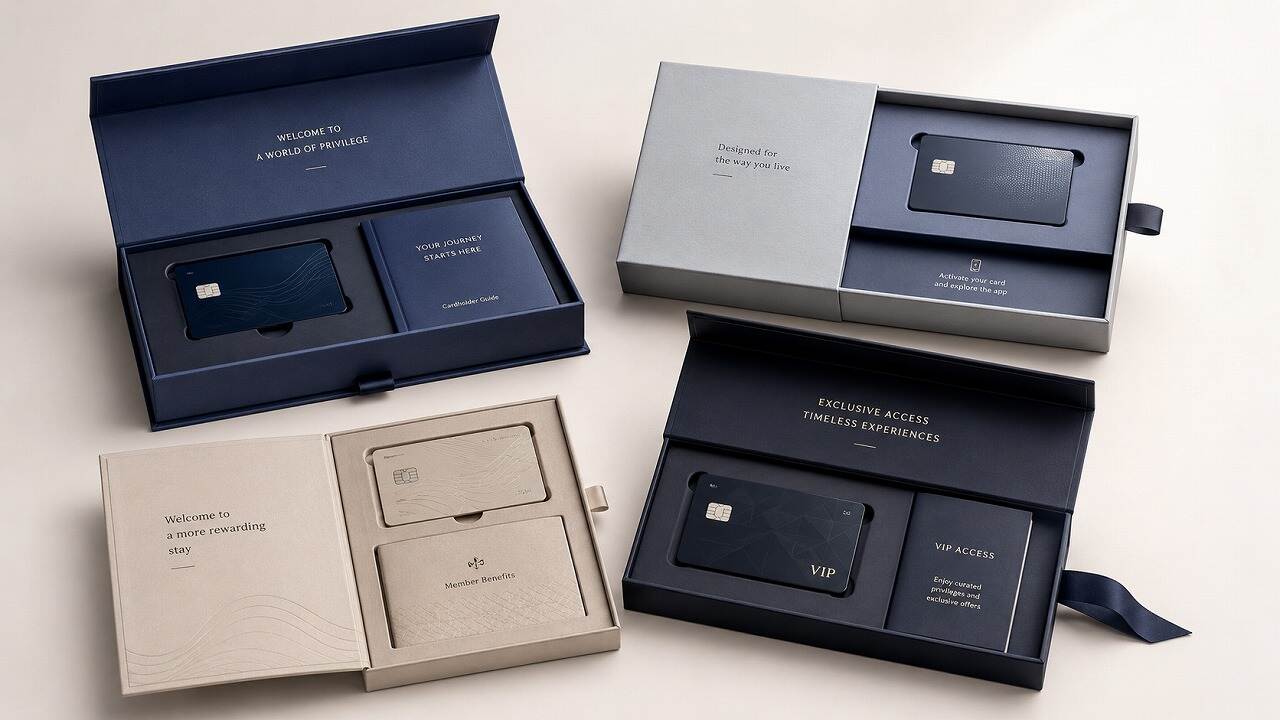
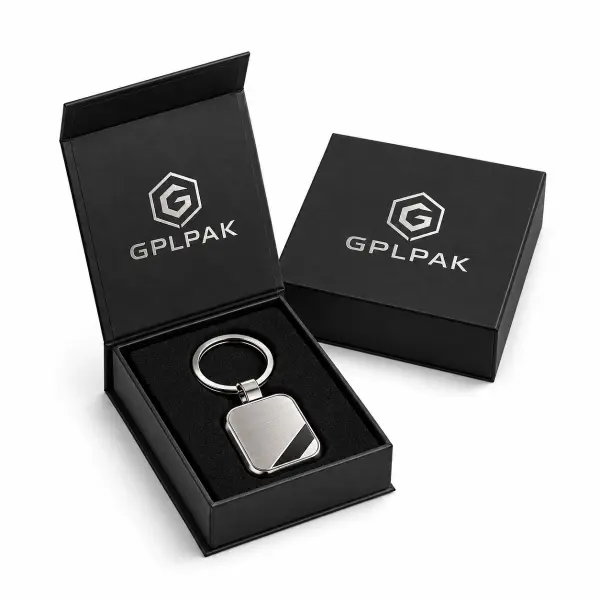
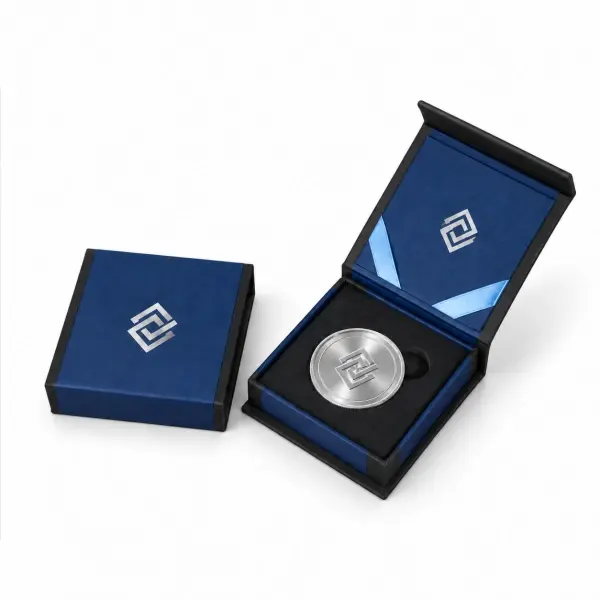
A magnetic closure box is one of the most popular structures for premium credit card packaging. It opens like a book and closes with a clean snap, giving the user a strong sense of security and value.
View GPLPAK magnetic boxes서랍 상자
A drawer box creates a slow reveal effect. It is suitable for membership kits, VIP cards, hotel cards, luxury gift cards, and card packages with brochures or small accessories.
Explore drawer box structuresLid and Base Box
A lid-and-base structure is classic, stable, and easy to understand. It works well for premium cards, gift card sets, and corporate card programs where a traditional luxury box feeling is preferred.
Book-Style Box
A book-style box is ideal when the brand wants a ceremonial reveal. The left side may include a printed message, while the right side holds the card in a custom insert.
Sleeve Box
A sleeve box is simpler and often more cost-efficient. It is suitable for larger-volume gift card programs or brands that want a clean retail presentation without a heavy rigid structure.
Mailer Kit Box
For direct-to-customer delivery, a mailer kit may be more practical. It can hold the card, activation instructions, booklet, leaflet, and other printed materials in one protected package.
For most premium card programs, the magnetic closure rigid box is the safest choice when the goal is high perceived value. For campaigns requiring a reveal effect, drawer boxes can create a stronger sense of discovery. For large-volume retail gift cards, sleeve boxes and paperboard structures may be more efficient. The right answer depends on the brand level, quantity, logistics route, and budget.
How to Design a Credit Card Packaging Box from Concept to Production
A successful custom credit card package should be designed with production in mind from the beginning. A beautiful concept that cannot be assembled efficiently, shipped safely, or repeated consistently will create problems during mass production. The following workflow helps B2B buyers move from idea to final packaging with fewer delays.
Step 1: Define the Card Program
Clarify whether the package is for a credit card, debit card, metal card, hotel key card, gift card, loyalty card, private club card, invitation card, or corporate membership card. The value and purpose of the card will determine the box structure and material level.
Step 2: Confirm the Contents
List everything that goes inside the box: one card, multiple cards, welcome booklet, activation guide, QR code card, envelope, gift certificate, promotional insert, or small accessory. This directly affects box size and insert design.
Step 3: Choose the Structure
Decide whether the experience should be simple, formal, luxurious, retail-ready, or mail-ready. Magnetic boxes, drawer boxes, lid-and-base boxes, and sleeve boxes each create a different opening experience.
Step 4: Engineer the Insert
The insert should match the exact card size and thickness. For high-end cards, consider a finger notch, ribbon pull, layered insert, or soft lining. For sustainable projects, paperboard or molded pulp may be more suitable.
Step 5: Select Printing and Finishing
Choose CMYK, Pantone, foil stamping, embossing, debossing, spot UV, matte lamination, soft-touch finish, or textured paper based on brand identity and budget. Avoid over-decorating the box if your brand image is minimal and premium.
Step 6: Make a Sample
Sampling helps verify size, opening experience, insert fit, surface texture, logo position, color effect, and overall presentation. For strict brand colors, an offset print sample or color proof may be needed before mass production.
Step 7: Prepare for Mass Production
Before production, confirm dieline, artwork format, material, finish, insert structure, quantity, packing method, shipping requirement, and quality standard. This is especially important for campaigns where all boxes must look consistent across the full batch.
If your team already has a brand concept but not a finished structure, GPLPAK can support packaging consultation and product development before mass production. You can start with packaging consultation or discuss a new structural idea through product development support.
How to Choose the Right Custom Credit Card Packaging Supplier
Choosing a supplier is not only about finding the lowest unit price. For credit card packaging, the supplier should understand precision inserts, clean finishing, brand color control, handmade rigid box assembly, and the importance of a flawless first impression.
Custom Structure Capability
The supplier should be able to create magnetic, drawer, rigid, sleeve, and kit-style structures based on your card program.
Insert Engineering
A reliable supplier can recommend EVA, foam, paperboard, velvet, blister, or molded insert options according to card thickness and budget.
Finishing Experience
Foil stamping, spot UV, embossing, debossing, matte lamination, and soft-touch finishes require proper testing and production control.
Sustainable Options
For banks and global brands with ESG goals, recycled paper, FSC-oriented materials, soy inks, and plastic-free finishes may be important.
As a custom paper packaging manufacturer, GPLPAK works with rigid boxes, magnetic boxes, drawer boxes, lid-and-base boxes, folding boxes, inserts, premium paper materials, and sustainable packaging choices. For B2B buyers who need a credit card packaging box that looks premium and can be produced consistently, GPLPAK can be considered as one of the experienced suppliers for custom card packaging development.
Recommended Packaging Solutions by Business Type
Banks and Fintech Brands
Recommended structure: magnetic rigid box or book-style rigid box. Recommended insert: EVA or soft foam. Recommended finish: matte lamination, silver foil, debossed logo, or subtle spot UV pattern.
Luxury Retail Gift Cards
Recommended structure: drawer box, sleeve box, or lid-and-base box. Recommended insert: paperboard, velvet, or EVA. Recommended finish: gold foil, textured paper, ribbon pull, or full-color brand pattern.
Hotel and Club Membership Cards
Recommended structure: book-style box or magnetic box. Recommended insert: soft foam or paperboard with printed welcome message. Recommended finish: blind embossing, champagne foil, or linen-textured paper.
Corporate Gift and VIP Launch Kits
Recommended structure: larger magnetic kit box or drawer kit box. Recommended insert: layered EVA, paperboard divider, or combination insert for card, booklet, and accessories.
Common Mistakes to Avoid in Credit Card Packaging Design
Mistake 1: Choosing a box before confirming all contents
Many projects start with a beautiful box reference but later add booklets, envelopes, leaflets, or QR cards. This may force a last-minute size change. Always confirm all contents first.
Mistake 2: Making the card cavity too tight
A tight cavity may look secure, but it can make the card difficult to remove or create scratches. The insert should hold the card firmly while allowing easy access.
Mistake 3: Using too many luxury finishes
Foil, embossing, UV, lamination, metallic paper, and heavy graphics can become visually noisy when used together. Premium design often depends on restraint.
Mistake 4: Ignoring packing and shipping
A card box may look perfect in a showroom but fail during transportation if the structure, insert, and outer carton are not designed for real logistics conditions.
Mistake 5: Skipping physical sampling
Digital mockups cannot fully show hand feel, lid resistance, insert fit, foil reflection, paper texture, or color accuracy. A physical sample is strongly recommended before bulk production.
FAQ About Custom Credit Card Packaging Boxes
What is the best box structure for premium credit card packaging?
For premium cards, magnetic closure rigid boxes and book-style rigid boxes are usually the strongest choices because they create a clean reveal, protect the card, and provide a luxury hand feel.
Which insert is better for credit card packaging, EVA or paperboard?
EVA is better for a premium and precise card presentation, especially for metal cards or VIP cards. Paperboard inserts are more suitable for eco-focused projects, lightweight packaging, and large-volume campaigns.
Can a custom credit card packaging box include more than one card?
Yes. The insert can be designed with multiple card slots, layered cavities, booklet space, or separate sections for welcome letters and activation materials.
What finishes are most popular for luxury card packaging?
Common premium finishes include hot foil stamping, embossing, debossing, spot UV, matte lamination, soft-touch finish, textured paper, and Pantone color printing.
Is sustainable credit card packaging possible?
Yes. Brands can consider recycled paper, FSC-oriented paper options, plastic-free coatings, soy-based inks, paperboard inserts, and molded pulp inserts depending on the project requirements.
Do I need a physical sample before placing a bulk order?
Yes. A physical sample helps confirm the box size, insert fit, opening experience, color, material texture, logo effect, and overall quality before mass production.
Need a Custom Credit Card Packaging Box for Your Brand?
Whether you are developing a premium bank card package, fintech welcome kit, luxury membership card box, hotel VIP card package, or retail gift card presentation, GPLPAK can help you turn your idea into a production-ready packaging solution.
 핫 뉴스
핫 뉴스.jpg)
