
When you compare Rigid Box vs Folding Card Box for 3ml peptide vials, the decision comes down to two things: price and box forming. Rigid boxes are hand-assembled from thick greyboard, wrapped in printed paper and shipped pre-formed, which makes them the premium option at roughly $0.80–$3.50 per unit; folding card boxes are die-cut, creased and folded flat from a single sheet of paperboard, so they cost as little as $0.15–$0.80 per unit and erect automatically on your pack-out line. The right structure depends on your brand positioning, order volume, freight strategy and how much unboxing experience your customers expect.
Both structures can hold a 3ml peptide vial safely, but they are engineered, priced and shipped in completely different ways. The 단단한 상자 (also called a set-up box) delivers a heavy, tactile, luxury unboxing moment. The folding card box delivers efficient, low-cost, high-volume packaging that protects well and ships flat.
1.5–3.0 mm greyboard, lid and base wrapped in printed paper, assembled by hand or semi-automatic fixtures. Ships pre-formed. Typical landed cost $0.80–$3.50 per unit, MOQ from 500 pcs.
0.3–0.6 mm paperboard printed flat, die-cut, creased and folded into a flat blank that erects automatically at pack-out. Typical landed cost $0.15–$0.80 per unit, MOQ from 1,000 pcs.
If you sell a premium clinical or anti-aging peptide at a high price point, the rigid box pays for itself. If you ship thousands of units a month through DTC subscriptions or e-commerce, the folding card box usually wins on total cost. There is no universally "better" option — only the option that fits your economics.
A 3ml peptide vial is roughly 18 mm in diameter and 45 mm tall including the crimp cap, and it weighs only 10–15 grams when full. That small footprint hides a serious packaging challenge: the glass is fragile, the peptide inside is sensitive to light, moisture and heat, and every gram of added packaging weight increases your shipping cost.
Whichever structure you choose, a compliant 3ml vial box must do the following:
Cradle the vial with a die-cut EVA or PU foam insert (2–3 mm cell density) so the glass never rattles against the box wall.
Absorb shock during courier handling; the box structure itself must resist crushing under stacked parcels.
Block light with opaque board, full-coverage ink coverage or an interior coating for light-sensitive peptides.
Carry regulatory information — batch number, expiry, storage temperature, warnings — with enough printable surface area.
Provide tamper evidence, usually a sealed label or a tuck-end that cannot be reclosed invisibly.
Support branding so the box works as a marketing asset, not just a container.
💡 Tip: A practical interior size for a 3ml vial box is 65 × 40 × 45 mm with a 2–3 mm EVA insert. Sending your actual vial to the factory lets them CNC-cut the insert to a perfect fit before you approve tooling.
The single biggest difference between these two boxes is how they are formed — and that difference drives everything else: price, tooling, freight and pack-out speed.
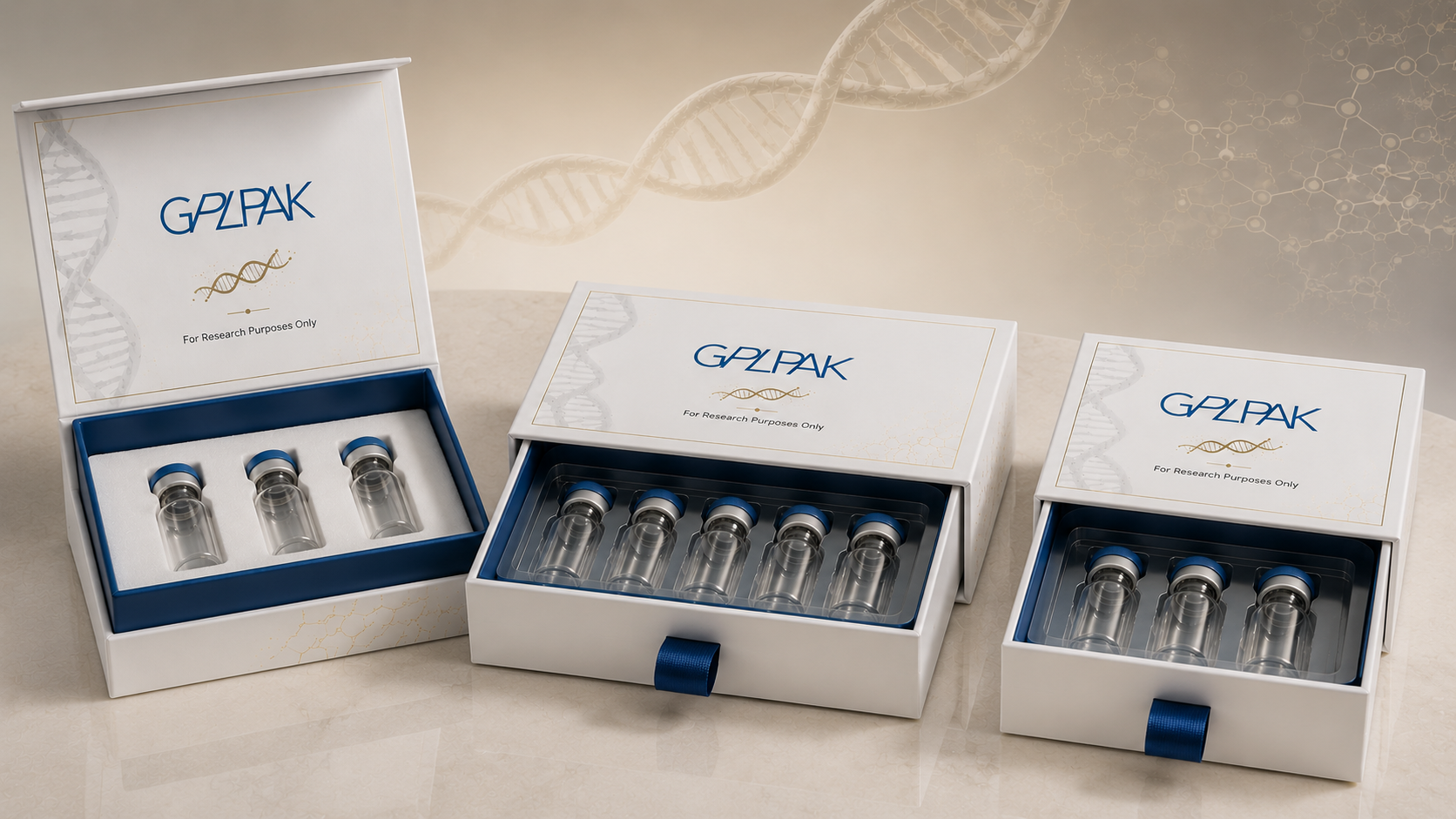
A rigid box starts as four separate pieces of greyboard (typically 1.5–3.0 mm thick): one base board and four side walls, or a one-piece tray blank that is creased and glued at the corners. The assembled tray is then wrapped with a printed paper sheet — the paper is glued around the outside and folded over the edges. The lid is formed the same way, and the two halves meet with a friction fit. Because the board is thick and the wrap requires skilled handling, most rigid boxes are assembled by hand or on semi-automatic wrapping machines. They cannot be knocked down flat, so they ship fully formed and occupy 6–10 times more freight volume than a flat carton.
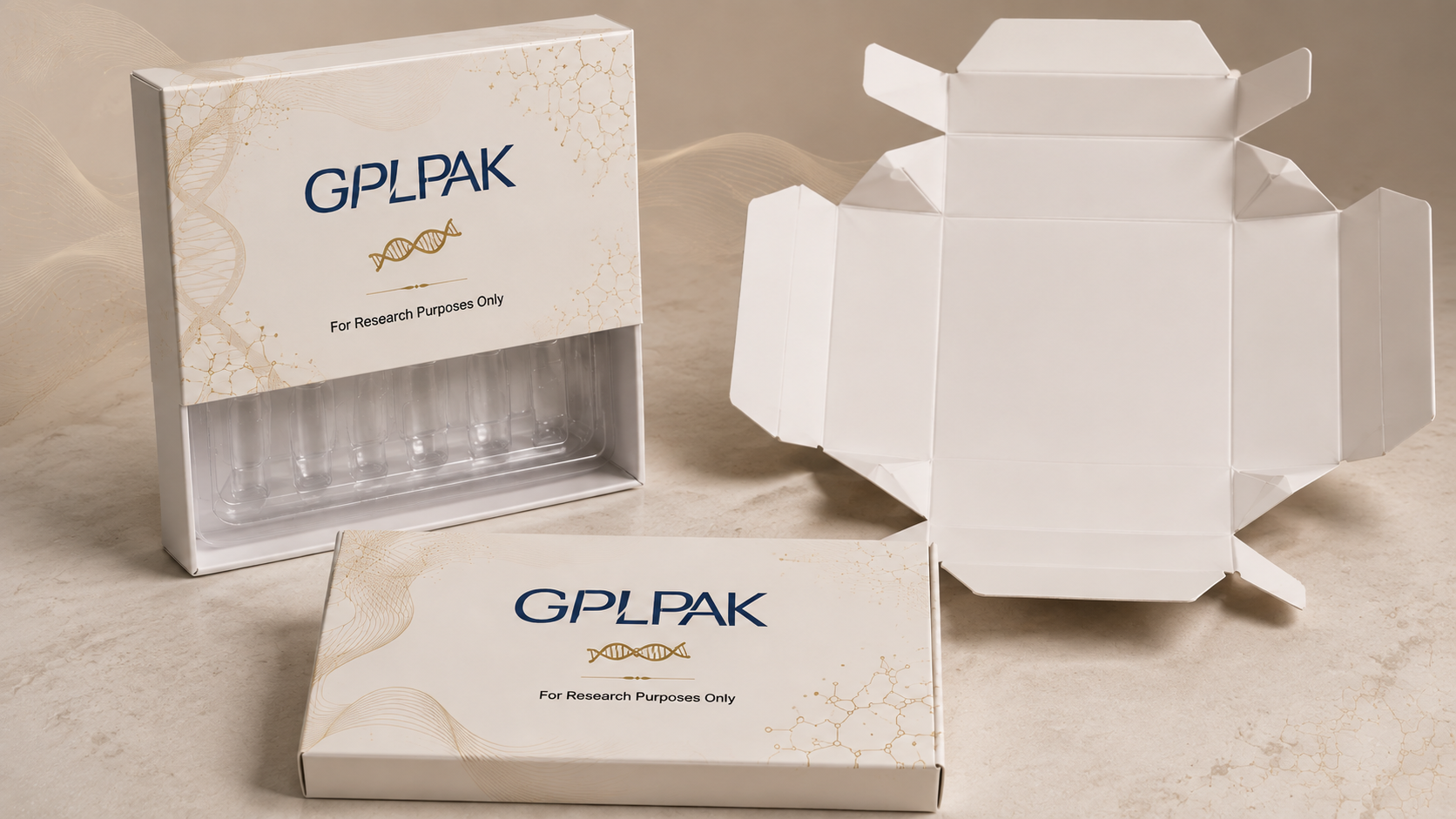
A folding card box is formed from a single sheet of paperboard (0.3–0.6 mm SBS or folding box board). The sheet is printed, die-cut into a flat blank with crease lines, then folded and glued into its final collapsed shape — or supplied as a lock-bottom blank that needs no glue at all. At your facility, the blank is erected automatically on a cartoning machine or by hand in seconds. The whole process is highly automated, runs at thousands of pieces per hour, and the finished blanks stack flat for cheap freight and compact warehousing.
| Forming Attribute | 엄밀한 상자 | Folding Card Box |
|---|---|---|
| Board thickness | 1.5–3.0 mm greyboard / chipboard | 0.3–0.6 mm SBS / folding box board |
| Construction | Lid + base, wrapped in printed paper | One-piece printed blank, folded & glued |
| Assembly | Hand / semi-automatic, pre-formed | Automatic erecting on pack-out line |
| Tooling required | Box mold + wrapping die, higher cost | Cutting die only, lower cost |
| Shipping form | Assembled; 6–10× freight volume | Flat blanks; dense, cheap freight |
| Compression strength | Very high, rigid walls | Moderate; depends on board grade |
| Production speed | Slower, labor-intensive | High-speed, fully automated |
| Unit cost impact | High (material + labor + freight) | Low (automated, flat-shipped) |
⚠️ Important: Never compare the two structures on unit price alone. The forming difference changes your freight cost, warehouse space, pack-out labor and minimum order quantity — all of which belong in your total landed cost calculation.
The table below shows typical ranges for a 3ml vial box ordered from a Chinese packaging manufacturer at 5,000 pcs, using offset printing and standard finishing. Actual quotes vary with artwork, finishing and freight route.
| Cost Component | Rigid Box (USD) | Folding Card Box (USD) |
|---|---|---|
| Board / material | $0.35–$1.20 | $0.06–$0.25 |
| Tooling (one-time) | $150–$600 (mold + dies) | $80–$300 (cutting die) |
| Printing & finishing | $0.20–$1.00 | $0.05–$0.30 |
| Assembly labor | $0.15–$0.60 (hand glue-up) | $0.01–$0.05 (automatic) |
| Freight per box (sea, US/EU) | $0.08–$0.35 (pre-formed) | $0.01–$0.05 (flat) |
| Typical landed cost | $0.80–$3.50 per unit | $0.15–$0.80 per unit |
A few patterns worth noting. First, the gap narrows as volume grows — at 50,000 pcs the rigid box can drop toward $0.60 while the folding carton holds around $0.12–$0.20, so the premium shrinks from roughly 4–5× to 3–4×. Second, inserts are a separate line item in both cases: a die-cut EVA foam insert adds $0.05–$0.15 regardless of structure. Third, freight is where the folding carton quietly wins — flat blanks let you fit 6–10 times more boxes in the same container.
💡 Tip: Ask your supplier for a landed-cost quote that includes tooling amortization, insert cost, export carton cost and sea or air freight. GPLPAK provides this breakdown free of charge, so you can compare the two structures apples-to-apples before committing.
The rigid box earns its higher price in specific business contexts. If your 3ml peptide vial retails above $60–$80, the packaging cost is a small percentage of margin — and the unboxing experience becomes a brand asset.
Premium clinical positioning — medical-aesthetic and anti-aging brands where perceived quality must match the price point.
Retail shelf presence — a rigid box stands up, doesn't crush in a display, and communicates weight and value from two meters away.
Gift and subscription moments — "first dose" kits, starter sets and VIP programs where the box is part of the ritual.
Deep finishing effects — thick board carries deep embossing, heavy hot foil and magnetic closures that a thin carton cannot support.
Low volume, high margin — below 2,000 units per year, the higher per-unit cost is easily absorbed and tooling amortization is minimal.
Reusable packaging — many customers keep rigid boxes for storage, extending your brand presence for months.
For most e-commerce peptide brands, the folding card box is the financially rational default. It protects the vial, prints beautifully and keeps your COGS low enough to scale marketing spend.
DTC and subscription volume — recurring monthly shipments make every cent of unit cost matter; at 10,000+ pcs the folding carton's economics are unbeatable.
Flat-pack logistics — blanks ship flat, store flat and cut your freight bill by up to 80% versus pre-formed boxes.
Automated packing lines — if you run a cartoning machine, folding cartons are the only structure that feeds it efficiently.
Sustainability reporting — single-material paperboard, lighter weight and lower carbon footprint per box; FSC-certified board is widely available.
Frequent design refreshes — lower tooling cost makes seasonal artwork changes affordable.
Multi-SKU lines — different vial formats (2ml, 3ml, 5ml) share one printing run and only need a new cutting die.
Surface finishing is where both structures can look far more expensive than they are. If you want a tactile, dimensional brand statement, emboss packaging techniques — blind embossing, multi-level embossing, and registered emboss combined with hot foil stamping — can be applied to both box types. The difference is depth: a rigid box lid is thick enough to carry a deep, sculpted emboss without the design showing through on the inside, while a folding carton needs shallower embossing to avoid distorting the flat blank.
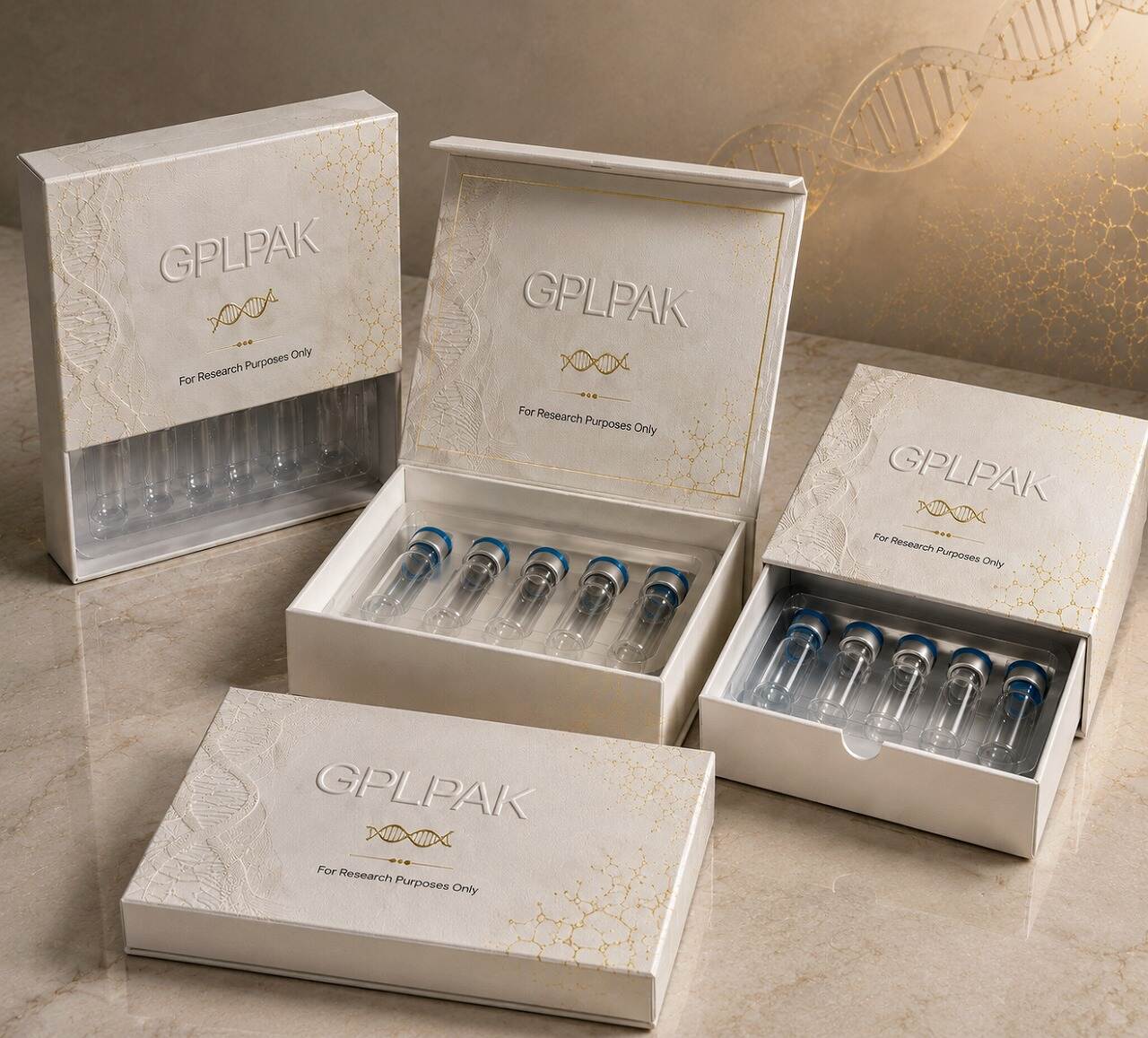
Blind emboss / deboss — a clean, elegant raised or recessed logo with no ink; the most understated premium finish.
Registered emboss + hot foil — foil applied exactly over the embossed area for a metallic, dimensional logo.
소프트 터치 라미네이션 — a velvet feel that pairs beautifully with emboss on both structures.
반점 UV 광택 — selective shine over a matte background, popular on folding cartons.
Textured paper wraps — linen, leatherette and recycled-fiber wraps available on rigid boxes only.
Magnetic or ribbon closure — rigid box specialties that add a jewelry-box feel to first-dose kits.
The practical rule: if your finishing plan relies on print effects (foil on flat surfaces, spot UV, lamination), a folding carton delivers 90% of the look for 30% of the cost. If your plan relies on depth and structure (deep emboss, textured wrap, magnetic closure), only a rigid box can deliver it.
Operational differences are just as important as the unit price. The table below summarizes what to expect from a reliable Chinese manufacturer.
| Factor | 엄밀한 상자 | Folding Card Box |
|---|---|---|
| MOQ (offset print) | 500–1,000 pcs | 1,000–3,000 pcs |
| MOQ (digital print) | 300 pcs | 500 pcs |
| Structural sample | 3–5 working days | 3–5 working days |
| Printed sample | 7–12 working days | 7–12 working days |
| Production lead time | 15~25일 | 10–20 days |
| Freight volume | 6–10× a flat carton | Flat, high density |
| Warehousing | Pre-formed boxes take space | Compact flat storage |
If you are a startup, digital printing lets you test both structures at low MOQ before committing to offset tooling. Order 300 rigid boxes and 500 folding boxes as a pilot, put them in front of real customers, and let sales data — not guesses — pick your production structure.
Work through these six questions in order. Your answers will point to one structure almost every time.
Premium clinical / medical-aesthetic → rigid. Accessible DTC / functional wellness → folding.
Below ~2,000 units → rigid is affordable. Above ~10,000 units → folding's unit economics dominate.
For vials used at home by repeat customers, yes → rigid. For consumables, no → folding.
Sea freight from China + tight warehouse → folding flat blanks. Domestic / small batches → rigid is fine.
Deep emboss, magnetic closure, textured wrap → rigid. Foil, spot UV, lamination → folding does it cheaper.
Under $0.50 per box → folding. $1.00–$3.00 per box acceptable → rigid becomes the differentiator.
Still undecided? Order both. A pilot run of each structure at the same time gives you real cost data, real unboxing feedback and a straight comparison of pack-out speed before you scale.
GPLPAK manufactures both rigid boxes and folding card boxes in the same Guangzhou facility, which means you get an unbiased recommendation instead of a push toward whatever one factory happens to make. We have produced vial packaging for dozens of peptide brands shipping to the US, EU and Australia.
Dual-structure capability — rigid and folding lines in-house, plus digital print for low-MOQ pilots.
CNC-cut EVA inserts — custom foam cradles fitted to your exact 3ml vial.
Full finishing suite — emboss packaging, hot foil, soft-touch, spot UV and textured wraps under one roof.
Landed-cost clarity — itemized quotes with tooling, inserts and freight, plus DDP shipping to major markets.
Send us your vial and your target price point, and we will return samples of both structures with a straight comparison. Explore our peptide packaging solutions to see how other brands solved the same question.
Get free structural samples of both a rigid box and a folding card box for your 3ml peptide vials, with a landed-cost quote that makes the choice obvious.
© 2026 GPLPAK - China's Professional Custom Packaging Manufacturer
 핫 뉴스
핫 뉴스2026-10-07
2026-09-30
2026-09-23
2026-09-22
2026-09-21
2026-09-18
2026-09-17
2026-09-17
2026-09-16
2026-09-09
Dongguan Xinglan Packaging Products Co., Ltd.의 프리미엄 포장 솔루션을 발견하십시오.
 영어
영어  EN
EN  RU
RU  ES
ES  KO
KO  JA
JA  PT
PT  IT
IT  DE
DE  FR
FR  NL
NL 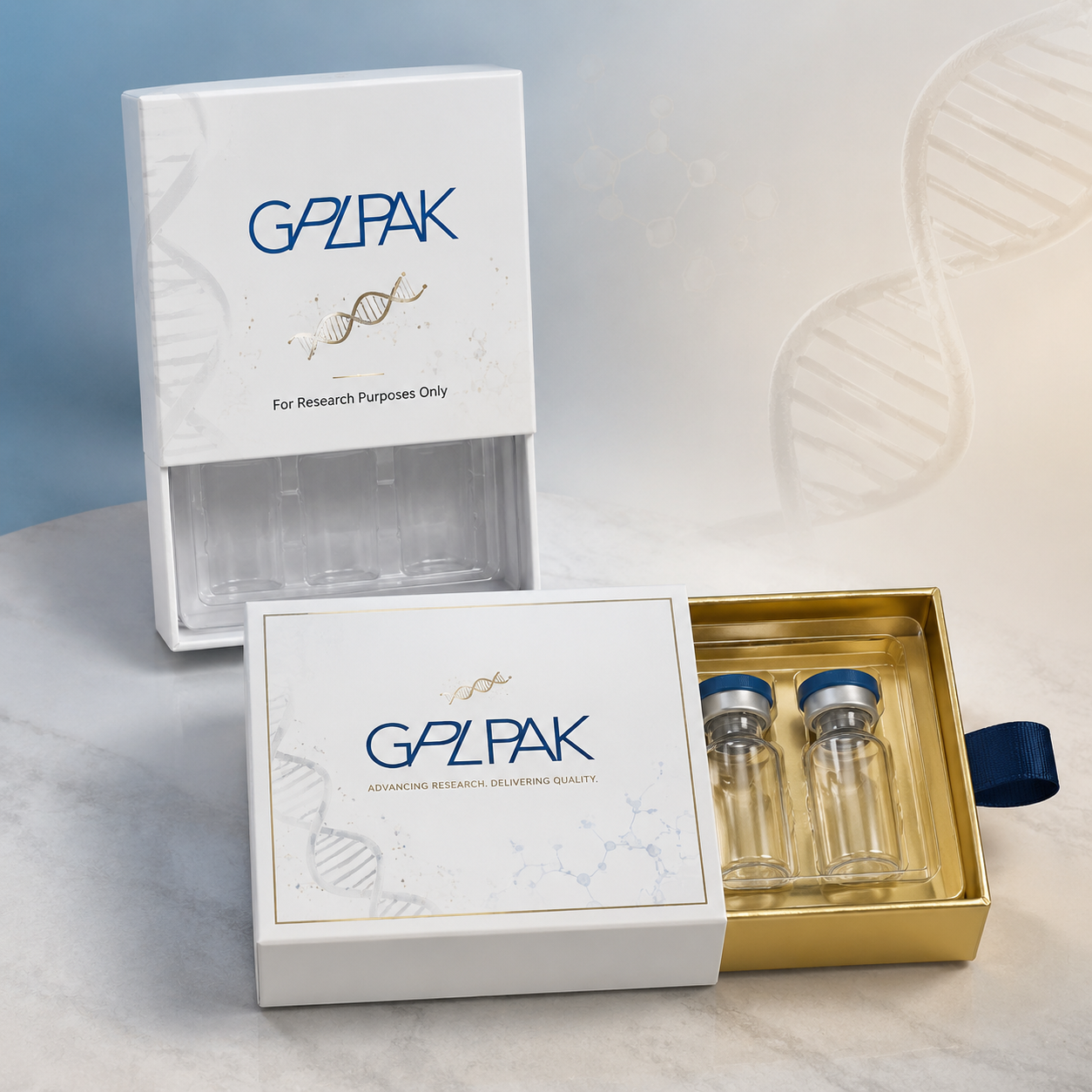
.jpg)
