




Alle categorieën
GPLPAK-adv005

Custom Octagonal Cosmetic Advent Calendar Box

Belangrijkste kenmerken

Aangepaste grootte
7-daagse monsterneming
Vrij ontwerp
Gepersonaliseerd
Aanvullende opties
Prijs op aanvraag
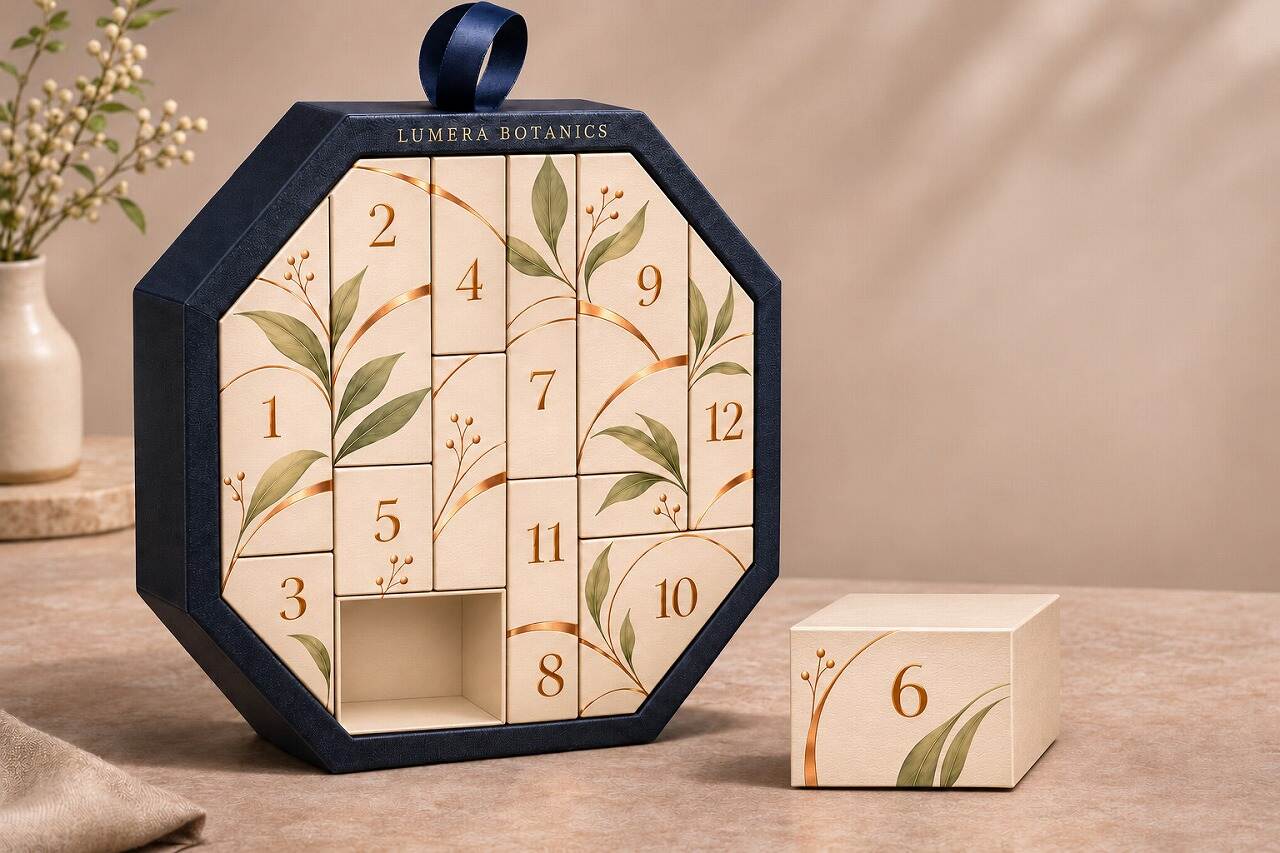
Custom octagonal cosmetic advent calendar box with 12 removable numbered carton modules
8-sided rigid caseRegular perimeter and flat display base
12 carton revealsProduct-specific folding modules
Tessellated artworkOne mosaic across separate dielines
Defined ribbon useAnchor and load reviewed by project
Geometric 12-day beauty packaging
AangepastOctagonal Cosmetic Advent Calendar Box

Transform a mixed beauty assortment into a precise 12-step reveal. This made-to-order format combines a rigid eight-sided presentation frame, a centered ribbon carry loop and tessellated removable folding-carton modules developed around the brand's sealed products.

The procurement difference        The outline, internal support grid, 12 carton dielines, numbered artwork and product map must be engineered as one packaging system.

Photorealistic derivative visualization using the fictional brand LUMERA BOTANICS. Final structure, dimensions, materials, load capacity, decoration and performance are project-specific.

Reference architectureOctagonal rigid perimeter frame with top ribbon loop
Countdown system12 removable folding-carton modules in a tessellated matrix
Customization scopeSize, module map, inserts, handle, print, foil and pack-out
Typical contentsSealed skincare, makeup, fragrance minis and beauty tools
In brief

What Is an Octagonal Cosmetic Advent Calendar Box?

Eencustom octagonal cosmetic advent calendar box is a rigid secondary presentation package shaped as a regular eight-sided case. Its front opening holds 12 individually numbered folding cartons, arranged as an interlocking visual composition and sized around the actual beauty assortment.

Unlike a conventional drawer calendar, the reveal unit is a removable paperboard carton. That difference changes the engineering: every module needs its own dieline, product-fit method, extraction clearance and number, while the frame and internal cellular support keep the complete mosaic aligned.

Buyer risk map

The Geometry Must Work After the Products Are Loaded

A striking silhouette only succeeds when the frame, modules, artwork and assortment remain controlled through sampling, filling and distribution.

Octagonal drift

Unequal side lengths, weak miter joints or wrap tension can make the perimeter look skewed and prevent the case from standing flat.

Module mismatch

A carton can bind, sink or rattle when its finished dimensions do not match its cell after printing, folding and filling.

Artwork discontinuity

A line crossing several cartons reveals every cutting, folding and placement tolerance; registration targets must be realistic.

Incorrect pack-out

Twelve SKUs, cartons and numbers require one controlled position map to prevent wrong-item or wrong-day errors.

Handle overloading

The ribbon and anchor must be reviewed against the complete filled weight and intended handling, not treated as decorative by assumption.

Shipping exposure

The presentation case is not automatically parcel-ready; finish and module retention depend on the protective outer pack.

System architecture

Define What Every Packaging Component Must Do

Separate presentation, product retention, handling and distribution functions before selecting materials. One component should not be credited with performance that belongs to the complete pack-out.

ComponentEngineering roleBuyer confirmation
Octagonal perimeter caseCreates the geometric silhouette and supports the front module matrixFinished width, height, depth, display orientation and allowable shipping cube
Cellular support gridLocates each carton, maintains recess depth and separates neighboring loadsProduct weights, retrieval direction, acceptable gap and module replacement behavior
Twelve carton modulesProvide individual reveals, branding surfaces and product-specific secondary packsSKU map, opening sequence, insert requirement, legal copy and filling method
Ribbon loop and anchorDelivers a visual handling cue and only the agreed lift functionDecorative-only, controlled lift or carry requirement and loaded validation condition
Protective shipping systemReduces abrasion, impact and module movement outside the retail presentation roleFilling location, pallet or parcel route, master carton, orientation and test objective
Product-to-module engineering

Design Each Carton Around Its Real Cosmetic Product

Begin with maximum dimensions and filled weight, not nominal catalog sizes. Caps, pumps, droppers, crimped tube ends and overcaps often define the usable envelope. Include the insertion direction, acceptable orientation and any surface that must not carry load.

The removable carton can use a folded paperboard platform, partition or another confirmed fitment to control movement. The opening sequence should let the user remove the product without tearing the carton, pulling against a fragile closure or disturbing neighboring modules.

  • Record maximum length, width, height and filled weight for all 12 SKUs.

  • Identify glass, pumps, sprayers, applicators and decorated faces that need protection.

  • Define the carton opening direction and finger clearance for removal.

  • Check the loaded module inside its final cell, not as a loose carton alone.

LUMERA BOTANICS octagonal beauty advent calendar with removable carton module and fitted serum insert

Derivative visualization showing a removable carton and paperboard fitment. Final carton construction and clearance depend on the supplied product.

Specification data

Translate the Assortment into Controlled Inputs

A buyer-approved matrix reduces structural revisions and gives engineering, artwork, filling and inspection teams the same reference.

InputBuyer providesPackaging decision
Product envelopeMaximum dimensions including closure and toleranceInternal carton size, opening and fitment geometry
Filled weightActual filled product and primary-pack weightBoard grade, support location and position in the octagon
Sensitive areasGlass, pump, nozzle, crimp, label or decorated surfaceNon-load zones, spacing and retention surfaces
Reveal experiencePreferred day, orientation and opening sequenceCarton position, flap direction and removal clearance
Primary-pack samplesProduction-intent samples or controlled drawingsPhysical fit approval and loaded sample scope
Close-up of linen wrapped octagonal advent calendar frame with copper foil registration and carton seams
Structure and finishing

Control the Perimeter Frame, Panel Gaps and Cross-Module Artwork

The octagonal perimeter is normally built from wrapped rigid board and must maintain equal sides, stable corner joints and a flat bearing edge. The internal cellular support grid locates the removable cartons and helps transfer load without crushing a product or exposing uneven recesses.

Continuous artwork across separate cartons creates a premium mosaic, but it is also tolerance-sensitive. Plan break lines through forgiving areas of the design and define acceptable print, die-cut, folding and placement variation at the decorated-sample stage.

Wrapped rigid greyboard          Folding-carton modules          Foil and emboss options          Ribbon handling feature

Material and Decoration Decisions

Select each layer for its structural or visual contribution, then define how the finished sample will be approved.

ElementContributionApproval focus
Rigid-board frameDefines the octagonal silhouette and perimeter stiffnessBoard grade, corner joints, flatness, symmetry and loaded stability
Wrap paperCarries color, texture and the close-range luxury impressionGrain direction, corner relief, seams, rub resistance and color target
Module paperboardForms the 12 removable cartons and protects sealed primary packsCreasing, folding, bulge, flap retention and dimensional repeatability
Print and foilCreates numbering, brand story and cross-module visual continuityColor, foil shade, registration, cracking and approved tolerances
Ribbon loopSupports presentation and defined handling behaviorMaterial, anchor, length, fraying and agreed loaded-use condition
Protective outer packControls abrasion, movement and distribution exposureFilled pack-out, orientation, cushioning, master carton and route
Artwork architecture

Treat the 12 Cartons as One Visual System

Create one master position map before separating artwork into individual dielines. Keep critical logos, fine rules and small legal text away from module edges, folds and expected tolerance zones. Number legibility should remain clear even when decorative graphics continue across several faces.

Every market-language or assortment change can create a new artwork set. Version-control the master mosaic, all 12 cartons and the packing map together so that a late SKU change does not introduce a mismatched face.

Handling boundary

Specify What the Ribbon Handle Is Expected to Do

A ribbon loop can support presentation, controlled retail handling or a defined lift condition, but its capability cannot be assumed from appearance. Filled weight, anchor area, board construction and repeated handling all affect the result.

State whether the loop is decorative, intended for consumer carry, or used only to remove the calendar from a protective carton. Validate the agreed use on a complete loaded sample and preserve the approved anchor construction in production.

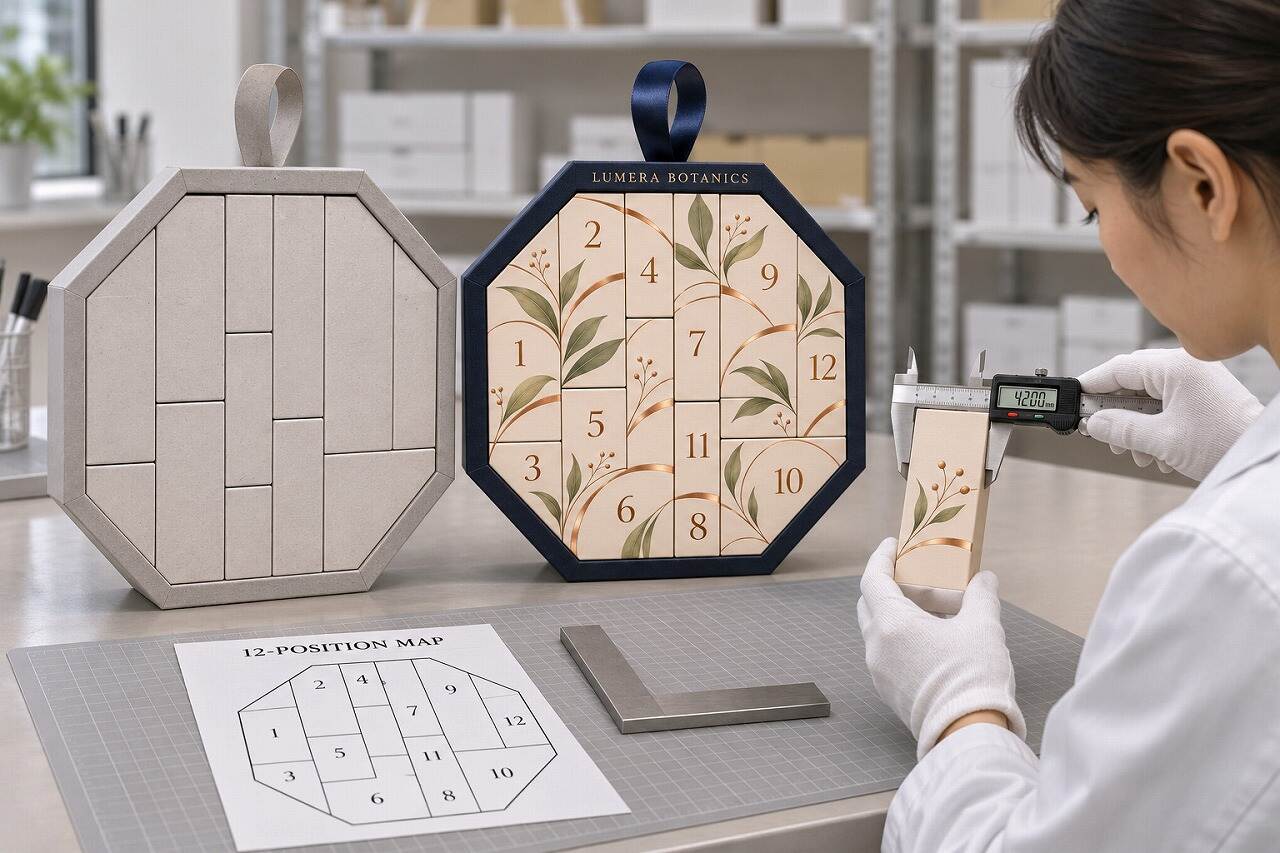
Octagonal cosmetic advent calendar blank structural sample and decorated sample under dimensional inspection
Sampling and quality control

Approve the Structure, Decoration and Loaded Pack in Stages

  1. Structural drawing: lock the octagonal envelope, depth, support grid and 12 carton cells.

  2. Blank sample: confirm symmetry, flatness, module extraction and complete product fit.

  3. Decorated sample: approve paper, print, foil, numbering, seams and artwork alignment.

  4. Loaded pack-out: verify the position map, handle condition, outer protection and filling instruction.

Derivative visualization, not an actual inspection, certification or test record.

Inspection areaPractical checkTypical issue to prevent
Perimeter geometryCompare side lengths, diagonals, corner profiles and base contactSkewed octagon, twisted frame or rocking base
Module actionRemove and replace every loaded carton in its assigned cellBinding, excessive looseness, sinking or damaged flaps
Position controlAudit number, SKU, orientation and artwork version against the mapMissing item, duplicate number or wrong reveal sequence
DecorationCompare color, foil and cross-module graphics under consistent lightVisible image jump, foil shift, scuff or color drift
Loaded handlingApply only the approved lift and carry condition to a complete sampleRibbon pull-out, frame distortion or module migration
Distribution packEvaluate the filled calendar with protective pack for the routeAbrasion, corner damage, product movement or carton release
Application boundary

Use the Calendar for Sealed Primary Packs

The system can present sealed serum bottles, cream jars, cleanser tubes, lip products, fragrance minis, facial mists, sachets and beauty tools when each module is developed around the actual item.

It is secondary packaging. Formula compatibility, tamper evidence, leakage control, ingredient information and required market labeling remain responsibilities of the primary pack and the applicable product regime.

No unsupported direct-contact claim

Do not place loose cosmetic or fragrance formula against paper, ink, foil, coating or adhesive without separate compatibility and regulatory review.

No automatic parcel-ready claim

A premium presentation case and a distribution shipper solve different problems. Specify the protective outer pack and route-specific objectives.

No generic sustainability claim

Material composition, recycled content, certification and recyclability statements require documents for the actual project and destination.

Commercial planning

Why MOQ, Price and Timing Are Project-Specific

A quotation depends on more than the external case size. The eight-sided rigid frame, twelve different carton dielines, internal support, artwork versions and filling method combine to determine tooling, material yield and assembly time.

StructuurFinished size, depth, greyboard, support grid, handle anchoring and module count
AssortmentTwelve product envelopes, fitments, weight distribution and pack-out sequence
DecorationPaper, colors, foil coverage, registration targets and number of artwork versions
ProgramQuantity, sampling rounds, filling location, inspection, destination and seasonal date

GPLPAK can confirm project terms after reviewing the product list, structure, artwork, quantity, destination and required delivery window. Generic competitor figures are not used as GPLPAK commitments.

RFQ checklist

Send a Brief That Can Be Engineered

A complete request enables a meaningful structural review and a comparable quotation.

01 — Numbered list of all 12 products
02 — Maximum sizes and filled weights
03 — Samples or controlled drawings
04 — Fragile areas and orientation limits
05 — Artwork, languages and legal copy
06 — Quantity and market versions
07 — Filling site and pack-out responsibility
08 — Destination and required in-market date
Buyer questions

FAQ: Custom Octagonal Cosmetic Advent Calendar Boxes

Direct answers for beauty brands, packaging developers and sourcing teams.

What makes this an octagonal beauty advent calendar?

The defining structure is a regular eight-sided rigid presentation frame holding individually numbered reveal units. In this reference format, the reveal units are 12 removable folding cartons arranged as a fitted mosaic rather than conventional drawers.

Can every carton module have a different size?

Yes, within the finished case envelope and structural clearances. Provide the maximum dimensions, filled weight, sensitive areas and orientation of every product so each dieline and its support cell can be developed around the real item.

How do removable cartons differ from drawer compartments?

A removable carton is an independent folding package with flaps and its own product fitment. It is lifted from the front matrix and then opened. A drawer slides within a sleeve or carcass. The two systems require different clearances, artwork and filling instructions.

Can the top ribbon loop carry the fully loaded calendar?

Only when that use is defined and validated for the project. Filled weight, ribbon specification, anchor construction and repeated handling affect performance. Confirm whether the loop is decorative, for controlled lifting or for consumer carry before sampling.

Can artwork continue across all 12 cartons?

Yes, but the design should accommodate print, die-cut, folding and placement tolerances. Use one master mosaic and keep critical details away from module edges. Approve alignment limits on a decorated sample before production.

Can the cartons hold skincare and makeup products directly?

They can hold sealed primary packs such as bottles, jars, tubes and lip products. Loose formula should not contact the paper packaging without separate compatibility and regulatory evaluation. Supply representative filled products for fit review.

Can the octagonal case be supplied flat?

A wrapped rigid perimeter case is normally supplied assembled to preserve geometry. Folding cartons may have different assembly and filling options. If freight efficiency is critical, alternative structures can be assessed, but they require separate development and approval.

What determines MOQ, price and lead time?

Key variables include size, board and paper, twelve dielines, support grid, handle, print and foil coverage, artwork versions, quantity, sampling, assembly, filling and seasonal capacity. GPLPAK confirms terms after reviewing the complete brief.

From assortment to sample

Request an Octagonal Calendar Feasibility Review

Send the 12-product list, maximum dimensions, filled weights, preferred reveal sequence, artwork direction, quantity, destination and required date. GPLPAK can review the structure, sample scope, decoration and commercial inputs.

Discuss Your Custom Packaging

Related Packaging Development Resources

LUMERA BOTANICS is a fictional placeholder brand. All derivative images illustrate a design direction and do not represent a completed customer order, approved production specification, certification or transport-test result.

Beschikbare opties

Materiaal

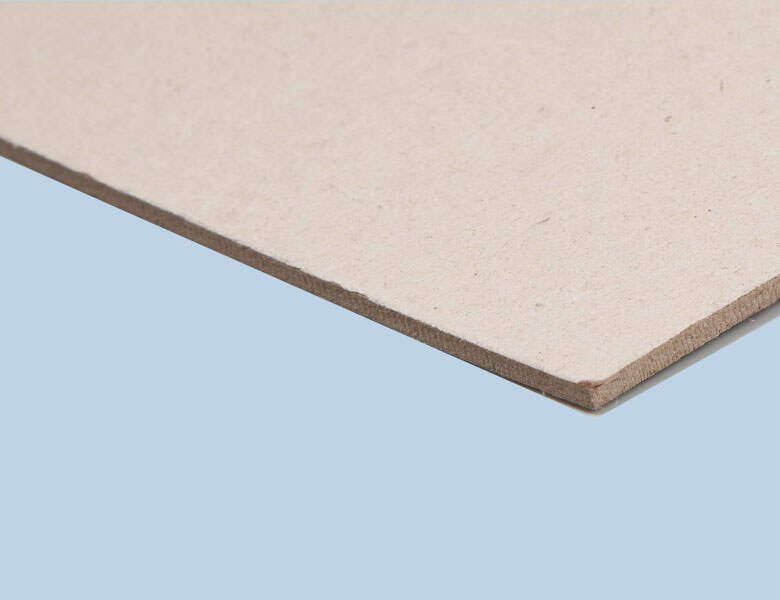
Grey Chipboard
Grijs Chipboard
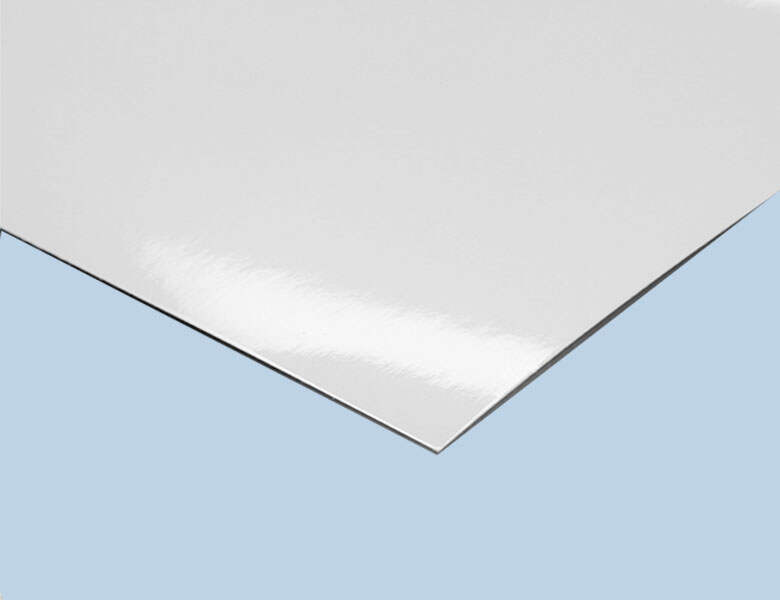
Coating Paper
Coating Papier
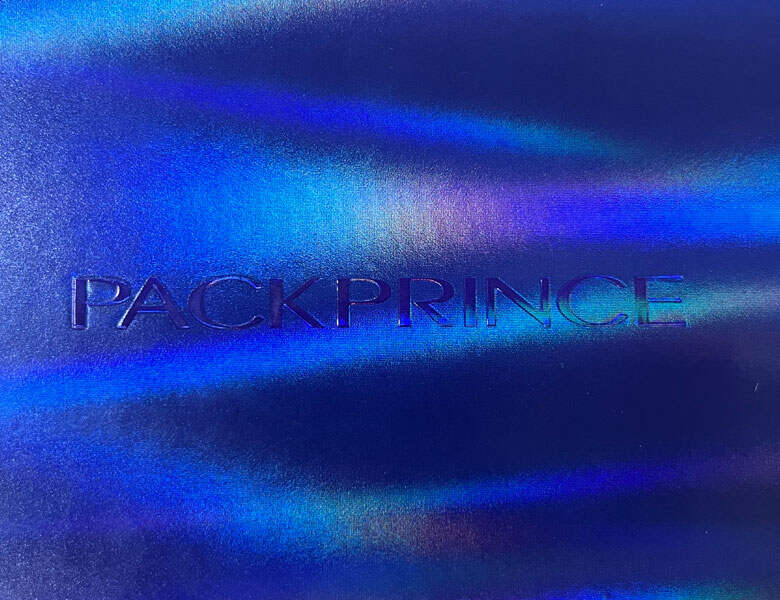
Holographic
Holografische
Leatherette Paper
Kunstleer Papier
Metallic
Metaal
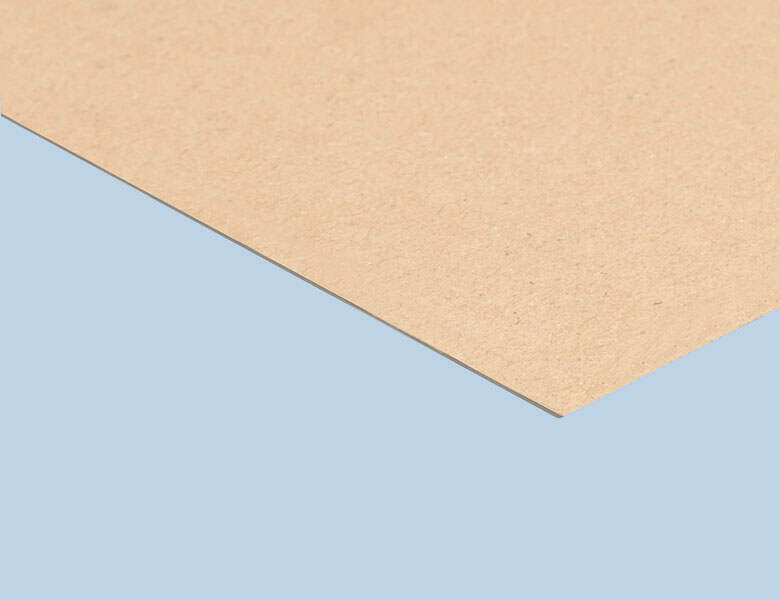
Natural Brown Kraft
Natuurlijke bruine Kraft
PU Leather
PU leer
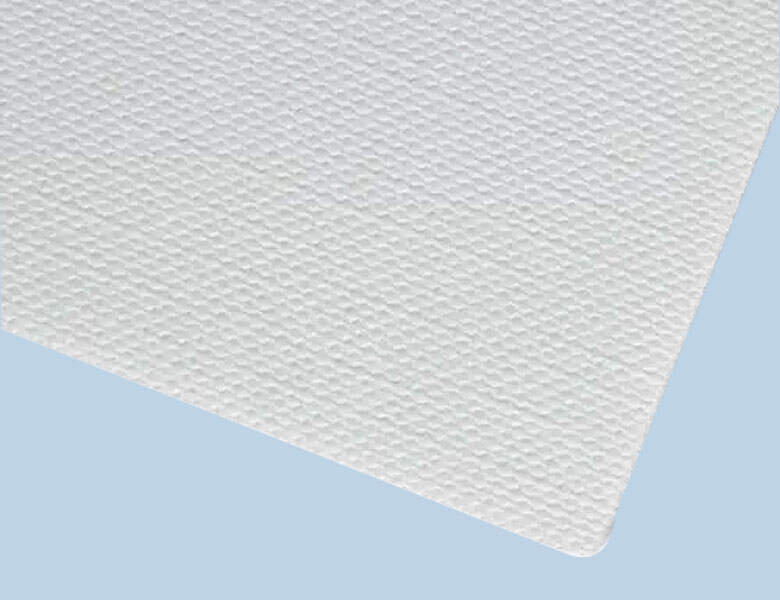
Textured paper
Textuurpapier

Kleur

Proces
Kleuren
CMYK
CMYK
Wat zijn proceskleuren?

Processkleuren zijn gebaseerd op het CMYK-afdruksysteem, met behulp van gelaagde punten van cyaan, magenta, geel en zwart bij verschillende dichtheden om een ​​volledig scala aan kleuren en gladde gradiënten te reproduceren.

Bij de verpakkingsproductie wordt CMYK-afdrukken bereikt via afzonderlijke printtorens, waarbij elke toren is gewijd aan een kleur. Samen werken de vier torens in volgorde om de uiteindelijke afbeelding en kleuroutput nauwkeurig op te bouwen.

Spot
Kleuren
PANTONE
Pantone
Wat zijn spot kleuren?

Spot kleuren gebruiken voorgemengde inkten die rechtstreeks worden afgedrukt, waarbij slechts één afdruktoren nodig is. Omdat de kleur vooraf is bepaald, zorgt het voor consistente resultaten in verschillende machines, leveranciers en productieprocessen.

In tegenstelling tot proceskleuren lijken spotkleuren uniform, zelfs onder nauwkeurige inspectie, zonder zichtbare CMYK-dotpatronen, waardoor een schonere en nauwkeuriger kleurreproductie wordt geleverd.
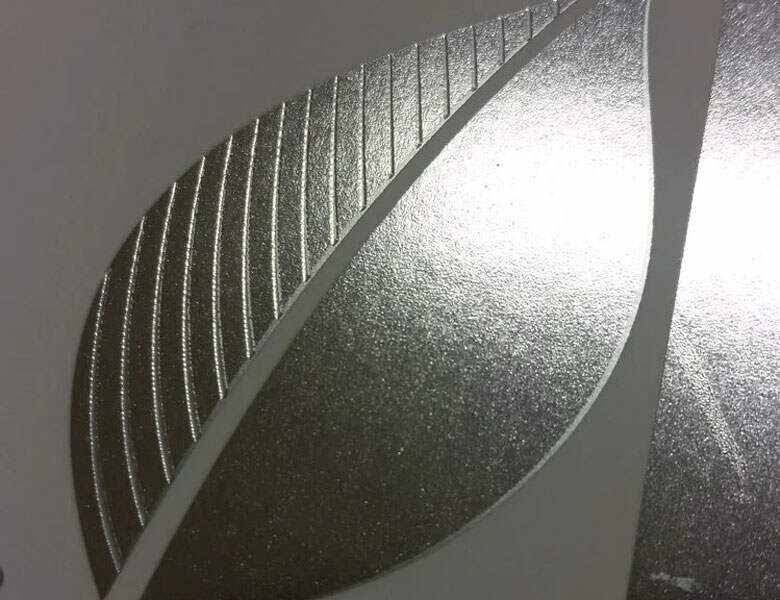
Oppervlakteafwerking

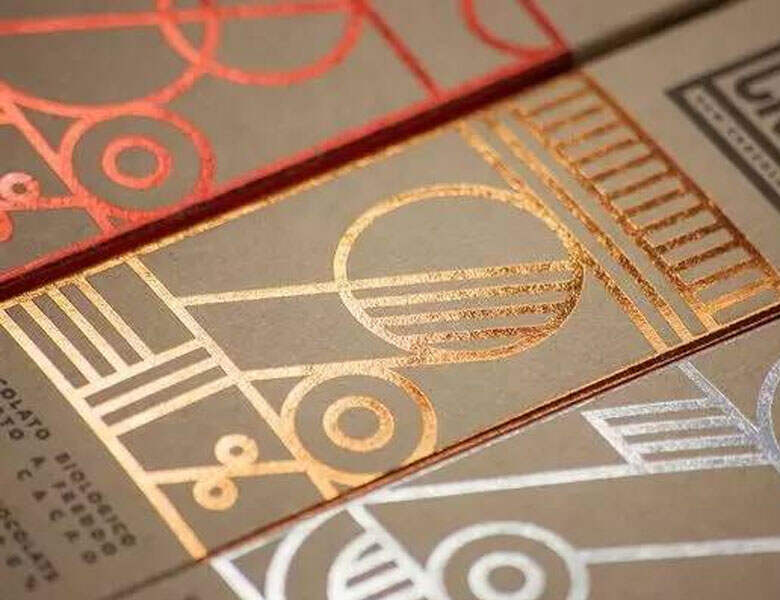
Hot Foil Stamping
Hete folie stempelen
Cold Foil Stamping
Koude folie stempelen
Debossing
Debossing
Embossing
Reliëfdruk
Spot UV
Vlek UV
Reverse UV
Omgekeerde UV
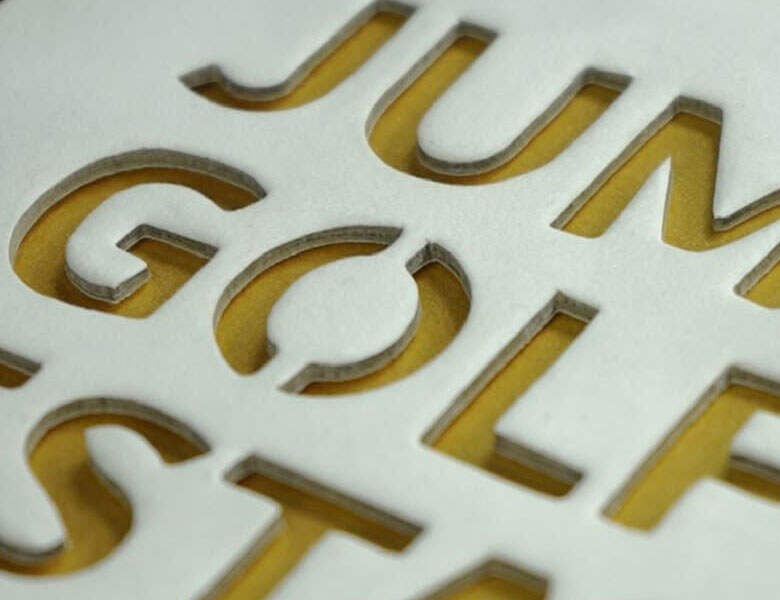
Die Cutting
Die snijden
Fresnel Lens
Fresnel Lens

Lamineren

Gloss Lamination
Glans Lamineren
Matte Lamination
Matte Laminering
Soft Touch Lamination
Soft Touch Laminatie
Anti-Scratch Lamination
Anti-kras laminatie
Holographic Lamination
Holografische laminatie
Plastic Replacement Coating
Plastic vervangingscoating
Varnishing
Vernikken
Water-Based Coating
Watergebaseerde coating

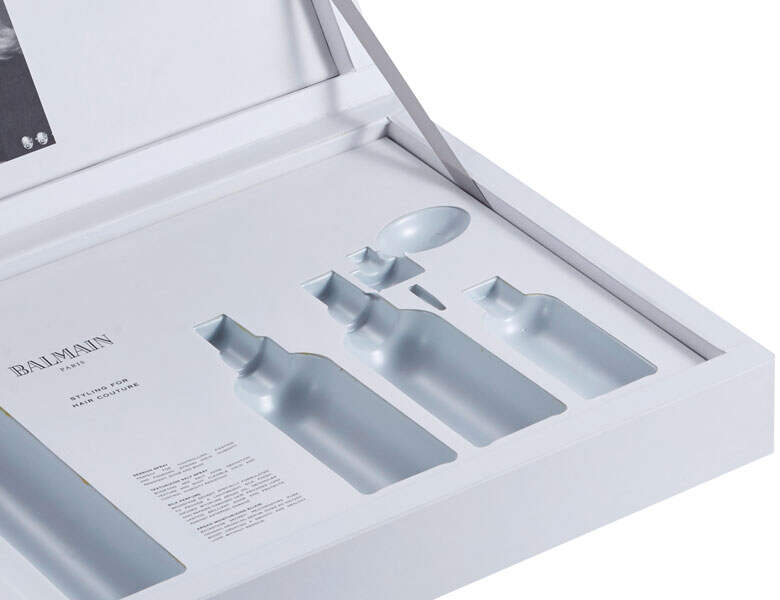
Boxen invoegen

EVA Insert
EVA-inzetstuk
Foam Inserts
schuim invoegt
Grey Board Insert
Grijs bord invoegen
PET Blister Insert
PET blister invoegen
Folding Carton inserts
Opvouwbare karton inserts
Paper Card Coating HIPS Blister
Papierkaart Coating HIPS Blister
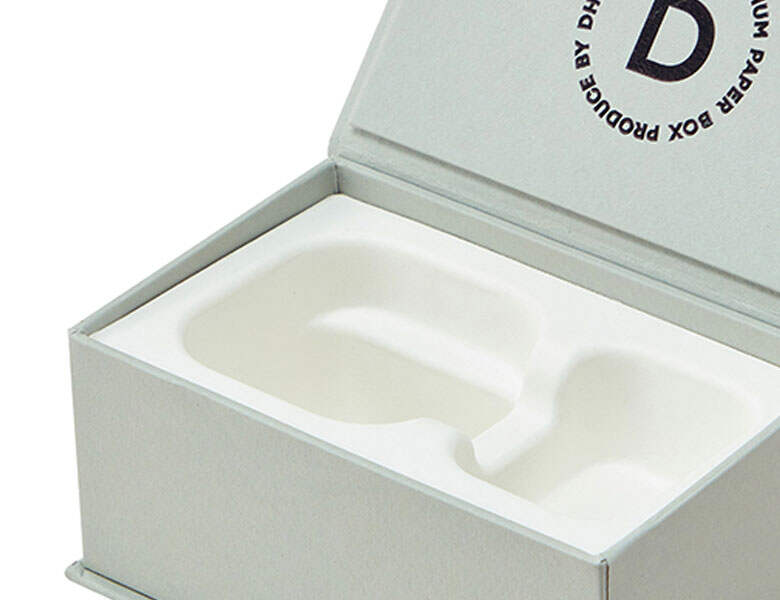
Molded Pulp Insert
Gegoten Pulp Insert
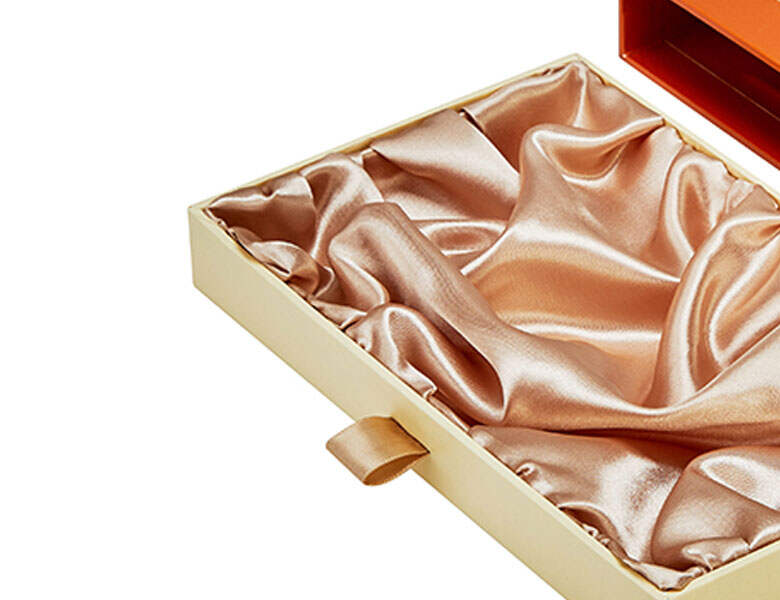
Satin Inserts
Satijn Inserts

Bestelproces

Een enkel platform om offertes te krijgen en bestellingen te plaatsen, met speciale
Steun elke stap van de weg.

1

Pas uw
verpakking

Ga naar het gplpak-platform om de grootte, materialen, afdruk en afwerking van uw stijve dozen aan te passen.

2

Krijg offertes &
monsters

Vergelijk aanbiedingen voor verpakkingen en krijg een steekproef van uw stijve doos voordat u een productieordering begint.

3

Selecteer verzending
methoden

Kies een voorkeursmethode voor verzending en stel zelfs verdeelde zendingen in om wat verpakkingen sneller te krijgen.

4

Kunstwerk uploaden

Voeg uw kunstwerk toe aan de dieline sjabloon die wij op maat maken aan uw doosspecificaties.

5

Bestelling volgen
vooruitgang

Krijg volledig zicht op de vooruitgang van monsters, productie en verzending.

Heb je nog vragen?

klik op de vraag
Gplpak-assistent

Nog een vraag?

Laat ons een bericht achter en ons verpakkingsteam zal binnen 2 uur antwoorden.

We collaborate with people and brands; let's build something great together.

Vraag een citaat aan
Vraag een offerte aan Gewoonlijk antwoord binnen 1 uur