




Custom Door and Heart Shaped Skincare Advent Calendar Boxes
Características principales

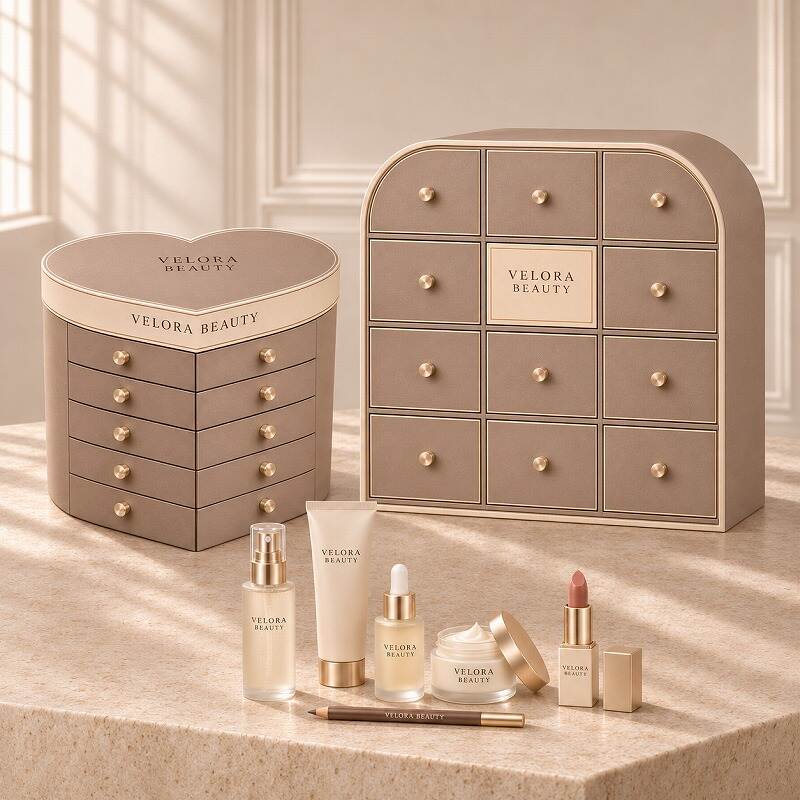
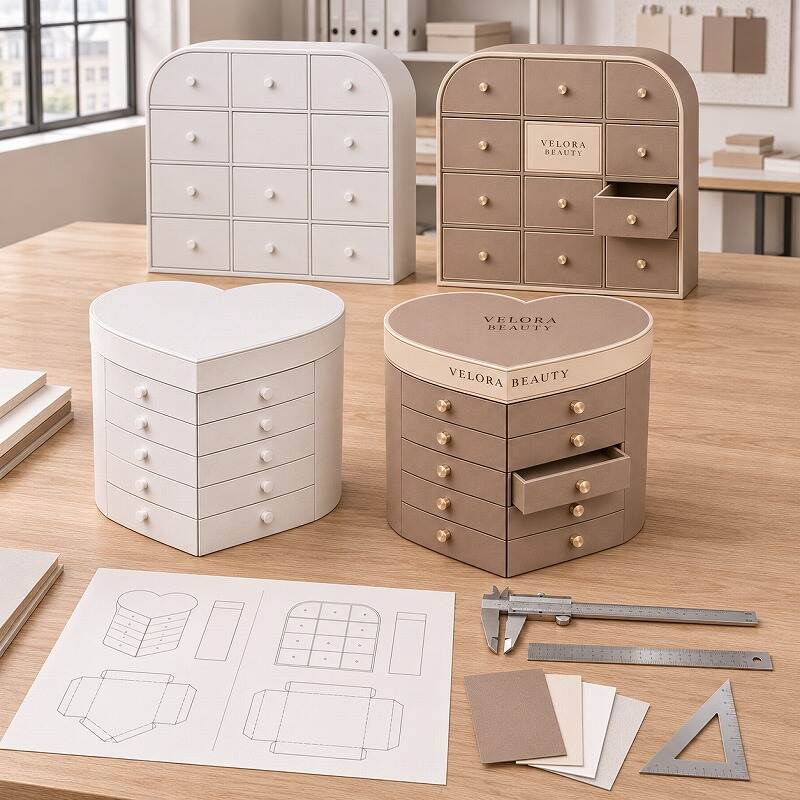
Develop a coordinated seasonal packaging collection without forcing two ideas into the same structure. The arched-door cabinet creates a vertical retail facade, while the heart-shaped drawer case delivers an emotive gifting silhouette. Both are engineered around the actual sealed skincare and beauty assortment.
Photorealistic derivative collection using the fictional brand VELORA BEAUTY. Final dimensions, drawer counts, materials, loading, decoration and performance are project-specific.
What Are Door and Heart Shaped Beauty Calendar Boxes?
Custom door and heart shaped skincare advent calendar boxes are special-shaped rigid drawer systems developed as coordinated seasonal packaging. They can share paper, color, foil, typography and hardware finishes while using different shells, drawer carcasses, product maps and protective packing.
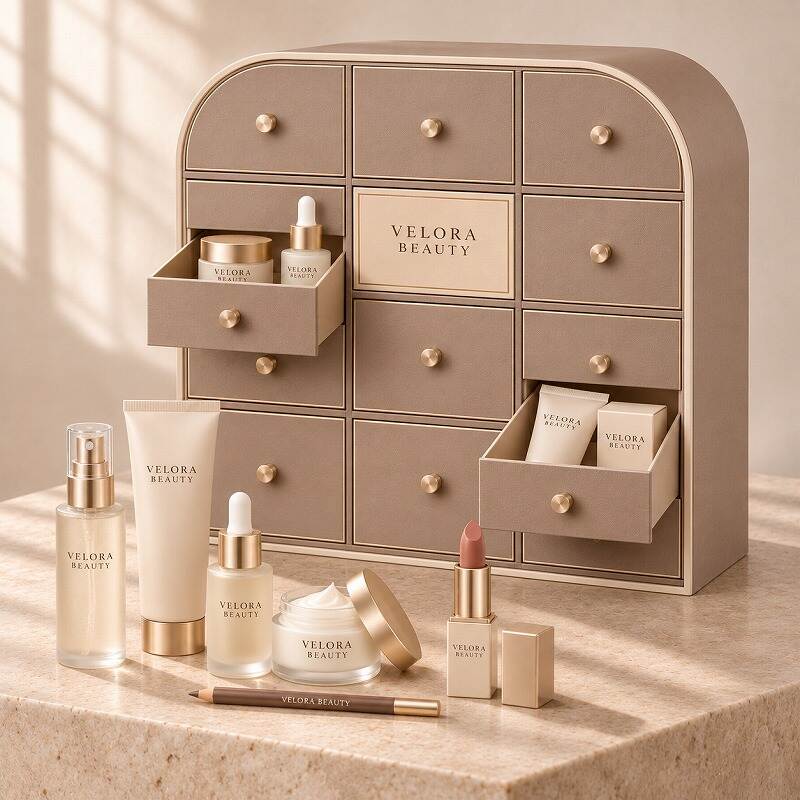
Arched-Door Drawer Calendar
A vertically oriented rigid cabinet with a rounded arch, flat base and front-access drawers. The architecture supports a facade-style artwork story and a compact rectangular footprint for shelf or counter display.
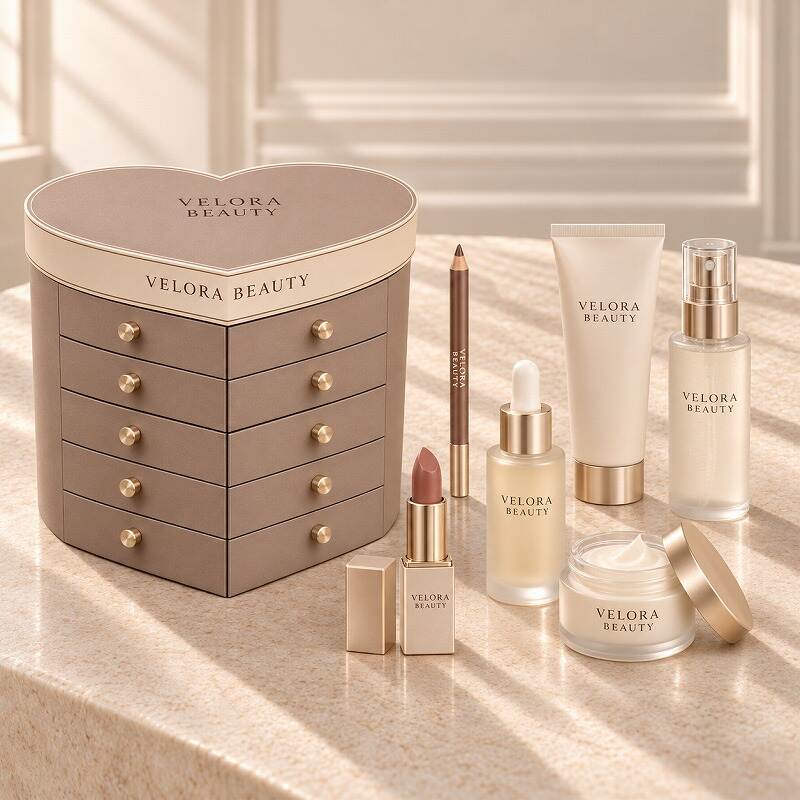
Heart-Shaped Drawer Calendar
A heart-contoured rigid case with a fitted shaped top and drawers distributed across two front planes. The form prioritizes gifting symbolism and creates more perimeter, lid-alignment and corner-protection requirements.
Door Shape or Heart Shape: Which Structure Fits the Brief?
Select the form after defining the assortment, display environment, gift story and distribution constraints.
| Decision factor | Arched-door version | Heart-shaped version |
|---|---|---|
| Primary impression | Architectural, editorial and vertically composed | Emotive, gift-led and immediately recognizable |
| Display footprint | Usually simpler rectangular base and vertical face | Wider curved perimeter and two-plane presentation |
| Drawer planning | Front grid supports clear row and column control | Split layout must balance products across the centerline |
| Artwork focus | Arch header and repeatable drawer-face system | Heart lid, curved band and mirrored front graphics |
| Key risk | Arch symmetry, carcass squareness and tall-case stability | Lid fit, heart symmetry, center joint and perimeter protection |
A Matching Colorway Does Not Remove Structural Risk
The program succeeds when each shape functions independently and both designs still look like one controlled collection.
Mixed drawer depths
A shared front design can hide different product envelopes. Every drawer needs enough internal depth without projecting beyond its carcass or wasting the overall shipping cube.
Hardware inconsistency
Even matching round pulls can use different stems or fixing methods. Define finish, projection, attachment and pull-force expectations for each structure.
Color drift across materials
Wrap paper, printed drawer faces, foil and hardware reflect light differently. Approve physical targets instead of judging only digital artwork.
Wrong-version filling
Two product maps can be confused during kitting. Use distinct design codes, position identifiers and packing instructions throughout revisions and inspection.
Different protective needs
The door arch and heart perimeter create different impact and abrasion zones, even when both finished boxes use the same master-carton artwork.
Seasonal approval pressure
A delayed approval on one shape can affect shared materials and campaign delivery. Plan separate sample decisions within one master schedule.
Coordinate Materials Without Ignoring Different Workmanship
Use common specifications where they create collection consistency, then define shape-specific acceptance points.
| Element | Shared collection target | Shape-specific approval |
|---|---|---|
| Rigid board and wrap | Board grade, paper texture and color standard | Arch curve, heart lobes, center point, seams and corner relief |
| Drawer construction | Straight rectangular bodies, board, wrap and gap standard | Carcass fit, depth, running clearance and loaded slide action |
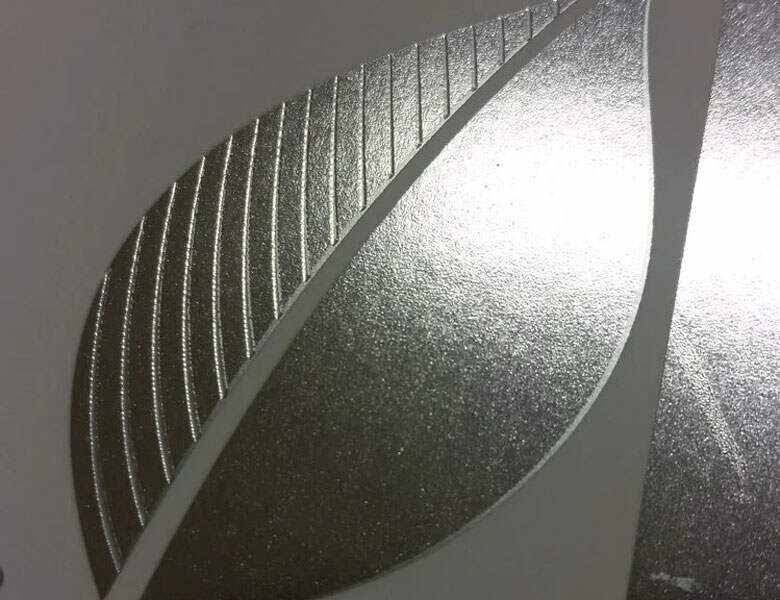
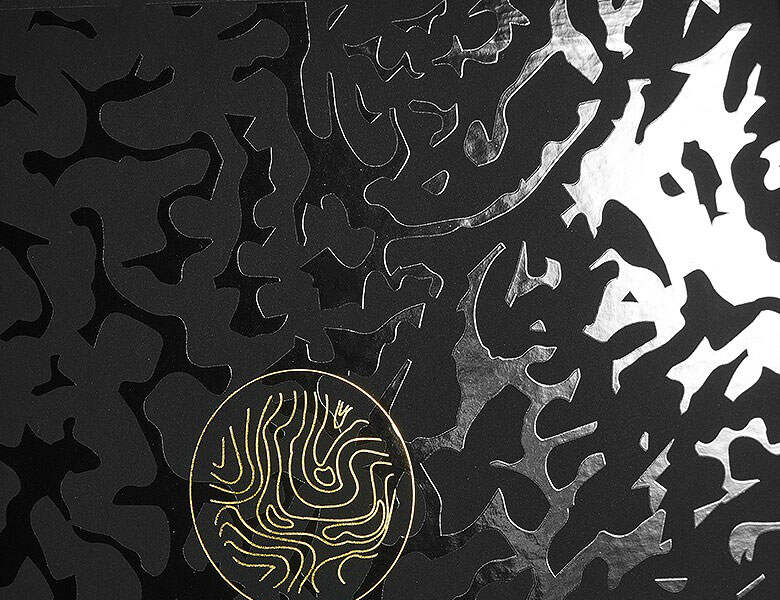
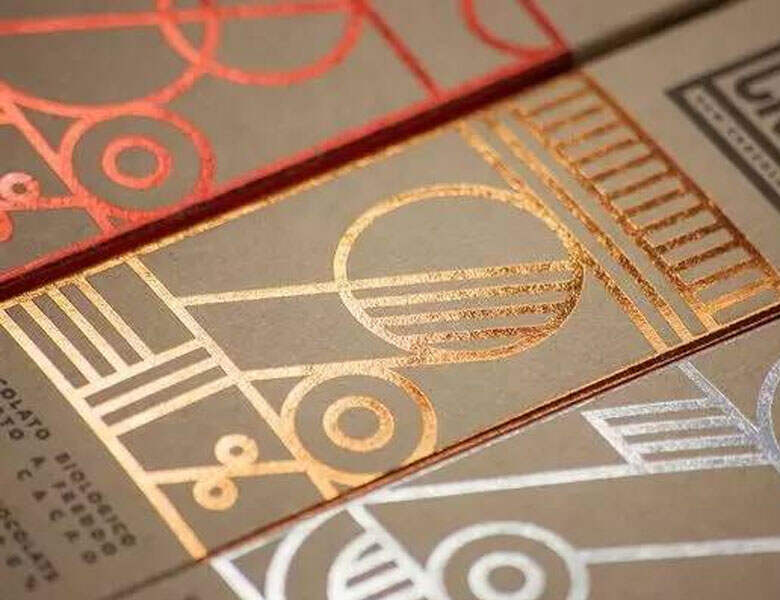
| Foil and print | Foil shade, colors, typography and decorative language | Registration across arch panels, curved lid bands and drawer faces |
| Pull hardware | Brushed champagne finish and visual scale | Round base, stem length, attachment, alignment and snag condition |
| Protective pack | Branding, labeling and destination information | Different cushions, orientation, carton dimensions and route evaluation |

Engineer the Door-Shaped Calendar as a Stable Vertical Cabinet
The arched header creates the door or portal identity, while the drawer carcass below should remain square, flat and repeatable. Keep the base broad enough for the loaded center of gravity, especially when heavy jars or glass bottles are placed in upper rows.
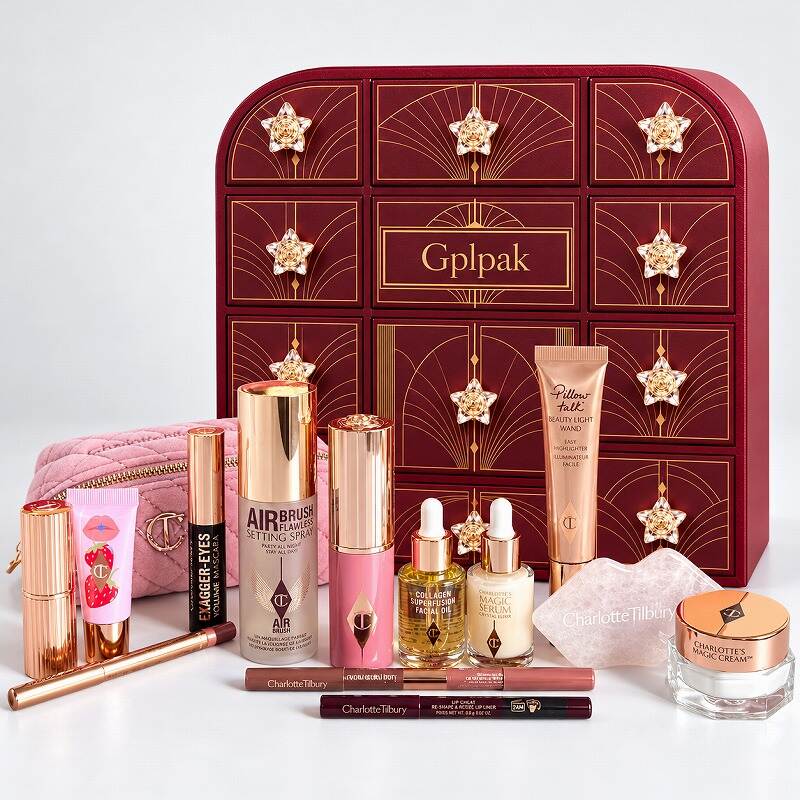
Conventional rectangular drawers simplify retrieval and packing control. Each drawer still needs the correct internal envelope, product retention and pull clearance. Star-shaped pulls or other decorative hardware should be assessed for attachment strength, snag risk and consistency.
Confirm arch symmetry against a centerline and approved profile.
Distribute heavy products low and close to the cabinet center.
Check every loaded drawer for slide action and accessible removal.
Protect the curved header from compression in the outer pack.
Balance the Heart Silhouette, Lid Fit and Two-Sided Drawer Loads
A heart-shaped case introduces compound curves, a central point and mirrored sides. The shaped top must locate without rocking, excessive friction or visible perimeter mismatch. The cabinet beneath needs a flat bearing surface even when the decorative outline curves outward.
Drawers positioned across two shallow front planes should be balanced by weight and depth. Use conventional rectangular drawer bodies behind the decorative heart facade; do not rely on fan-shaped or irregular drawers unless the buyer explicitly approves a separate structural solution.
Approve heart symmetry, center point and lid-to-body gap.
Pair left and right product weights where practical.
Maintain straight drawer sides and consistent running clearance.
Add perimeter protection around lobes and the front point.

Build Separate Drawer Maps from the Real Assortments
The two structures may share the same product family or carry different edits. Either way, each position needs its own controlled product and drawer data.
| Buyer input | Why it matters | Decision created |
|---|---|---|
| Maximum product dimensions | Closures, caps and crimped ends often define the envelope | Drawer internal size, opening and insert geometry |
| Filled product weight | Controls weight distribution and cabinet stability | Position, board grade, carcass support and pull load |
| Fragile or sensitive areas | Glass, pumps, droppers and decorated faces need non-load zones | Fitment contact surfaces and orientation limits |
| Reveal sequence | Campaign storytelling may prioritize hero items or routines | Number, row, side, product orientation and artwork file |
| Representative samples | Nominal drawings may omit tolerance and real handling behavior | Loaded sample approval and filling instruction |
Approve One Shared Target
Use agreed paper, ink or Pantone targets and consistent viewing conditions across both shapes, then define how acceptable production variation will be assessed.
Keep Foil and Hardware Coherent
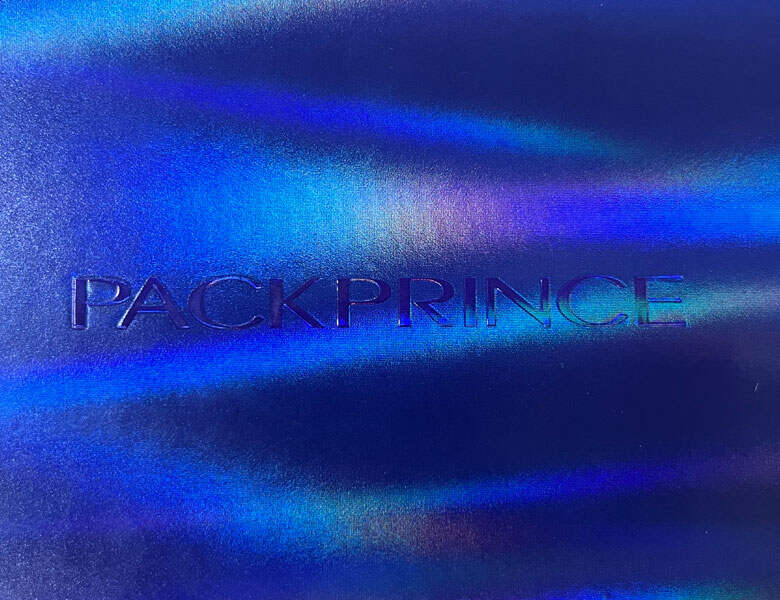
Match foil shade, emboss depth and pull-hardware finish while checking that different panel curves and drawer faces do not create inconsistent visual weight.
Adapt, Do Not Stretch
Build a shared design system, then adapt graphics to the arch, heart lid, curved bands and drawer grid. Do not force one flattened artwork file onto two unrelated dielines.

Approve Each Structure Separately, Then Review the Collection Together
A matching finish does not make the two structures mechanically identical. Each needs its own signed structural sample, loaded drawer map and protective pack.
Derivative visualization, not an actual inspection, certification or test record.
| Inspection point | Door-shaped sample | Heart-shaped sample |
|---|---|---|
| Profile geometry | Arch radius, centerline, side walls and flat base | Mirrored lobes, center point, curved band and bearing base |
| Opening action | Drawer travel under expected loaded weight | Lid placement plus drawer travel on both front planes |
| Load distribution | Heavy items low and centered in the vertical cabinet | Balanced left-right load around the central joint |
| Decoration | Arch artwork, drawer grid and pull alignment | Lid artwork, band registration and mirrored faces |
| Distribution protection | Top arch, corners, front pulls and finish abrasion | Heart lobes, center point, lid movement and front pulls |
Secondary packaging
Use for sealed primary packs. Formula compatibility, leakage control, tamper evidence and required cosmetic labeling remain primary-pack and market responsibilities.
Protective shipping system
Neither decorative case is automatically parcel-ready. Evaluate the filled calendar together with its protective outer pack for the intended route.
Project-specific claims
Material sourcing, recycled content, certification, recyclability and performance claims require evidence for each actual design.
Price the Collection as Two Structures with Shared Visual Inputs
Matching colors do not eliminate separate tooling, board yield, drawer carcasses, assembly or protective packing. Commercial terms are confirmed after both specifications are reviewed.
There is no responsible universal MOQ, price or lead-time promise for both shapes. GPLPAK confirms terms after the complete door and heart briefs are reviewed.
Send Two Product Maps and One Collection Brief
Separate structure data prevents assumptions; shared brand data keeps the collection visually aligned.
FAQ: Door and Heart Shaped Skincare Advent Calendar Boxes
Are these two boxes one combined structure?
No. They are two separate rigid drawer structures designed as one visual collection. Each has its own shell, carcass, product map, tooling, assembly and protective pack, even when the papers, colors and finishes match.
What is the main difference between the door and heart versions?
The arched-door version is a vertical front-drawer cabinet with a simpler base footprint. The heart version has a shaped top, curved perimeter and split front planes, creating additional lid-fit, balance and perimeter-protection requirements.
Can drawer counts and sizes be customized?
Yes. Counts and dimensions are developed from the real product list and acceptable finished size. Changing the count alters the carcass, profile, artwork, weight distribution and packing sequence, so it is confirmed before structural sampling.
Can both calendars use identical drawer inserts?
Only when the assigned products and drawer envelopes are genuinely identical. Inserts should be developed around maximum product dimensions, filled weight, fragile areas and orientation rather than copied between positions for convenience.
How is the heart-shaped lid kept aligned?
The lid and body profiles, wall thickness, locating fit and wrap buildup are coordinated in the structural sample. Approve the perimeter gap, removal force and repeated replacement with the fully loaded cabinet.
How is the tall door-shaped cabinet kept stable?
Use an adequate base, rigid carcass and controlled load distribution. Place heavier products lower where practical, then evaluate the complete calendar with drawers closed, open and partly removed during loaded-sample review.
Can loose skincare formula touch the drawer paper?
Not by default. These calendars are secondary packaging for sealed primary packs. Loose formula requires separate material-compatibility, safety and regulatory review for the target market.
What determines MOQ, price and lead time?
Drivers include dimensions, board, drawer maps, shaped shells, lid, hardware, papers, finishes, quantities by design, versions, sampling, assembly, filling and seasonal capacity. GPLPAK confirms terms after reviewing both briefs.
Request a Door and Heart Calendar Feasibility Review
Send both product maps, representative samples, desired drawer counts, shared artwork direction, quantities, destinations and target dates. GPLPAK can review the structures, sampling scope, collection finishes and commercial inputs.
Discuss Your Two-Structure ProjectRelated Packaging Development Resources
VELORA BEAUTY is a fictional placeholder brand. All derivative visuals show a design direction and do not represent a completed customer order, approved production specification, certification or transport-test result.
Opciones disponibles
Materiales


color
Los colores
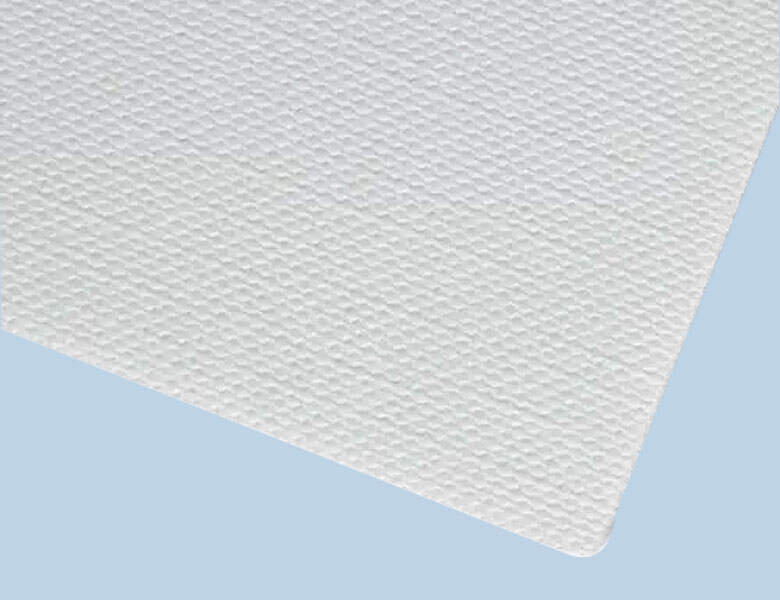
Los colores de proceso se basan en el sistema de impresión CMYK, utilizando puntos en capas de cian, magenta, amarillo y negro a diferentes densidades para reproducir una gama completa de colores y gradientes lisos.
En la producción de envases, la impresión CMYK se logra a través de torres de impresión separadas, con cada torre dedicada a un color. Juntas, las cuatro torres trabajan en secuencia para construir con precisión la imagen final y la salida de color.
Los colores
Los colores puntuales usan tintas premezcladas que se imprimen directamente, lo que requiere solo una sola torre de impresión. Debido a que el color está predeterminado, asegura resultados consistentes en diferentes máquinas, proveedores y ciclos de producción.
A diferencia de los colores del proceso, los colores de puntos parecen uniformes incluso bajo una inspección cercana, sin patrones de puntos CMYK visibles, lo que proporciona una reproducción de color más limpia y precisa.
Acabado superficial


Laminación


Cajas Insertar


Proceso de pedido
Una plataforma única para obtener cotizaciones y realizar pedidos, con una plataforma dedicada
Apoyar cada paso del camino.
Personaliza tu
embalaje
Ir a la plataforma gplpak para personalizar el tamaño, materiales, impresión y acabados de sus cajas rígidas.
Obtener cotizaciones &
muestras
Compara las cotizaciones de embalaje y obtenga una muestra de su caja rígida antes de iniciar un pedido de producción.
Seleccionar envío
métodos
Elija un método de envío preferido e incluso configure envíos divididos para obtener un paquete entregado más rápido.
Subir obras de arte
Agregue su obra de arte a la plantilla de dielina que personalizamos a las especificaciones de su caja.
Seguir orden
progreso
Obtenga una visibilidad completa sobre el progreso de las muestras, la producción y el envío.
¿Tienes alguna otra pregunta?
¿Tienes otra pregunta?
Déjanos un mensaje y nuestro equipo de embalaje responderá en un plazo de 2 horas.