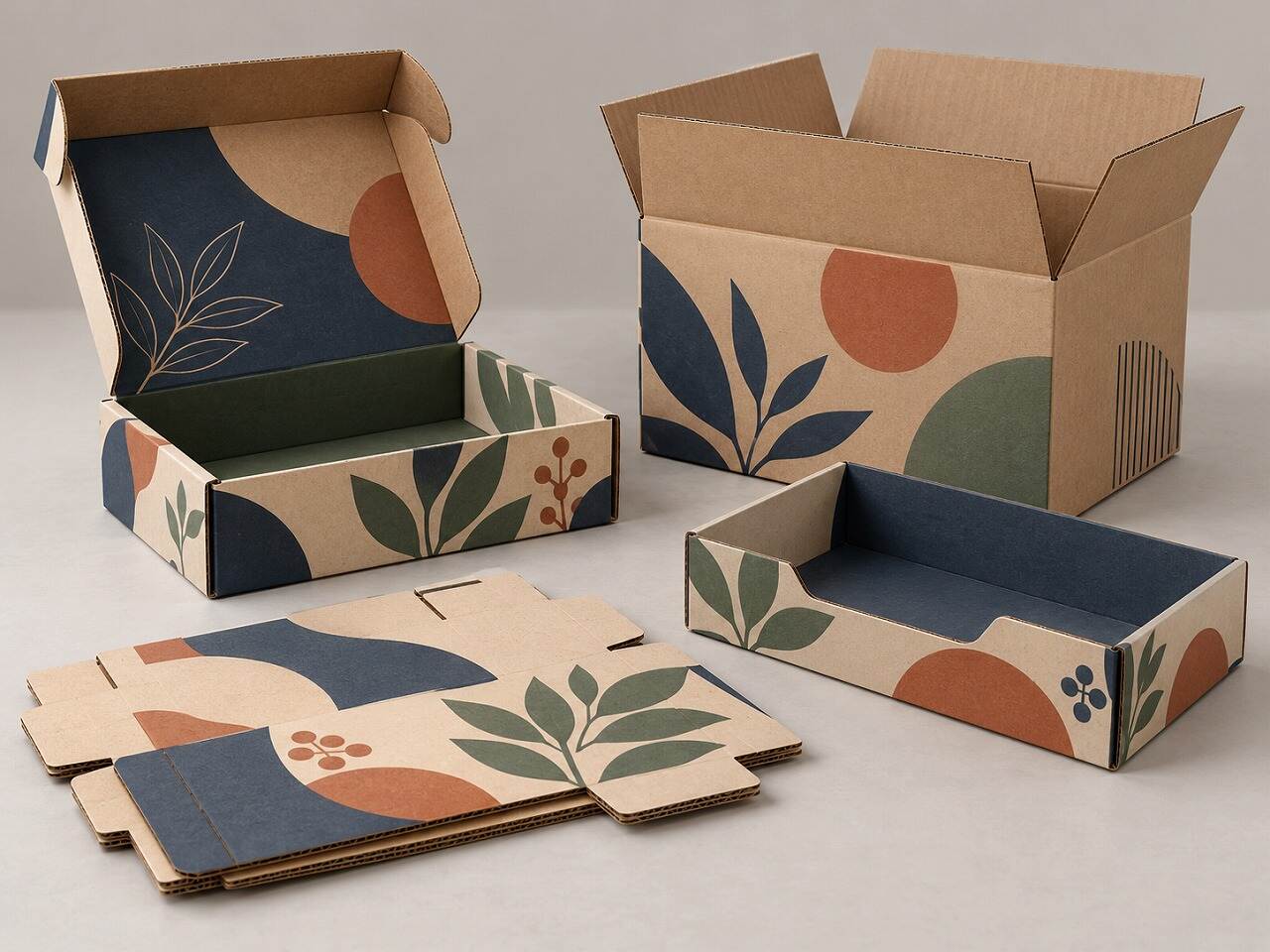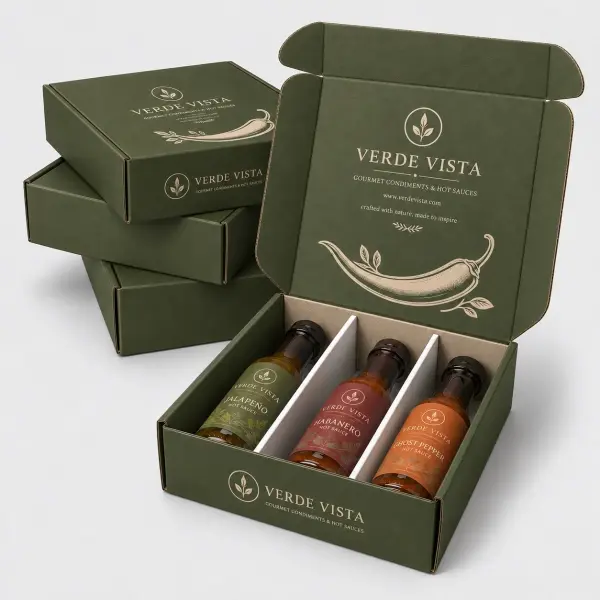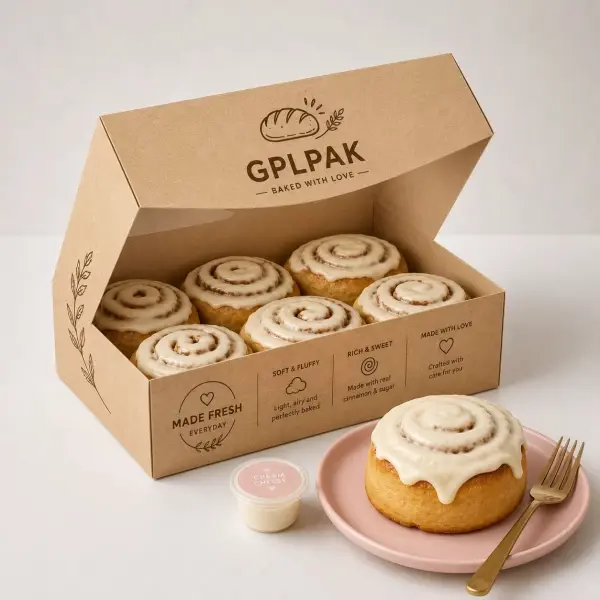
In brief: Personalized corrugated boxes are made-to-order shipping, ecommerce or retail packs whose structure, board grade, dimensions and graphics are developed for a defined product and distribution route. For a reliable quotation, a buyer should specify the packed product, internal dimensions, packed weight, box style, board performance requirement, print coverage, order quantity, delivery destination and approval tests. The lowest unit price is not automatically the lowest total cost if the pack wastes freight space, slows packing or fails in transit.
A search for personalized corrugated boxes often produces attractive printed mailers, but a B2B buyer needs more than a surface design. The same artwork can be applied to a compact subscription mailer, a regular slotted shipping case, a shelf-ready tray or a litho-laminated presentation pack. Those formats do different jobs, use different converting routes and create different cost drivers.
This guide shows how to brief, compare and approve a custom corrugated program without treating every flute, strength value or test method as interchangeable. It is written for brand owners, distributors, ecommerce teams and procurement managers sourcing printed corrugated packaging in wholesale quantities. Buyers ready to review specific formats can also view GPLPAK's corrugated box capabilities.
“Personalized” should mean that the package has been engineered and printed for a particular product, brand and route—not merely that a generic stock carton receives a logo. A complete specification connects appearance to performance. The buyer should first identify whether the corrugated pack is primary presentation packaging, secondary grouping packaging or a distribution shipper.
| Packaging job | Common format | Main design priority | Question the buyer must answer |
|---|---|---|---|
| Ecommerce mailer | Roll-end tuck-front mailer | Opening experience plus parcel protection | Will it ship alone or inside an outer case? |
| Master shipping case | RSC or die-cut case | Stacking, handling and pallet efficiency | What is the packed weight and stacking pattern? |
| Retail or shelf-ready pack | Tray, tear-away case or display | Fast merchandising and clean graphics | How is the case opened without damaging the display? |
| Premium corrugated gift pack | Die-cut mailer or litho-laminated box | Print fidelity, fit and unboxing | Does it still need a separate transit shipper? |
This distinction prevents a common sourcing error: asking a presentation mailer to perform like a qualified shipping case, or adding excessive corrugated strength to a box that already travels inside a master carton. A useful brief states the packaging level and the conditions it must survive.
Also define who interacts with the box. A fulfillment operator values rapid erection, obvious loading orientation and dependable tape adhesion. A retailer needs compact storage and clean shelf conversion. An end customer notices opening force, print quality, waste and product presentation. These requirements can conflict, so rank them before the converter starts a dieline. For example, a highly secure locking sequence may improve parcel resistance but add packing steps; an oversized reveal may look premium but increase dimensional freight. A written priority order turns subjective preferences into engineering decisions.
The box maker cannot determine a safe internal size from product volume or a marketing description. Supply the finished product or a controlled drawing and include everything that enters the box: closures, labels, retail cartons, inserts, leaflets, cables, accessories and protective bags. Record the maximum dimensions and mass, not only the nominal dimensions.
If the route is not yet fixed, describe realistic worst-case handling rather than selecting a famous test number by habit. ISTA advises users to understand the distribution environment and select a test approach that represents it. Material, product or package changes can also justify retesting. GPLPAK's 包装コンサルティングそしてproduct development pages outline the early-stage information that can be reviewed before sampling.
Corrugated board combines linerboard with a fluted medium. The flute profile affects caliper, cushioning, print surface and converting behavior, but “E-flute” or “B-flute” is not a complete performance specification. Fibre Box Association notes that profiles can vary because they are created by different corrugator rolls. Request the actual board construction and the performance value relevant to the pack.
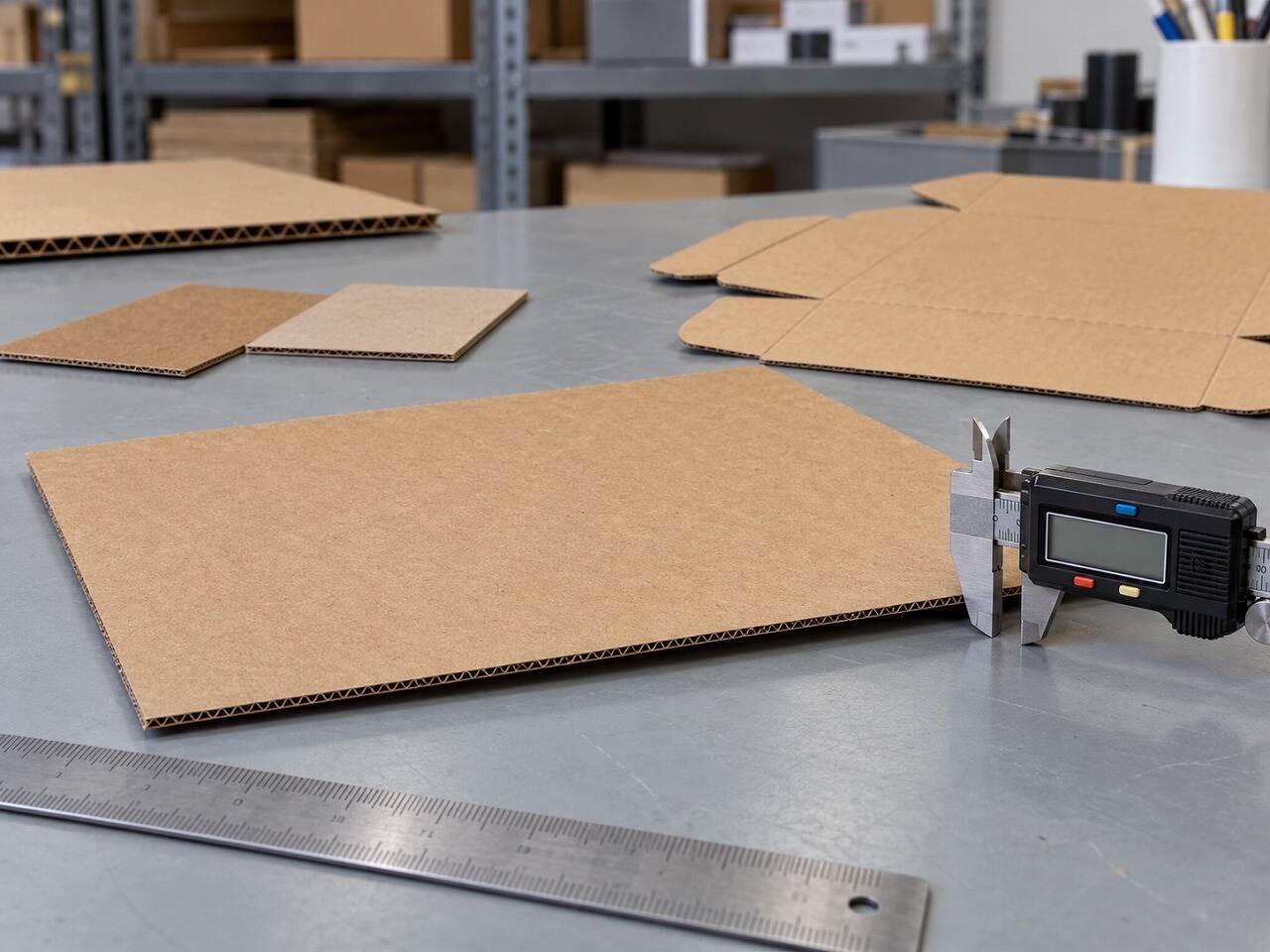
Check the supplier's production-representative board sample, including actual caliper and flute formation, instead of approving from a generic flute-name chart alone.
Do not convert ECT and burst strength as if they were the same measurement. Edge Crush Test relates to the edgewise compression resistance of corrugated board and can inform stacking performance. Burst, often associated with a Mullen test, measures resistance to rupture under hydraulic pressure. A value in one system does not prove the result in the other; specify the system your customer, carrier or project requires.
| Board decision | What it influences | What to place on the RFQ |
|---|---|---|
| Single-wall or double-wall | Caliper, compression, weight and converting | Approved construction or required performance result |
| Flute profile | Cushioning, bend radius and print surface | Profile plus supplier sample and actual caliper |
| Kraft, white or coated liner | Appearance, ink contrast and rub behavior | Inside/outside liner color and print side |
| ECT or burst requirement | A defined board performance property | Test method, target value and acceptance rule |
| Moisture and storage conditions | Compression retention and warp risk | Route and conditioning assumptions |
Structure determines material yield, assembly time, closure, product restraint and customer experience. The “best” style is therefore the one that meets the pack-out and route requirements with the fewest unnecessary parts. Common choices include:
Regular slotted container (RSC): efficient for master cases and palletized shipping; normally sealed with tape or adhesive.
Roll-end tuck-front mailer: strong presentation and convenient opening for ecommerce; extra board and converting can make it less efficient than an RSC.
Die-cut tray or display: useful where the shipper converts into a merchandising unit; tear-away features must open cleanly.
Full-overlap or reinforced case: considered when closures, weight or rough handling demand more panel overlap, subject to testing.
Corrugated fitment or divider: separates units, controls movement and can reduce reliance on loose fill when correctly engineered.
Ask the converter to show the flat layout, glue joint, locking tabs, hand holes, tear features and sealing areas. Confirm whether quoted dimensions are inside dimensions and define the dimension order. A structural sample is the fastest way to detect interference, excessive free space, difficult assembly or a lid that springs open.
Review material utilization at the same time. A few millimeters added to one panel can force a larger sheet layout or reduce the number of blanks cut from a sheet, changing both material use and price. Nesting, grain or flute direction, die-cut waste and the converter's machine format all matter. This is why two boxes with similar finished dimensions may not share similar economics. A value-engineering proposal should show what changes and what remains protected—not merely return a cheaper price.
Printing is a production decision, not only a visual preference. Artwork coverage, liner color, required color tolerance, variable content, box size and total run all affect the practical route. Three common approaches cover most personalized corrugated programs.
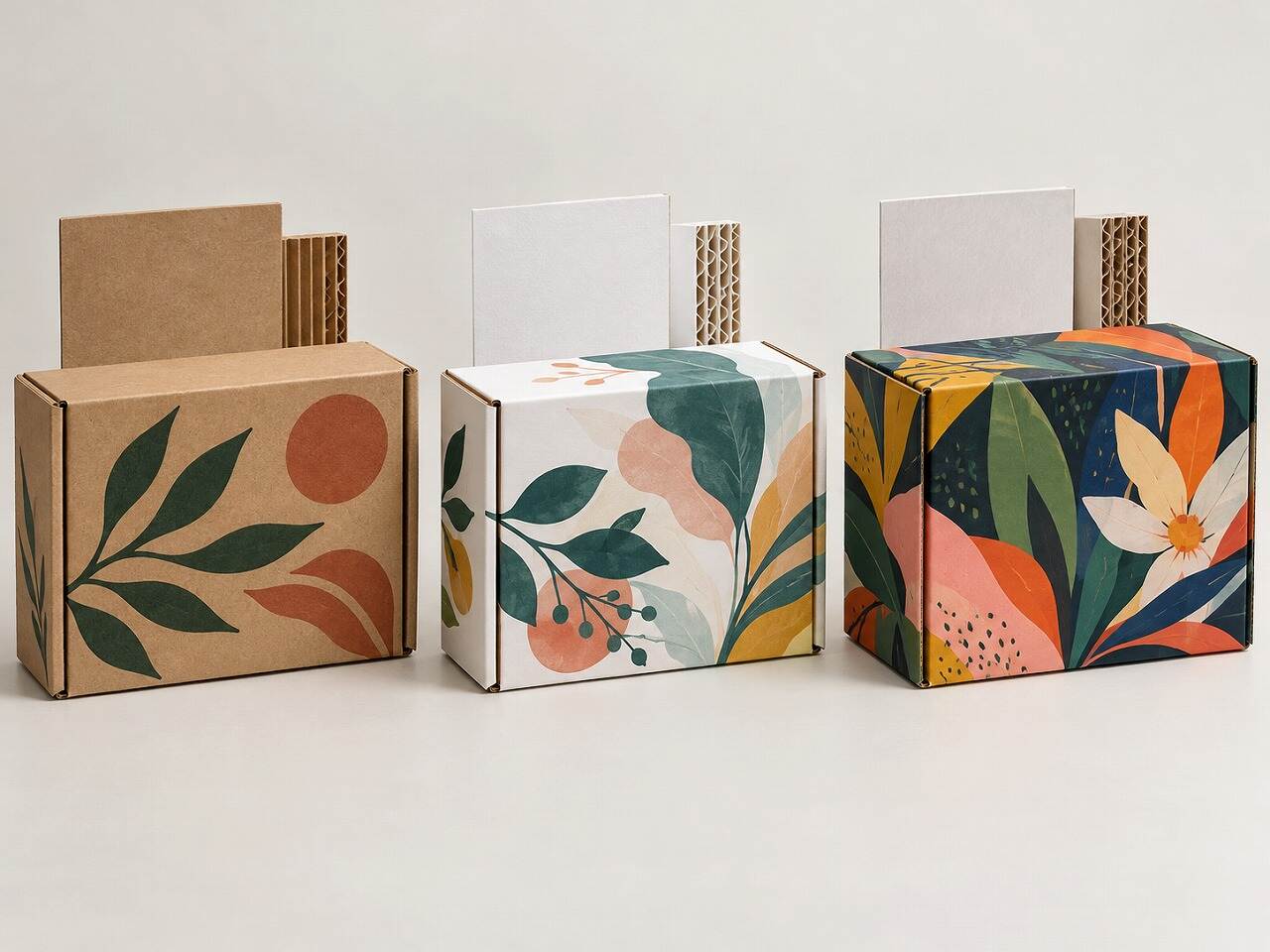
Print method changes color behavior, detail and setup economics; compare a physical press proof or production-representative sample when appearance is critical.
| プロセス | Best fit | Strengths | Points to approve |
|---|---|---|---|
| Direct flexographic print | Repeat programs and restrained graphics | Efficient direct-to-board printing; strong for line art and spot colors | Plate cost, registration, trapping, ink on kraft and print crush |
| Direct digital print | Shorter runs, many SKUs or changing artwork | No conventional plates; detailed multicolor graphics and versioning | Machine format limits, color consistency, surface treatment and unit economics |
| Litho-lamination | Premium retail graphics and fine process work | High-resolution printed sheet laminated to corrugated board | Paper wrap, lamination, score cracking, coating and added operations |
Do not judge color from an uncalibrated screen alone. Kraft liner changes perceived hue; white underlay and coated papers behave differently. Define whether a brand color is a target or a controlled tolerance, the viewing light, and which approved sample becomes the production reference. Varnish or protective coating may improve rub resistance, but it can affect recyclability claims and should be assessed as part of the complete package.
A personalized corrugated box may carry much more than a logo. It can organize product identification, handling information, barcodes, regulatory copy, recycling guidance and an opening sequence. The artwork should be built on the converter's approved dieline after the structure is stable.
Separate cut, crease and print layers. Keep technical lines non-printing and identify the outside and inside views.
Respect joints and scores. Do not place small type, QR codes or critical symbols across a glue flap, main crease, hand hole or tear strip.
Control barcode quiet zones and contrast. Verify the final printed code on the intended liner and coating, not only in the artwork file.
Define inside printing explicitly. It may require a separate pass, plate set or production route.
Version artwork deliberately. List SKUs, languages and variable fields so quotation quantities match the actual version mix.
For multiple sizes, build a packaging architecture rather than stretching one design indiscriminately. Set common positions, color rules and minimum logo sizes, then adapt each dieline. This preserves brand recognition while keeping legal copy and barcodes usable.
Prepress approval should identify the exact source file, fonts, linked images, spot-color definitions and expected overprint behavior. Require a PDF proof for content and position, but understand what it proves: a soft proof can catch copy and layout errors, while a calibrated contract proof or press sample is needed for tighter appearance decisions. Sign and date the chosen reference, then prohibit unapproved artwork substitutions. For repeat orders, record whether plates, dies and digital files are reusable, how long they are retained and who owns them.
A color mock-up can approve visual hierarchy, but it cannot prove compression or transit performance. Validation should progress from structural fit to a production-representative sample and, where risk warrants it, a packed test. The test object is the complete pack: product, retail components, insert, corrugated box, closure and any outer shipper.
A test result only supports the configuration that was tested. If board construction, product weight, insert, closure or pack count changes, review whether the evidence still applies. GPLPAK's design validation for manufacturingそして開発サンプリング services can be used to coordinate fit and production-readiness decisions. For independent distribution testing, select the procedure with a qualified laboratory or packaging engineer rather than copying a test designation from another project.
Before releasing mass production, run a short pack-out trial with the people or equipment that will actually use the box. Time erection, insertion, closing, labeling and case packing. Check whether operators can accidentally reverse a fitment or damage print at the scores. Then confirm how flat boxes are bundled and protected from moisture in storage. These observations often reveal avoidable labor and damage costs that a static sample does not show.
A credible supplier cannot price a custom corrugated program from the keyword alone. Unit cost changes with blank size, board construction, print process, ink coverage, tooling, finishing, packing method, order quantity, SKU mix and freight. MOQ is likewise not a universal number: it depends on the chosen process, sheet utilization, tooling and commercial setup.
Unit price at identical quantities and the exact number of artwork versions
One-time die, plate, sample and prepress charges
Inside print, coatings, tear strips, tape, handles, inserts and assembly
How boxes are packed—flat or pre-assembled—and units per export carton or pallet
Incoterm, loading location, destination and freight assumptions
Sample, production and transit milestones stated as project-specific estimates
Evaluate total landed and operating cost. A slightly higher-converting box can be economical if it reduces void fill, improves cube utilization or shortens packing time. Conversely, a premium print route may add little value to a master case that never reaches the customer. Ask suppliers to explain cost alternatives without silently changing board grade or finished dimensions.
Normalize the quote before selecting a vendor. Record whether prices include tooling, samples, export cartons, pallets, inspection, taxes and freight; note the currency and validity period. Compare units per bundle, cartons per pallet and estimated shipment cube. If forecasts are uncertain, ask for several quantity breaks using the same specification and artwork mix. This creates a usable cost curve without pretending that one published “wholesale price” applies to every personalized corrugated box.
An approved sample is useful only when the order also defines measurable acceptance criteria. Build the inspection plan around functional risk, not cosmetic perfection alone. The drawing, color reference, board specification and pack-out standard should share a revision number.
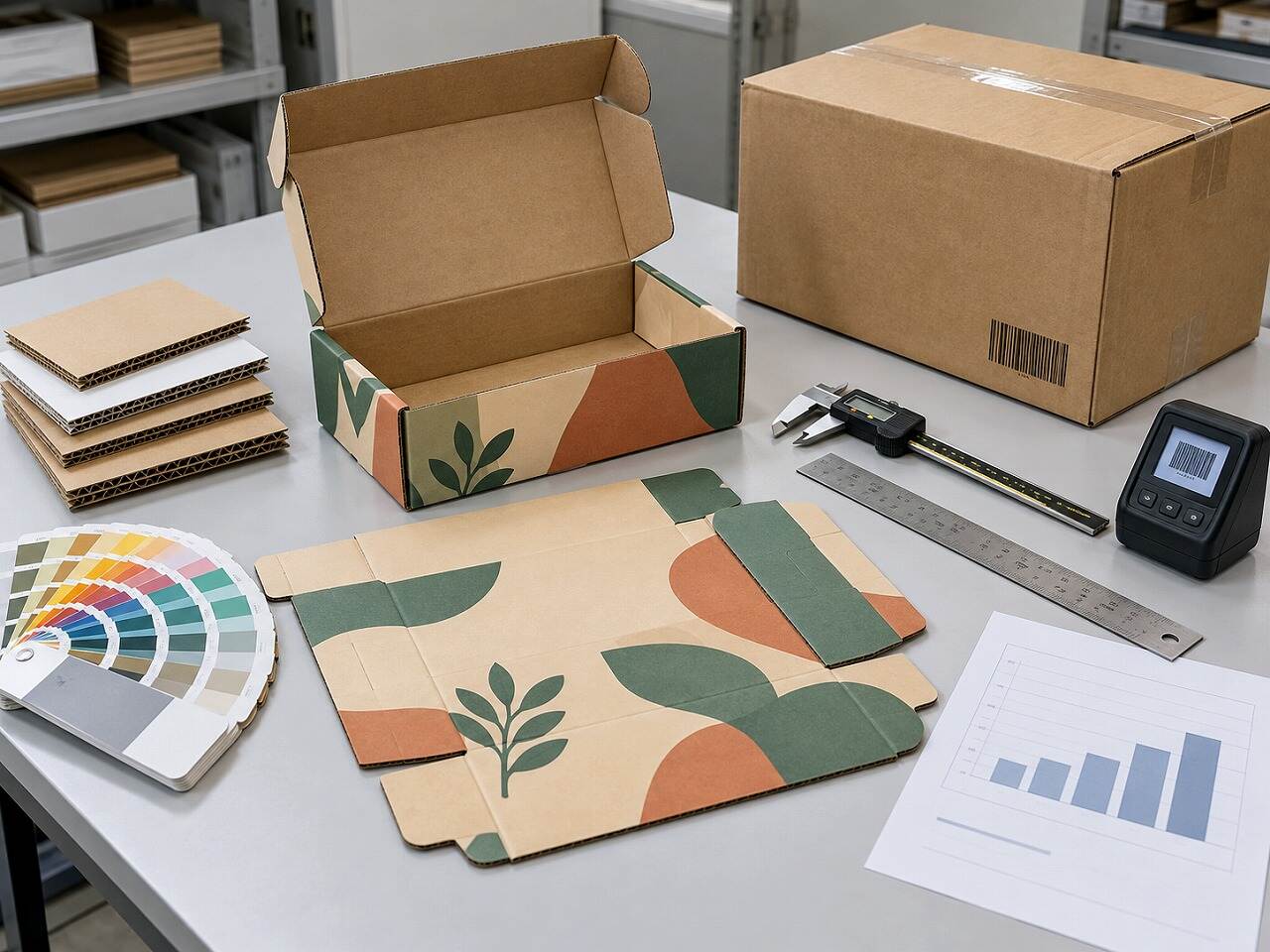
A usable approval set links structure, board, artwork, color, barcode and packed performance to one controlled revision.
| Control point | Evidence or method | Typical defect to prevent |
|---|---|---|
| Finished dimensions and squareness | Approved drawing and defined measuring method | Poor fit, bulging or packing-line jams |
| Board identity and performance | Purchase specification, mill/plant records and agreed test | Unapproved substitution or weak stacking |
| Print and coating | Approved color reference, registration limit and rub check | Color drift, scuffing or unreadable small copy |
| Cut, crease, glue and locks | Visual and functional assembly inspection | Cracked scores, open joints or tabs that release |
| Barcode and pack-out | Scan verification and approved packing instruction | Receiving errors, mixed versions or freight damage |
For sustainability communication, ask for evidence that supports the exact claim. “Recyclable,” “recycled content,” “FSC-certified” and “plastic-free” are different statements and may not apply to every component or market. The U.S. FTC Green Guides caution against broad, unqualified “green” or “eco-friendly” claims. Coatings, windows, tapes, labels, inserts and local collection systems can change the correct wording.
Define change control for repeat production. A converter should not substitute liner, medium, ink, coating, adhesive or manufacturing location when the change could affect appearance or performance without following the agreed approval route. Retain a signed sample and current specification at both buyer and supplier, record corrective actions against the affected lot, and distinguish cosmetic deviations from functional nonconformance. This makes supplier reviews evidence-based and gives future orders a controlled baseline.
If chain-of-custody certification is required, put the certification scope, claim wording and documentation in the RFQ; do not infer coverage from a supplier's general marketing page. Buyers evaluating production controls can review GPLPAK's manufacturing, packingそして工場概要部 information, then request project-specific records during qualification.
A complete RFQ reduces assumptions and makes quotations comparable. Send the following in one controlled package:
Product sample or dimensioned drawing, packed weight and quantity per box
Packaging job, distribution route, pallet or parcel conditions and outer-pack relationship
Required style, internal dimensions and dimension order—or permission to propose them
Board construction, liner colors and performance/test requirement
Print process preference, artwork coverage, colors, inside print and protective finish
Artwork files, legal text, barcode requirements and number of versions
Order quantity by size/SKU, repeat forecast and acceptable over/under-run rule
Sample stages, acceptance criteria and approval owners
Packing configuration, labeling, destination, Incoterm and required delivery window
Evidence required for material, environmental or chain-of-custody claims
Send GPLPAK your product dimensions or sample, packed weight, intended route, artwork, quantity by SKU and acceptance needs. The response can then address structure, board, print, sampling and quotation on the same basis.
Request a Corrugated Box Review View Corrugated Box OptionsThey are corrugated shipping, ecommerce, display or presentation boxes whose size, style, board, print and features are made for a defined product and brand. Personalization can include structural engineering, direct or laminated printing, inside graphics, inserts, barcodes and handling information.
No. “Currogated” is a common misspelling of corrugated. The professional term is personalized corrugated boxes, referring to boxes made from fluted paperboard faced with linerboard.
There is no universal best flute. Fine profiles can provide a compact pack and smoother print surface; larger profiles can add caliper and cushioning. The correct choice depends on product weight, box span, liner and medium properties, print process, route and tested performance. Approve the actual board sample because flute profiles vary by producer.
Use the system required by the project, customer or distribution standard. ECT measures edgewise compression resistance; burst measures resistance to rupture under pressure. They describe different properties, so one should not be presented as a simple equivalent of the other.
Direct flexography is often efficient for repeat work and spot-color graphics; direct digital printing is useful for shorter or versioned programs; litho-lamination supports detailed premium graphics. Final suitability depends on box size, artwork, liner, run quantity, color expectation and available equipment.
MOQ is project-specific. It changes with the print process, blank size, tooling, board procurement, artwork versions and production setup. Provide quantities by size and SKU so the supplier can quote a realistic break point rather than a generic minimum.
If the mailer ships through parcel or freight networks, testing may be appropriate. The procedure and severity should represent the actual route, packed product and business risk. A presentation box traveling inside a tested master shipper has a different requirement from a box shipped directly to the customer.
Send the physical product or controlled drawing, maximum dimensions and weight, pack count, route, preferred box style, quantity by SKU, artwork or brand guide, print coverage, destination, packing method and written acceptance criteria. If details are open, state which decisions the supplier may propose.
For independent definitions and decision boundaries, see the Fibre Box Association overview of corrugated, ISTA guidance on design and distribution testing, and the FTC summary of environmental marketing claims. Standards and customer requirements can change; verify the edition and scope that apply to the shipment and market.
 ホットニュース
2026-10-27
2026-10-23
2026-10-16
2026-10-12
2026-10-07
2026-09-30
2026-09-23
2026-09-22
2026-09-21
2026-09-18
Discover premium packaging solutions from Dongguan Xinglan Packaging Products Co., Ltd. Specializing in innovative, durable, and custom packaging products for diverse industries.
 英語
 EN
 RU
 ES
 KO
 JA
 PT
 IT
 DE
 FR
 NL