
 EN
EN  EN
EN  RU
RU  ES
ES  KO
KO  JA
JA  PT
PT  IT
IT  DE
DE  FR
FR  NL
NL Snelle links
A beautiful box can still fail if the incense arrives fractured, if fragrance migrates between variants, or if the graphics look different from the approved proof. The practical solution is to treat the pack as a system: the incense and its primary wrap, the printed retail box, and the corrugated shipping case each have a different job. This guide gives brand owners, incense manufacturers, importers and retail buyers a specification-first path from concept to a production-ready RFQ.
Buyers often use “incense packaging” to describe three different layers. The primary pack directly contains the incense and may manage aroma, dust or moisture exposure. The retail box provides identification, instructions, tamper evidence if specified, shelf presentation and modest physical protection. The distribution pack groups retail units for storage and transport. Treating one paper carton as all three layers usually creates ambiguous quotations and untested assumptions.
| Package layer | Primary responsibility | Buyer must define | Do not assume |
|---|---|---|---|
| Primary inner pack | Contains incense and supports the required aroma, dust and moisture-control strategy | Film, paper wrap, seal type, packed bundle size and compatibility criteria | A paper box alone is an aroma or moisture barrier |
| Printed retail box | Presentation, information, opening experience and secondary protection | Structure, artwork, finish, closure and retail display orientation | Premium appearance proves transit performance |
| Distribution case | Groups and protects retail units through a defined route | Units per case, stacking, pallet pattern, parcel or freight route and acceptance criteria | The retail carton can ship without an overpack |
For a wholesale project, write a one-sentence functional brief before requesting design work: “A printed secondary paper package for one sealed bundle of 20 incense sticks, displayed vertically in specialty retail and shipped in master cases.” Replace the example count and channel with your own. This simple statement aligns design, manufacturing, packing and freight conversations around the same deliverable.
Incense sticks are slender but not dimensionally trivial. Natural ingredients, hand finishing, bamboo cores, coating variation and bundle wrapping can change the maximum packed envelope. Measure approved production samples after they are bundled and sealed in the intended inner pack. The box converter needs maximum dimensions, not only nominal stick length.
| Input | How to document it | Why it changes the package |
|---|---|---|
| Maximum packed length, width and depth | Measure several sealed bundles at their widest points and record the maximum | Sets internal box size, loading clearance and shipping volume |
| Stick count and arrangement | State count, row pattern, tie or band, and whether a holder or leaflet is included | Controls bundle cross-section and internal movement |
| Inner-pack construction | Provide a physical sample, material specification and closure method | Seams, folds and trapped air affect fit more than flat-film thickness suggests |
| Retail and shipping orientation | Show shelf direction, hanging requirement and master-case pack-out | Determines panel hierarchy, closure direction and compression exposure |
Provide the physical product and inner pack whenever possible. If only a drawing is available, mark tolerances and identify which dimensions are maximum. Ask the converter to propose manufacturing clearances, then verify those clearances with a fit sample. Do not enlarge every dimension “for safety”; excess space can make sticks rattle, weaken presentation and increase material and freight volume.
The best structure depends on price position, packing speed, shelf behavior, refill strategy and shipping route. GPLPAK’s current packaging structure range includes folding, drawer, rigid, tube and other formats. Those categories are starting points, not finished specifications.
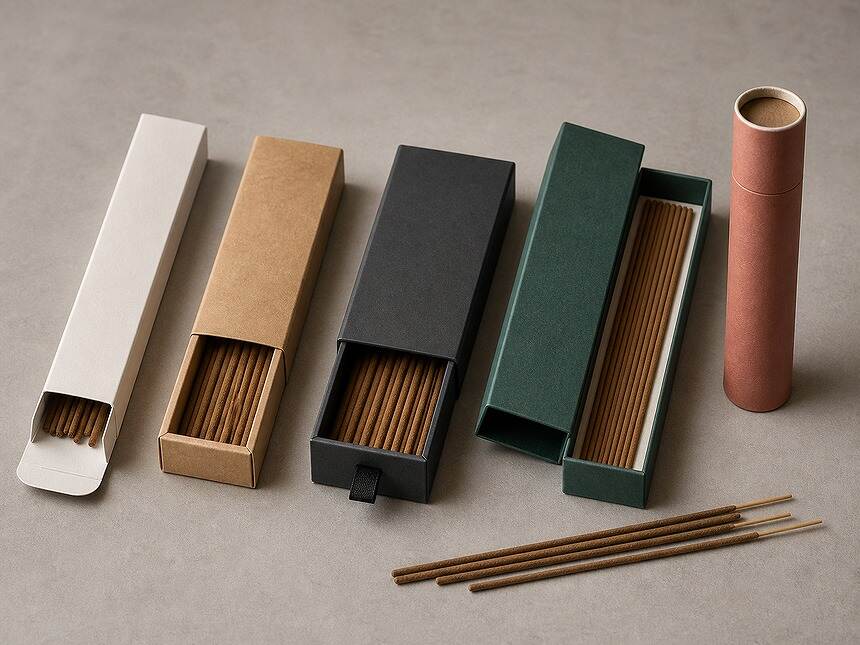
Structure changes material use, packing method, presentation and freight efficiency. Approve the actual packed-product fit before production.
| Box style | Best fit | Voordelen | Watch-outs |
|---|---|---|---|
| Folding carton | Volume retail programs and efficient flat shipment | Lightweight, printable and compatible with automated or manual packing | Panel bow, end-flap security and crush resistance need validation |
| Sleeve and tray | Mid-premium sets and controlled reveal | Distinct unboxing and a useful inner tray | Tray-to-sleeve friction can change with paper, finish and humidity |
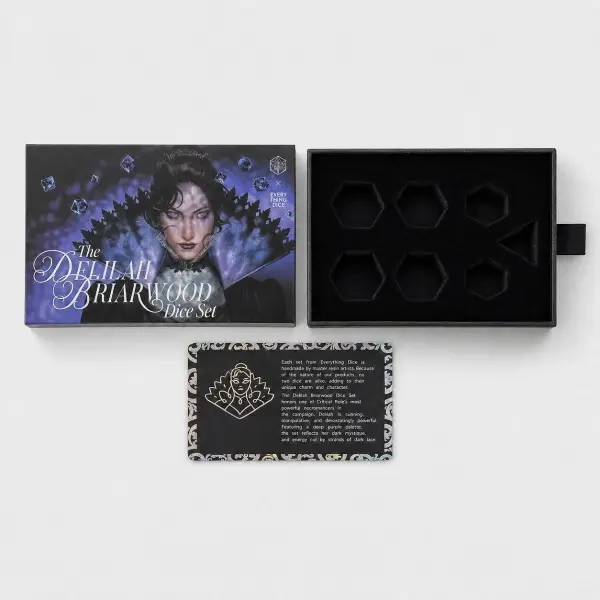
| Drawer box | Giftable incense, discovery sets and reusable packs | Premium interaction and strong panel area for storytelling | Ribbon pulls, stops and sliding clearance add components or assembly |
| Rigid setup box | Luxury gifting, limited editions and higher-value assortments | Substantial hand feel and strong presentation | Higher unit weight and assembled volume; wrapping quality is visible |
| Paper tube | Distinctive shelf presence and cylindrical brand systems | Good resistance to side crushing and memorable form | Rolling on shelves, end-fit consistency and case-packing efficiency |
For a classic premium presentation, a two-piece rigid box separates lid and base. For a lighter, flat-delivered route, review paper folding gift-box options. The decision should be made against the whole packed system and landed cost, not the empty sample alone.
Material names are often used loosely in sourcing conversations. “Cardboard,” “kraft” or “premium paper” is not enough for a reproducible quote. Identify the substrate family, caliper or basis specification, surface, color, recycled-content requirement where applicable, and the construction it serves.
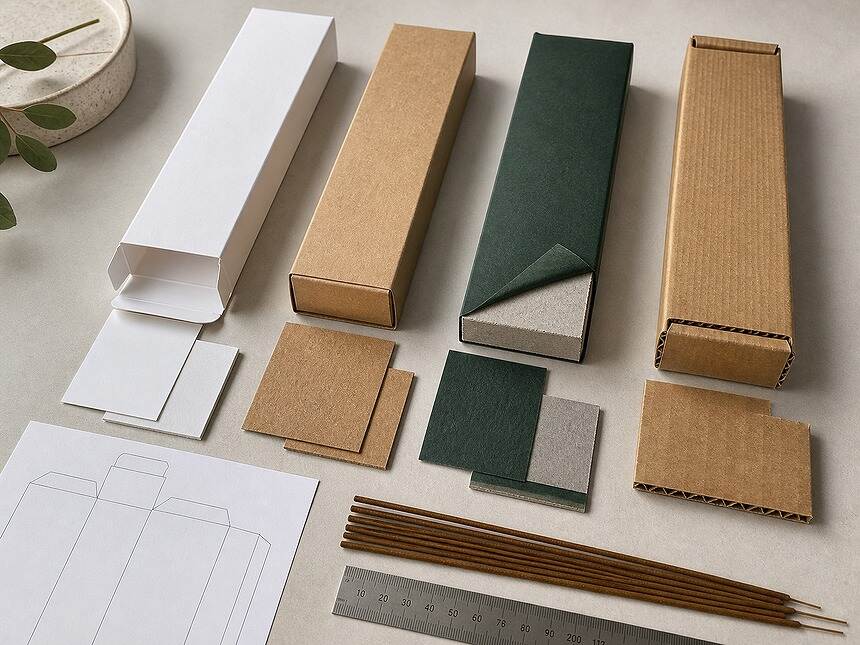
Specify substrate, surface and construction separately. Similar colors can conceal very different stiffness, fold behavior and print response.
| Material family | Typical role | Design opportunity | Approval focus |
|---|---|---|---|
| White coated paperboard | Printed folding cartons and sleeves | Detailed imagery, clean light colors and consistent brand graphics | Crease performance, ink rub and cracking on dark fold areas |
| Natural kraft paperboard | Earth-toned cartons, sleeves and trays | Visible fiber character and restrained graphics | Substrate color shifts printed hues; white ink may require a separate pass |
| Greyboard with printed or specialty-paper wrap | Rigid boxes, trays and drawer constructions | Substantial feel, wrapped edges and tactile papers | Wrap joints, corner turn-ins, board visibility and dimensional squareness |
| Golfbord | E-commerce mailers and master shipping cases | Efficient protection and printed unboxing in direct-to-consumer routes | Flute direction, compression, print method and product immobilization |
Ask for a substrate swatch and a constructed blank sample. A flat swatch shows color and texture; it cannot demonstrate folding, corner quality, tray friction or how a long narrow panel resists bowing. If appearance depends on a natural kraft tone or specialty texture, approve the actual production substrate because normal material variation can be more visible than on white coated stock.
A printed paper box should not be assigned barrier performance unless its complete material and closure system has been designed and validated for that purpose. In many projects, the safer division of work is a sealed inner wrap or pouch selected by the incense brand for product compatibility, plus a secondary paper package engineered for presentation and physical support.
Control lengthwise movement. End clearance should permit packing without allowing repeated impacts that chip incense tips. Verify it with the sealed bundle, not loose sticks.
Control crosswise movement. A paper band, tray, folded cradle or correctly sized carton can reduce rattling. Avoid over-compression that deforms the inner seal or powders the incense surface.
Separate fragrance variants. Define warehouse segregation, inner-pack integrity and master-case arrangement when several aromas share one shipment. The outer carton alone may not prevent odor transfer.
Plan dust management. Select inner-pack and opening details that keep residue away from printed panels and the consumer’s first touchpoint.
Test the shipping configuration. Evaluate the retail pack inside its intended master case or parcel mailer. The product and package are tested as a system, not as isolated components.
Distribution testing should match the actual supply chain. ISTA explains that its procedures range from screening tools to general simulations, and that the correct procedure depends on the desired outcome and shipment type. Review the current ISTA test-procedure descriptions with a qualified laboratory rather than placing an unsupported test badge on artwork.
Incense packaging frequently uses dark solids, botanical artwork, metallic accents and tactile papers. Each choice changes proofing and production risk. CMYK process printing suits photographs and multi-color artwork. A specified spot color can help control a critical brand hue, but the approved result still depends on substrate, ink system and finish. Kraft and colored papers change the visual baseline, so a screen proof is never the final color authority.
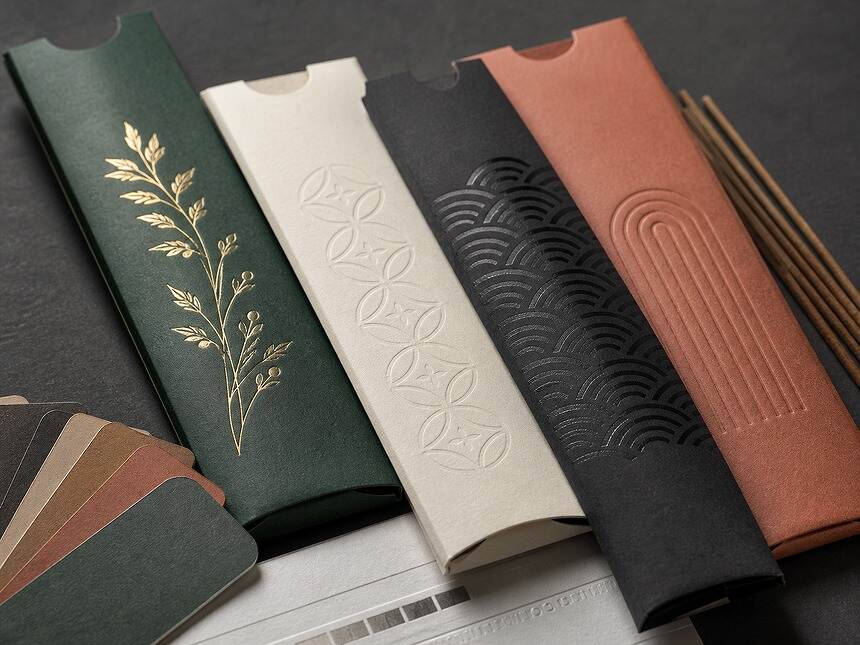
Raking light reveals foil edges, emboss depth, gloss contrast and substrate texture that a flat digital proof cannot reproduce.
| Proces | What it adds | Production risk to approve | Useful proof |
|---|---|---|---|
| Process or spot-color printing | Brand color, imagery and required information | Color shift, small reversed text, barcode contrast and fold cracking | Color proof followed by production sample on specified stock |
| Hete folie | Metallic or pigmented accent with crisp contrast | Fill-in on fine detail, pinholes on texture and registration to print | Physical foil strike on final substrate |
| Emboss or deboss | Tactile relief and light-driven detail | Depth, board show-through and interference with folds or small type | Tool-made mock-up or representative strike |
| Spot UV or overall coating | Gloss contrast, rub resistance or surface character | Registration, cracking, blocking and compatibility with foil or glue | Finished production-intent sample |
Keep mandatory product information, warning text and machine-readable codes away from structural seams and decorative competition. Confirm regulatory wording with the brand’s compliance adviser for every destination market. If you want to compare finish options across several premium structures, GPLPAK’s custom gift packaging overview shows currently offered structural and finishing categories; the final combination still needs project-specific feasibility and sample approval.
Sustainable packaging decisions are strongest when they are specific and measurable. Begin by reducing unnecessary volume, avoiding decorative components that do not serve the brief, and choosing a structure appropriate to the protection requirement. A lighter folding carton is not automatically better if failures cause replacement shipments; a rigid box is not automatically reusable unless customers have a credible reason to retain it.
Right-size the packed product. Compare internal and shipping dimensions, not only the front-panel appearance.
Simplify material separation. Review magnets, ribbons, foam, plastic windows, metallic films and laminated constructions against the intended recovery route.
Specify fiber sourcing precisely. If an FSC claim is required, align the material, supplier chain and approved label use before artwork approval.
Qualify claims by market. “Eco-friendly” is too broad to act as a technical specification. State the exact attribute and evidence.
Record substitutions. A change in board, coating, adhesive or insert can affect appearance, recyclability and tested performance.
The Forest Stewardship Council explains that chain-of-custody certification verifies forest-based materials along the supply chain and supports the use of FSC labels on finished products that meet its requirements. See the official FSC chain-of-custody overview. For products marketed in the United States, the FTC’s Green Guides summary cautions against broad, unqualified environmental benefit claims and explains that claims such as recycled content and recyclability need appropriate qualification and substantiation.
There is no responsible universal wholesale price for a custom incense box. Two packs with the same external dimensions can have very different material yield, hand assembly, tooling, finish and freight requirements. A useful quotation separates one-time costs, unit costs and landed logistics so buyers can see which design decisions create value and which only add complexity.
| Cost driver | Why it matters | Questions to ask | Practical optimization |
|---|---|---|---|
| Finished size and layout yield | A small dimensional change may alter how many pieces fit on a sheet or in a case | Is the size based on the maximum sealed bundle? Can orientation improve yield? | Remove unneeded clearance while preserving packability |
| Structure and assembly | Rigid, drawer and multi-piece boxes use more conversion and assembly than simple cartons | Does the box arrive flat or assembled? Who loads the incense? | Compare the packing-line cost, not only empty-box price |
| Printing and special finishes | Extra passes, tools and registration controls add setup and production work | Which finish creates the key shelf cue? Can variants share common tooling? | Use one controlled focal finish instead of stacking effects |
| Quantity and variant split | Short runs spread setup and spoilage over fewer saleable units | Is the quote total quantity or quantity per aroma/artwork? | Standardize structure and common graphics across variants where practical |
| Packing and logistics | Assembled volume, master cases, palletization and freight can outweigh a small unit saving | What is the case pack, gross carton size and shipment term? | Compare landed cost per sellable packed unit |
Ask suppliers to state whether tooling, samples, freight, duties, packing labor and taxes are included or excluded. MOQ should be treated as a quote-specific production condition because it changes with structure, material, artwork split and equipment route. When comparing quotations, normalize the specification first. A cheaper box made from different board, without the requested finish or packed differently is not a like-for-like offer.
Sampling is a sequence of decisions, not one attractive prototype. Start with structure and fit, then approve graphics and finishes, then establish the signed production reference. GPLPAK’s current service pages describe Verpakkingsadvies, design validation for manufacturingenontwikkelingsmonsterning. For any supplier, place the expected deliverables and approval authority in the purchase documentation.
| Stage | Approve | Evidence to retain | Common mistake |
|---|---|---|---|
| White structural sample | Internal fit, loading, opening, closure and retail orientation | Signed sample, dieline revision and packed-product photos | Approving a blank made from a different thickness without noting it |
| Artwork proof | Text, legal copy, barcode, orientation, overprint and finish layers | Approved PDF, fonts outlined or packaged, and version record | Using a screenshot as print-ready artwork |
| Finished sample | Color, substrate, foil, coating, emboss, glue and assembly appearance | Sealed master sample and written deviations | Approving color on a screen without a physical reference |
| Pre-shipment inspection | Quantity, workmanship, critical dimensions, function, packing and shipping marks | Inspection plan, random-sample results, defect photos and release decision | Using subjective terms such as “good quality” without defect definitions |
Define critical, major and minor defects for the project. Critical issues may include incorrect legal copy or a box that cannot contain the product. Major issues may include closure failure, severe print defects or dimensions outside agreed tolerances. Minor issues may include small cosmetic variation within an agreed visual standard. The buyer and manufacturer should agree the inspection method, sampling plan and acceptance limits before production—not after a disagreement.
A strong RFQ reduces qualification time and prevents suppliers from filling gaps with different assumptions. Send the same controlled brief to each shortlisted manufacturer and require deviations to be listed. If a value is unknown, mark it “supplier to recommend and justify” rather than leaving the field blank.
Product: incense type, stick count, maximum sealed-bundle dimensions, packed weight, inner-pack material and physical samples.
Structuur: preferred box style, opening direction, insert or band, closure, hanging or display feature, and flat or assembled delivery.
Materials: substrate family, color, thickness or performance target, wrap paper, insert and documented fiber-sourcing requirements.
Artwork: print method, color references, finish layers, barcode, warnings, destination markets and approved dieline revision.
Commercial: annual demand, order quantity per artwork, launch timing, delivery address, shipment term, packing responsibility and target cost basis.
Quality: master sample, dimensional tolerances, visual defect standard, functional checks, inspection plan and distribution-test requirement.
Quotation breakdown: tooling, samples, unit price, packing, freight and all exclusions, plus the validity period and change-control process.
The quotation lists only “custom paper box” and omits board, structure, finish, insert and packing details.
The supplier confirms fit from stick length alone without asking for the sealed bundle or maximum cross-section.
Sustainability, aroma protection or shipping performance is promised without identifying the material, test, evidence or limitation.
Artwork can move into mass production before a controlled dieline and proof are approved.
The price changes when quantity is divided among fragrance variants, but the original quotation did not state quantity per artwork.
The goal is not the longest specification. It is a brief in which every cost-driving and quality-driving decision has an owner, an approval method and a recorded revision.
For cost-efficient retail, a folding carton is often the first structure to evaluate. A sleeve, drawer or rigid box can support a more premium opening experience, while a tube creates a distinctive form. The best choice depends on the sealed bundle, channel, packing process and landed-cost target.
Do not assume so. Fragrance and moisture management normally depend on the complete primary-pack material and closure. Define and validate the inner pack for product compatibility, then use the paper box for presentation, information and secondary physical protection unless a tested specification states otherwise.
Send the maximum length, width and depth of the finished sealed bundle, plus count, weight and any holder or leaflet. A physical production sample is preferable. Ask the converter to state the proposed internal dimensions and clearances on the sample drawing.
Provide structure, dimensions, materials, artwork, finishes, insert, quantity per design, packing method, delivery destination, shipment term, sample requirement and quality criteria. If the structure is open, provide the product and commercial brief so the supplier can quote clearly identified alternatives.
Finished size, material yield, board construction, manual assembly, print coverage, special finishes, tooling, quantity per artwork, case packing and freight can all change cost. Compare quotations against one normalized specification and calculate landed cost per sellable unit.
Approve a physical strike or finished sample on the specified production substrate. Digital artwork can define position and approximate appearance, but it cannot reliably show foil fill, emboss depth, paper texture, gloss contrast or registration.
No. Kraft describes an appearance or material family, not the full environmental result. Evaluate right-sizing, fiber sourcing, recycled content where specified, coatings, adhesives, additional components, local recovery routes and the evidence supporting every public claim.
If damage risk matters, evaluate the complete packaged product in a method relevant to its actual parcel, freight or pallet route. Screening and simulation procedures serve different purposes. Define product damage and package-degradation acceptance criteria before selecting a test with a qualified laboratory.
Send GPLPAK your sealed incense sample or controlled dimensions, artwork, quantity per design, desired box style, delivery destination and acceptance criteria. The team can review the brief and discuss a project-specific structure, sample route and quotation.
 Populair nieuws
2026-09-23
2026-09-22
2026-09-21
2026-09-18
2026-09-17
2026-09-17
2026-09-16
2026-09-09
2026-08-31
2026-08-26
Discover premium packaging solutions from Dongguan Xinglan Packaging Products Co., Ltd. Specializing in innovative, durable, and custom packaging products for diverse industries.
GPLPAK zet zich in voor uitmuntendheid in productie.






.jpg)