
 EM
EM  EN
EN  RU
RU  ES
ES  KO
KO  JA
JA  PT
PT  IT
IT  DE
DE  FR
FR  NL
NL 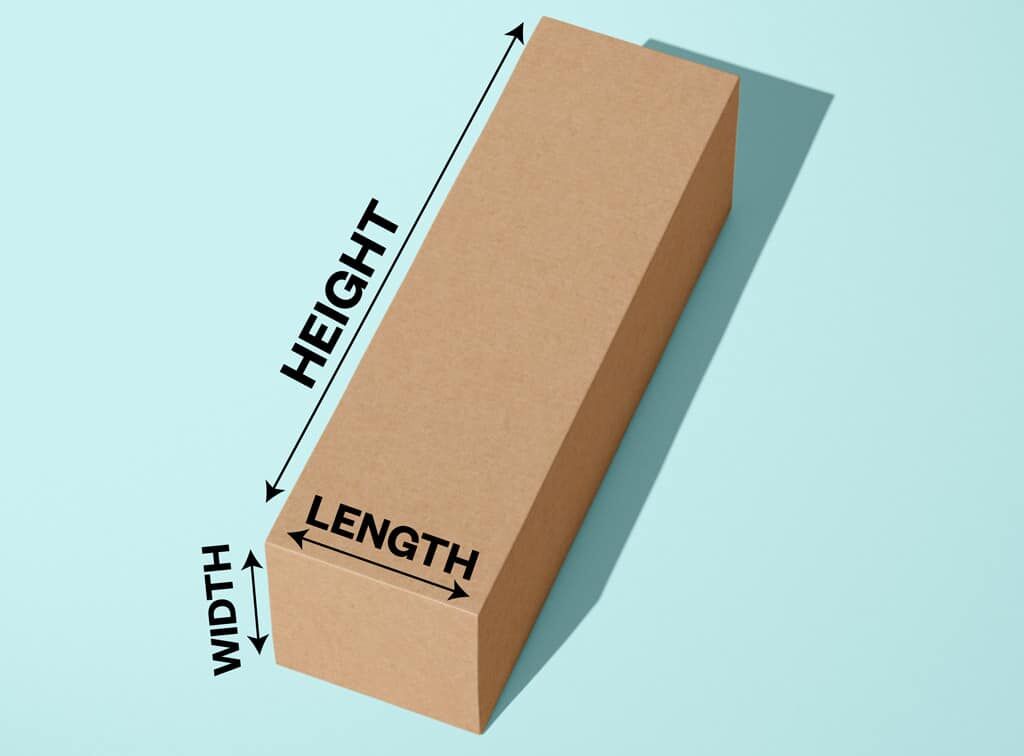
Introdução
Por que a medição precisa da caixa importa em embalagens personalizadas
Alguns milímetros podem mudar o resultado de um projeto de embalagem personalizado. Se a caixa for muito pequena, o produto pode não caber. Se a caixa for muito grande, o produto pode se mover durante o envio, a inserção pode parecer solta e a apresentação da marca pode parecer menos premium.
Para embalagens sob medida, a medição precisa ajuda a fábrica a criar a dielina certa, escolher a espessura adequada da placa, projetar a inserção, estimar o custo do material e evitar revisões repetidas da amostra.
01 · Standard Measurement
Always measure a box in the order of Length × Width × Height
Using the same measurement order prevents communication errors between your design team, purchasing team and packaging factory.
Comprimento
Length is usually the longest side of the box opening. For rectangular boxes, this is the first number you should provide.
Largura
Width is usually the shorter side of the box opening. It helps the factory understand the footprint of the product and inner tray.
Altura
Height is the vertical distance from the opening to the base. For lid-and-base boxes, magnetic boxes and rigid boxes, height affects product clearance and insert depth.
Recommended format
Write dimensions like this: 180 × 120 × 60 mm. Always add the unit, such as mm, cm or inches.
02 · Internal vs External
Internal dimensions and external dimensions serve different purposes
One of the most common mistakes is sending external box dimensions when the supplier needs internal product-fit dimensions, or sending internal dimensions when the logistics team needs shipping size.
Internal dimensions
Internal dimensions refer to the usable space inside the box.
Melhor para: product fit, inserts, trays, bottle cavities, gift sets, cosmetic boxes, perfume boxes, chocolate boxes and jewelry boxes.
External dimensions
External dimensions refer to the full outer size of the box after production.
Melhor para: shipping cartons, courier pricing, warehouse storage, pallet loading, export packing and dimensional weight calculation.
Buyer tip
When requesting a quote, send both product dimensions and target box dimensions if possible. This allows the factory to recommend the correct inner space, board thickness and insert design.
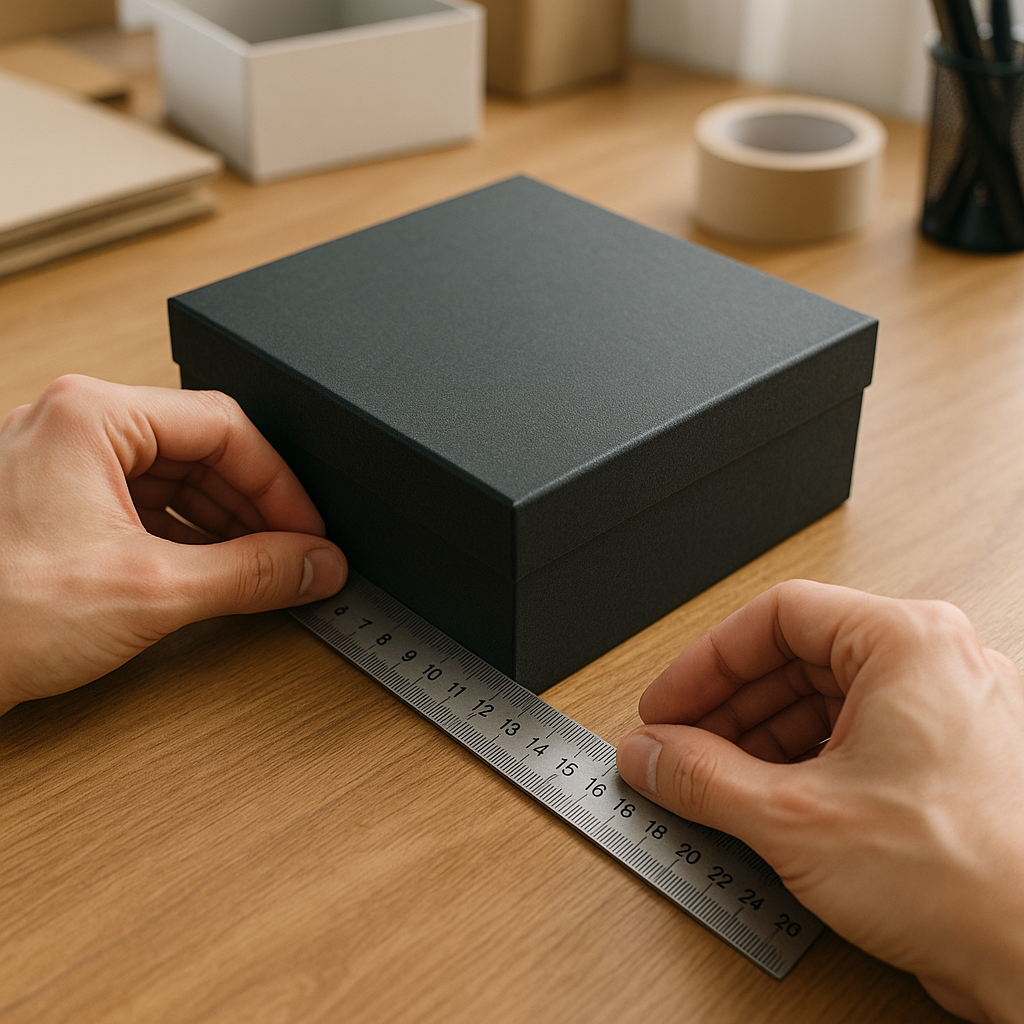
03 · Step-by-Step Guide
How to measure a custom packaging box correctly
04 · Box Type Differences
Different packaging structures require different measurement attention
Do not measure every box the same way without considering structure. A drawer box, magnetic box, tube box and folding carton may all need different measurement notes.
Rigid lid-and-base boxes
Measure the base internal size for product fit. If the lid covers the base deeply, also confirm lid height and overall closed box height.
Caixas gaveta
Measure the inner tray size, outer sleeve size and pull-out clearance. A drawer that is too tight can affect user experience.
Magnetic closure boxes
Measure the usable inner space, flap thickness, magnetic closure position and product clearance after the lid is closed.
Caixas do tubo
Measure diameter and height instead of length and width. For paper tubes, confirm inner diameter, outer diameter and cap height.
Folding cartons
Measure the assembled inner size and confirm tuck flap direction, glue flap position and board thickness before creating the dieline.

05 · Insert & Product Fit
Product dimensions are just as important as box dimensions
For premium packaging, the insert is often the part that decides whether the product feels secure, organized and luxurious. To design a correct insert, the factory needs accurate product measurements.
06 · Cost Impact
Correct measurement can reduce material waste and shipping cost
Oversized packaging may look harmless at the sample stage, but it can increase board usage, insert cost, carton volume, dimensional weight and warehouse space.
Material cost
A larger box uses more greyboard, wrapping paper, glue, insert material and carton space. Right-sizing helps control unit cost.
Shipping cost
Couriers and freight carriers often consider external size and dimensional weight. A box that is too large may increase shipping charges even if the actual product is light.
Storage efficiency
Well-measured packaging helps brands improve carton loading, pallet layout, warehouse storage and retail backroom handling.
Sustainability value
Smaller and more accurate boxes can reduce paper waste, insert waste, transport space and unnecessary packaging materials.
07 · Common Mistakes
Avoid these box measurement mistakes before requesting a quote
Many packaging delays happen because the first size information was incomplete, unclear or measured from the wrong reference point.
Sending product size as box size
The product size is not the same as the final box size. The box must include clearance, insert space, board thickness and opening structure.
Confusing internal and external dimensions
Always label whether your measurement is internal size or external size. This is especially important for rigid boxes and shipping cartons.
Forgetting the insert thickness
EVA, foam, paperboard, molded pulp and blister trays all take up space. The product cavity must be designed together with the box size.
Ignoring board thickness
Rigid boxes use thick greyboard, so the difference between inner and outer size can be significant. This must be calculated before production.
Using unclear units
Never send only numbers. Always include units such as mm, cm or inches, and keep the same unit throughout the project.
08 · GPLPAK Support
How GPLPAK helps brands measure and develop custom packaging
GPLPAK supports custom paper packaging projects from product measurement and structure planning to sampling, insert testing, production and export packing.
Project Checklist
Checklist before sending box dimensions to a supplier
09 · FAQ
FAQs about measuring box dimensions
What is the correct order for box dimensions?
The correct order is Length × Width × Height. This order should be used consistently when communicating with a packaging supplier.
Should I provide internal or external dimensions?
Provide internal dimensions for product fit and insert design. Provide external dimensions for shipping, carton loading and logistics cost estimation.
How much clearance should I leave around the product?
The clearance depends on product material, insert type, box structure and shipping risk. Fragile glass bottles usually need more secure insert support than flat paper products.
Why does board thickness matter?
Rigid paper boxes use thick greyboard, so the outer size will be larger than the inner usable space. Board thickness affects structure, product fit and shipping size.
Do I need a sample after confirming dimensions?
Yes. A white sample or printed sample helps confirm size, product fit, insert accuracy, opening experience, surface finish and carton packing before mass production.
Get your custom packaging dimensions right from the start
If you are developing custom packaging for perfume, cosmetics, wine, chocolate, jewelry, candles, watches or premium gifts, GPLPAK can help you measure products, design the right box structure, create inserts and validate samples before production.
Solicitar suporte à medição da embalagem Ver amostragem de desenvolvimento Browse Custom Packaging Products




 Notícias quentes
.jpg)
