
 АНГЛИЙСКИЙ
  EN
EN  RU
RU  ES
ES  KO
KO  JA
JA  PT
PT  IT
IT  DE
DE  FR
FR  NL
NL Быстрые ссылки
In brief: successful custom eyewear packaging is a coordinated system, not simply a decorated box. The paper presentation box, fitted insert, daily-use case, cleaning cloth, pouch, printed information and shipping pack must each have a defined job. For most premium brand programs, the rigid paper box is the primary presentation component; a PU case, microfiber cloth or velvet pouch can then be specified as a coordinated accessory when the sales channel and price position justify it.
B2B buyers often request an “eyewear packaging box” before deciding what the package must accomplish. That can produce quotations for completely different products: a folding carton, a handmade rigid gift box, a molded travel case, a soft pouch or an export shipper. The result is difficult price comparison and, more importantly, a pack that may look correct in a rendering but fail with the actual folded frame.
This guide provides a practical route from product definition to approved production standard. It focuses on GPLPAK's core capabilities in custom paper boxes and premium handmade rigid boxes, while treating PU cases, cleaning cloths and velvet pouches as optional coordinated items. The goal is to help eyewear brands, optical retailers, distributors and private-label teams prepare a clearer brief, evaluate samples and source a complete set without confusing presentation packaging with daily-carry protection or transport packaging.
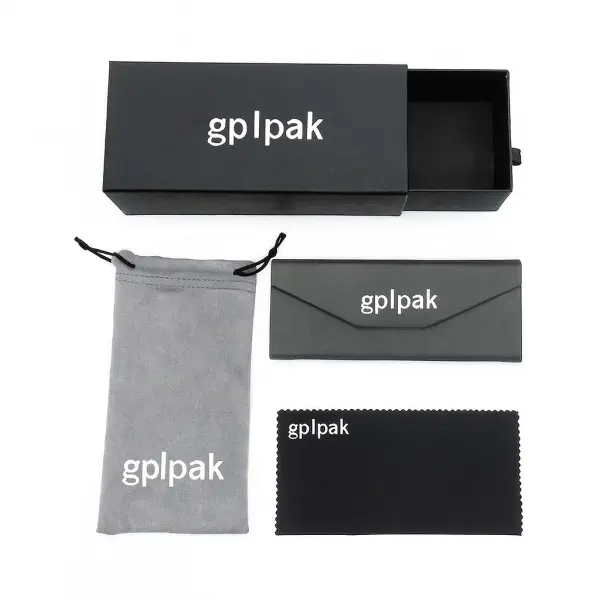
The phrase custom sunglasses packaging set can describe several combinations. Some buyers need only a branded retail box. Others need a complete handover set containing a rigid paper box, reusable case, cleaning cloth, pouch, care card and master-carton plan. A useful brief names every component and gives it one primary function.
| Component | Primary job | What it does not prove |
|---|---|---|
| Rigid paper presentation box | Premium presentation, product positioning and organized unboxing | Daily-carry impact performance or parcel protection |
| Folding carton | Efficient printed retail packaging with flat delivery potential | The same stiffness or reveal as a setup box |
| PU or other reusable case | Consumer storage and daily handling after purchase | A complete retail pack or validated shipping solution |
| Microfiber cloth or soft pouch | Lens care, light separation and reusable brand contact | Rigid protection against crushing |
| Distribution shipper | Protecting packed units through a defined handling route | Premium retail presentation by itself |
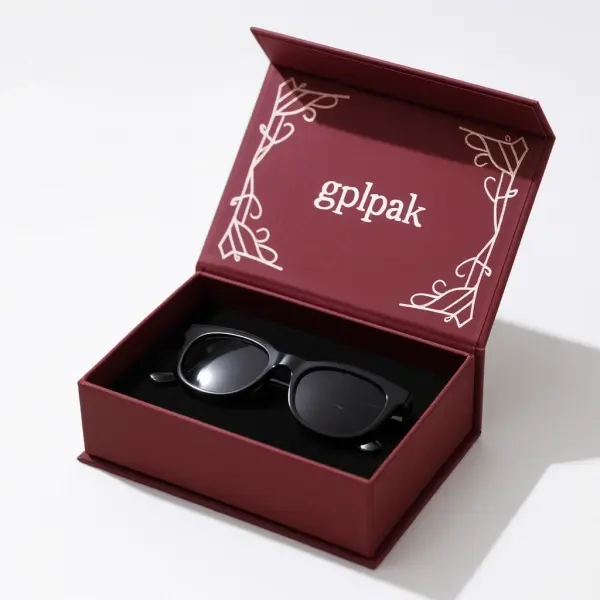
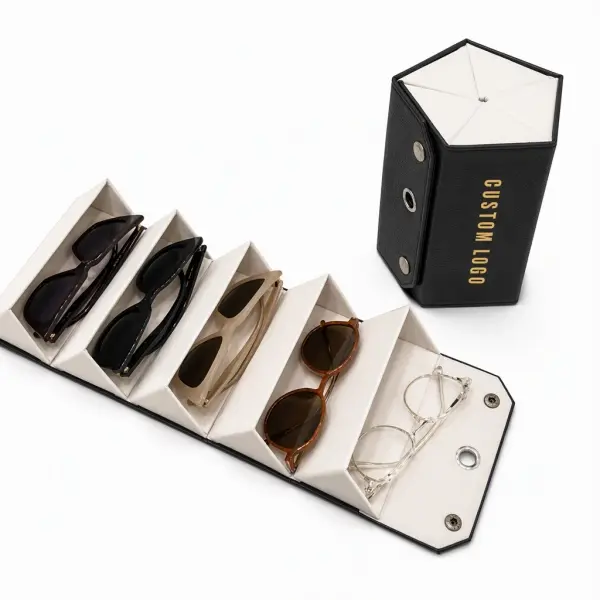
This separation prevents a common sourcing mistake: asking a presentation-box converter to make an untested promise about the protection supplied by a daily-use case or shipper. If your project needs a single-pair luxury presentation box, review the construction and fit principles on GPLPAK's custom rigid paper eyeglasses case box page. If the requirement is multi-pair storage, it is a different product class, illustrated by the five-pair PU sunglasses organizer.
Buyer boundary: a retail presentation box, reusable glasses case and corrugated shipping case may work together, but they should not be treated as interchangeable products in the RFQ.
Structure should follow the way the customer receives the eyewear. A box designed for an optical counter has different priorities from a direct-to-consumer pack that moves through parcel networks. Write the route before approving appearance: factory to distributor, store replenishment, online fulfillment, promotional event, subscription shipment or gift presentation.
Prioritize a clean handover, visible branding, easy staff access, barcode or SKU placement and compact back-room storage.
Treat the branded box as the presentation layer and define a separate mailer or shipper, void control and packing method for the actual route.
Use controlled opening, disciplined material contrast, an organized accessory layout and an information area that does not compete with the frame.
Control unit identification, carton quantity, packing orientation and consistency across several frame colors or SKUs.
The channel decision also determines whether every unit requires the same accessory bundle. A premium launch may justify a case, cloth and pouch in one presentation. A volume retail line may use a simpler carton with the cloth placed inside the case. Define the mandatory set and optional upgrades before structural work starts. GPLPAK's консультации по упаковкеиproduct development pages explain how a project brief is translated into a manufacturable concept.
Paper packaging is the center of GPLPAK's offer. The correct structure depends on the intended brand position, insert depth, artwork area, packing labor and shipping volume. “Luxury” does not automatically require the heaviest or most complex box. A disciplined folding carton can be appropriate for a streamlined retail line, while a handmade rigid box suits a controlled premium reveal.
| Структура | Best fit | Key approval points | Commercial trade-off |
|---|---|---|---|
| Folding carton | Efficient retail packs and secondary sleeves | Creases, locking tabs, print alignment and assembly | Ships flat, with less presentation mass |
| Lid-and-base rigid box | Classic premium presentation and simple access | Lid fit, reveal depth, wrap alignment and lift speed | Straightforward form but larger packed volume |
| Drawer rigid box | Layered reveal and compact horizontal layout | Sleeve clearance, drawer travel and pull-tab attachment | More components and tighter fit control |
| Book-style rigid box | Storytelling inside the lid and gift presentation | Hinge action, lid clearance, closure and repeated opening | Large decoration area with more assembly detail |
| Collapsible rigid box | Programs prioritizing lower inbound storage volume | Set-up sequence, corner closure, panel alignment and stiffness | Space efficiency versus assembly complexity |
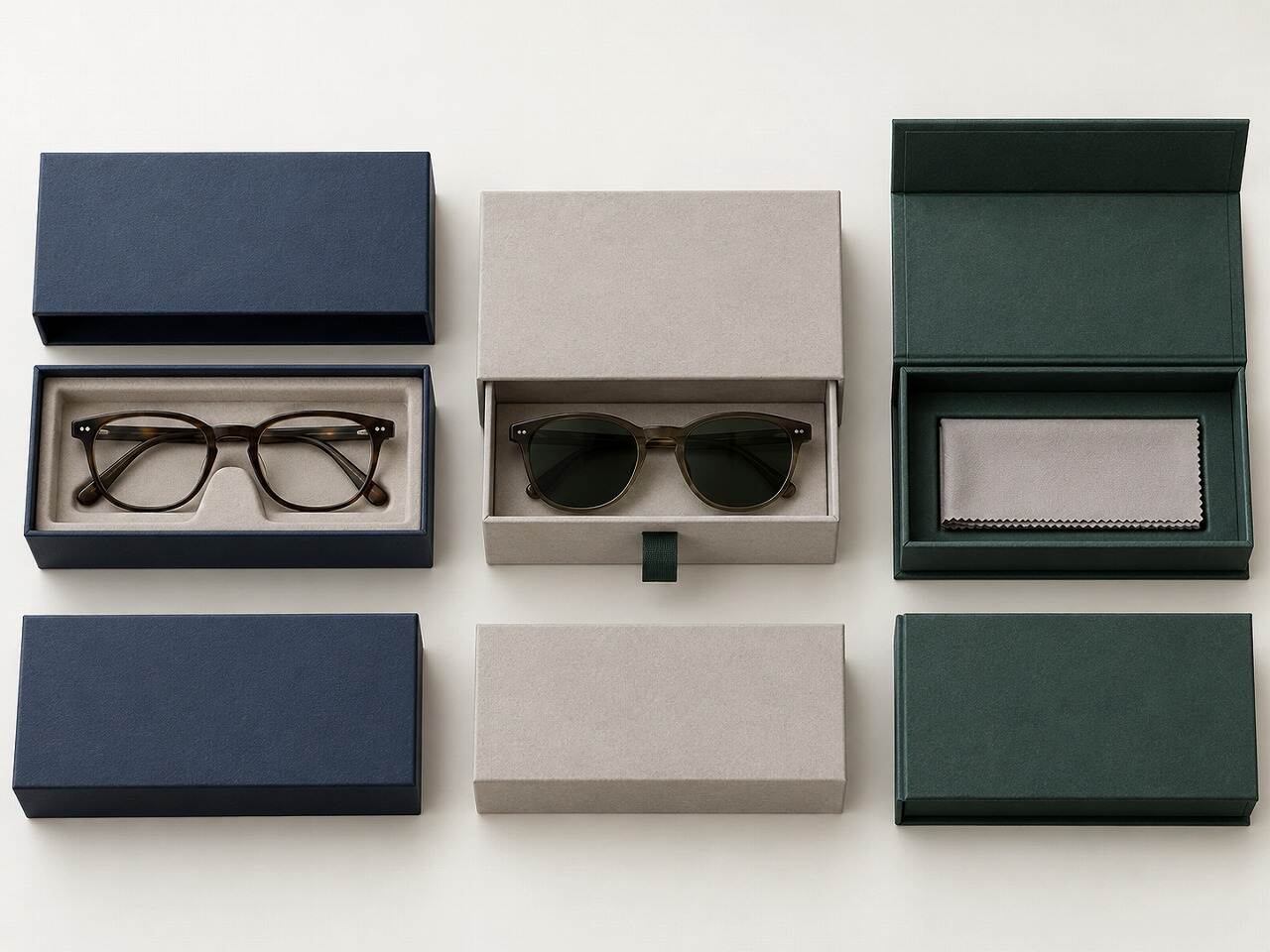
Paper box structures should be compared by opening method, insert space, packing labor and channel—not by appearance alone.
Buyers can explore GPLPAK's current rigid boxes, ящиковые коробки, magnetic boxesиfolding boxes as starting points. The final construction should still be developed around the actual frame and accessory layout.
“Sunglasses,” “optical frames” and “oversized eyewear” are not cavity dimensions. The converter needs the maximum packed envelope and the areas that must not carry pressure. A drawing is useful, but a physical production-intent frame is usually the clearest fit reference because temple position, nose-pad projection and front curvature can be difficult to infer from a simple length-by-width specification.
Overall length, width and highest point of the frame in its intended folded condition.
Frame-front curvature, bridge form, lens projection and any sensitive coated surface.
Folded temple stack, hinge projection and the orientation intended during packing.
The maximum envelope across all SKUs expected to share one insert, not only the smallest or most convenient sample.
Cloth, pouch, cards and case dimensions in their packed state, including folds and closures.
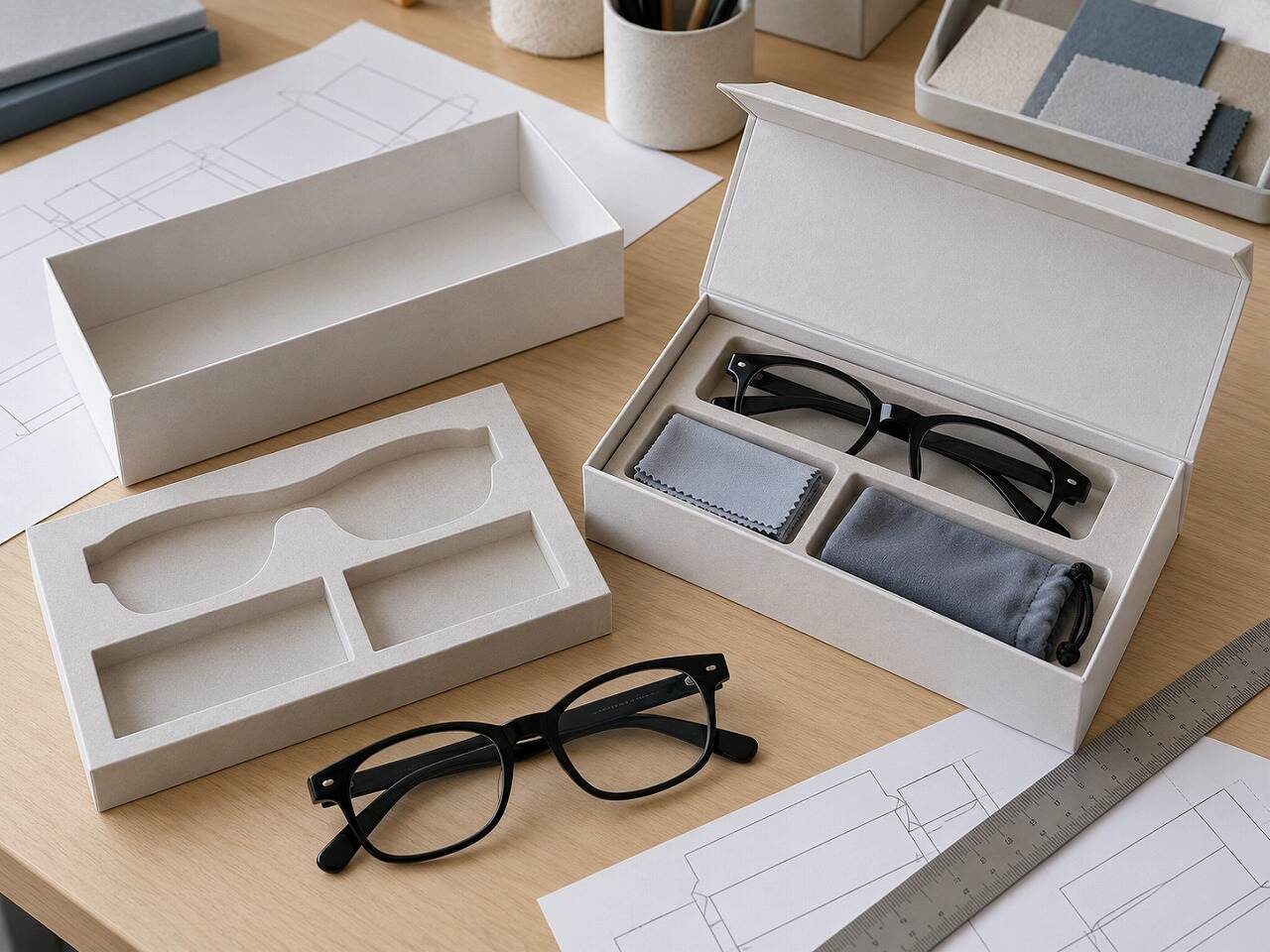
A physical fit sample reveals frame height, compartment conflicts and removal access that a generic box size cannot show.
Allowances should be approved through a sample rather than copied from an unrelated project. Too little clearance can load the hinges, temples or lens area when the lid closes. Too much clearance allows the frame to migrate and weakens presentation. A multi-SKU program may use one verified maximum envelope, a shared insert with controlled adjustment, or separate inserts where the geometries are materially different.
The insert is the interface between the paper box and the eyewear. Its job is not merely to fill empty space. It must locate the folded frame, avoid unacceptable contact, keep accessories organized and let the user remove the product without pulling on a lens, temple or decorative part.
| Insert system | Suitable when | Approval questions |
|---|---|---|
| Die-cut EVA or foam | A defined geometry needs firm location and a clean product well | Density, odor, compression, edge finish, contact area and removal force |
| Fabric- or flock-covered insert | A softer premium appearance is required | Lint, color transfer, surface abrasion, adhesive marks and fabric tension |
| Wrapped paperboard platform | The project favors a paper-forward interior and moderate restraint | Folded edges, locking geometry, structural recovery and surface contact |
| Molded pulp | Geometry, visual texture and tolerance permit a formed-fiber solution | Draft, edge texture, fit variation, dust and contact with finished surfaces |
Insert approval should include a loaded closing check. Confirm that the inside lid does not touch the eyewear or compress a pouch placed above it. Add a finger notch, ribbon lift or controlled access zone where needed. The frame should remain visually centered after normal handling, yet release without an uncomfortable pull. These criteria are observable and more useful than a vague instruction such as “tight fit.”
Practical approval rule: specify acceptable product movement, removal method, contact zones and lid clearance in writing, then preserve the approved loaded sample as the production reference.
A coordinated set should feel intentional, but every component does not need the same decoration. Repeating one color family, logo hierarchy or tactile cue is often more effective than applying several expensive finishes across the box, PU case, cloth and pouch. First decide which items are mandatory for every SKU and which are optional for premium lines or campaigns.
Lead with the paper box. It carries the largest brand surface and organizes the customer reveal.
Add a reusable case only when it supports the product promise. Define material, closure, lining, folded-frame fit and logo method separately from the box.
Treat the cleaning cloth as a functional product. Approve fabric feel, edge treatment, print clarity, color and packed fold.
Use a velvet or microfiber pouch for light separation and presentation. Confirm seam quality, drawcord, color transfer risk and final packed bulk.
Reserve space for information. Care cards, warranty material, barcode labels and regulatory copy need a planned location rather than being inserted after tooling.
GPLPAK's main manufacturing value is the paper presentation package and its handmade rigid construction. PU cases, cloths, pouches and other eyewear accessories can be coordinated for an approved set where the project requires them; their material, decoration, source and inspection standard should be confirmed in the quotation. This wording is important for buyers because “one-stop sourcing” should describe coordinated project responsibility, not imply that every component is made by the same production line.
Use one color and artwork master, then attach a component sheet for the box, insert, case, cloth, pouch and printed card. This prevents a supplier from applying the same logo size or method to incompatible materials. A fine hot-foil mark that works on coated paper may not reproduce the same way on textured PU or fabric.
Material names alone are not approval standards. “Black paper,” “soft-touch,” “gold foil” and “velvet pouch” can describe visibly different results. A useful specification connects the visual intent to an actual swatch, construction sample and acceptance method.
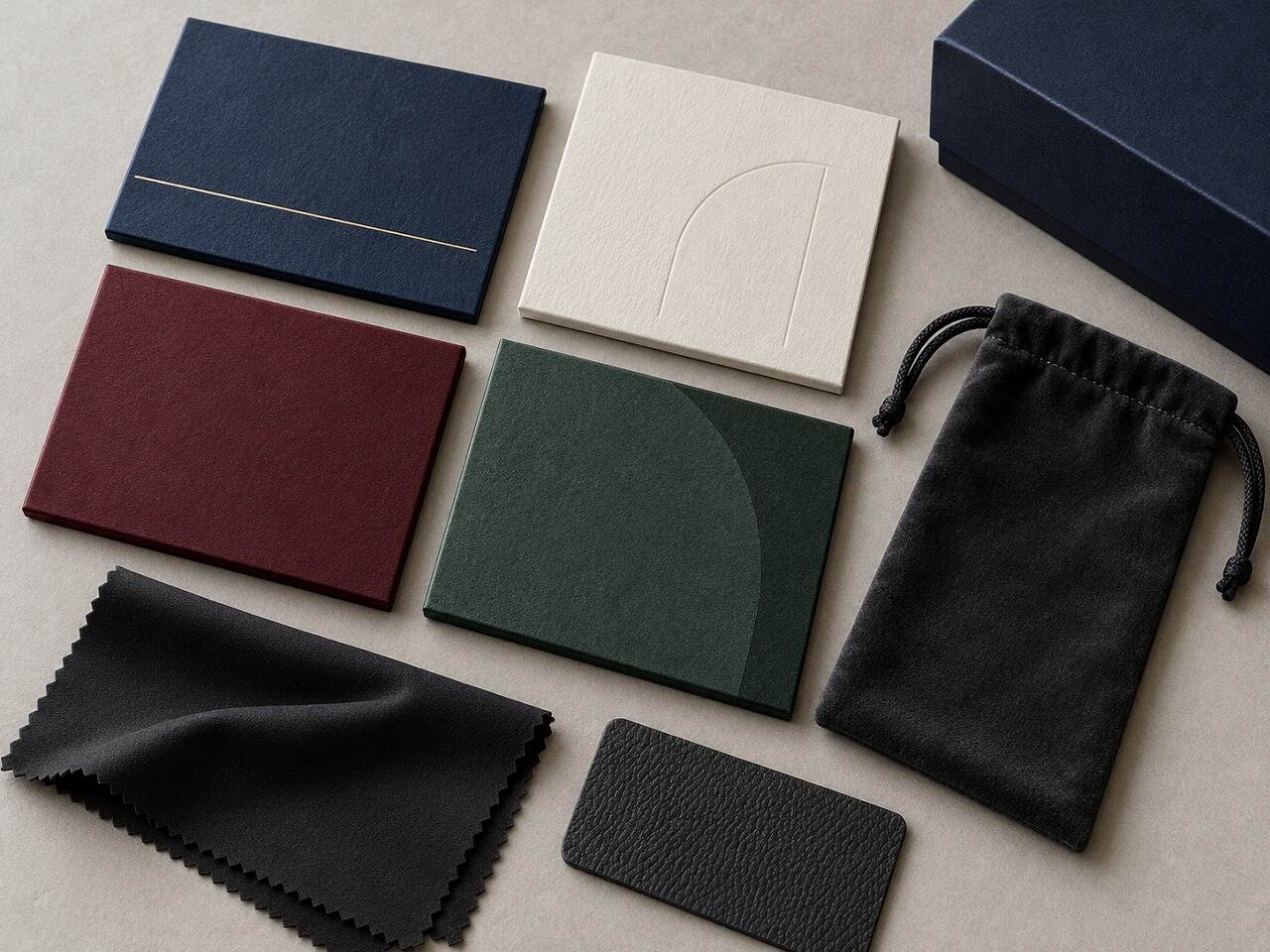
Approve paper, foil, relief, cloth, pouch and PU materials as separate physical references while coordinating their color hierarchy.
Board grade and caliper appropriate to the structure
Printed or specialty wrapping paper reference
Color target and acceptable comparison method
Foil shade, emboss or deboss relief and registration
Lamination, coating or uncoated surface behavior
PU color, grain, backing and fold behavior
Lining or pouch fabric, hand feel and color-transfer check
Cloth construction, edge treatment, print and folded size
Hardware finish, drawcord, stitching and closure action
Logo method suited to each substrate
For a premium handmade box, scrutinize wrapped corners, paper grain direction, exposed turn-ins, panel flatness and the relationship between decoration and folds. Foil, embossing and debossing should be tested at the intended size on the selected paper. Fine artwork may need adjustment when transferred to textured stock. The objective is repeatable production, not a rendering that depends on effects the substrate cannot hold.
Sampling should answer decisions in the correct order. Approving a fully decorated sample before confirming the frame and accessory layout can waste time because a fit change may alter the insert, box depth, artwork position and shipper. A staged route separates structural questions from decoration and final pack-out.
Check box proportion, opening method, insert depth, access and component arrangement without letting decoration hide structural issues.
Pack the actual frame, case, cloth, pouch and cards. Check retention, removal, lid clearance and presentation after normal handling.
Approve materials, color, printing, foil, relief, closures and branded accessories using the intended specifications.
Confirm unit packing, orientation, protective interleaving, labels, inner quantity, master carton and any route-specific verification plan.
GPLPAK describes related controls on its выборка развитияиdesign validation for manufacturing pages. The signed sample, artwork revision, material references and inspection sheet should agree. If one document changes, identify the new revision before production begins.
“Good quality” is not a measurable acceptance criterion. The buyer and supplier need a shared definition covering the finished box, insert, accessories and final packing. Cosmetic standards should distinguish a critical functional defect from a minor visual variation that may be inherent to the material.
| Inspection area | Check | Reference |
|---|---|---|
| Rigid box construction | Panel alignment, wrap, corners, glue cleanliness, opening and closure | Approved sample and drawing |
| Print and finish | Color comparison, registration, foil coverage, relief and surface marking | Approved proof, swatch and decorated sample |
| Insert and loaded fit | Position, movement, access, contact points and lid clearance | Approved frame and loaded fit sample |
| PU case and textile items | Material, seams, edge treatment, hardware, logo and odor or transfer concerns | Sealed component sample and material reference |
| Final packing | Component count, orientation, surface separation, labels and carton loading | Pack-out instruction and approved packed unit |
Distribution performance must be connected to a defined route and completed pack. A premium eyewear packaging box should not be called crush-proof, drop-proof or shipping-ready simply because it uses rigid board. If transit performance matters, define the unit pack, shipper, load and acceptance criteria, then agree on a project-specific validation plan. GPLPAK's packing supportипроизводство pages provide useful context for production and final packing responsibilities.
A low quotation may represent a different material, insert, accessory source, decoration method or packing assumption. Send every shortlisted supplier the same controlled brief and ask them to identify exclusions. MOQ, sampling route, tooling, unit price and lead time should be quoted for your actual configuration and quantity rather than borrowed from an unrelated product page.
Project name, destination market, sales channel, launch timing and forecast quantity by SKU.
Physical folded frame or controlled drawing, maximum product envelope, weight and sensitive contact areas.
Required box style, desired opening experience, approximate finished size and preferred insert direction.
Full component list: box, insert, case, cloth, pouch, cards, labels, sleeves and shipping pack.
Artwork files, color references, material targets, finish locations and logo methods by substrate.
Sampling stages, approval owners, inspection criteria, packing method and required documentation.
Quotation breakdown showing one-time charges, component inclusions, packing assumption and validity.
When reviewing suppliers, look for evidence that they separate fit engineering from decoration, can explain how the box will be assembled, and will document project-specific accessory sourcing instead of hiding it behind “full service.” For GPLPAK, the most relevant starting point is its paper-box expertise, supported by a Заводской профиль and production-focused development workflow.
Put every proposal into the same component table. Separate the rigid or folding box, insert, reusable case, cloth, pouch, printed matter, individual packing and master-carton packing. Record whether plates, dies, molds, foil blocks, freight and taxes are included. Also note the assumed quantity per SKU, because a total order divided among many artworks or colors may create a different production condition from one design at the full volume.
Then compare the approval route. One supplier may quote a structural sample only, while another includes a decorated production-intent sample or accessory prototypes. Neither approach is automatically better, but the difference affects risk, timing and cost. Ask how changes after sample approval will be controlled and whether a revised item triggers a new fit or decoration check.
Finally, examine the packing assumption. A quote for nested empty boxes is not equivalent to a quote for individually protected, fully assembled sets with every accessory inserted and cartons labeled by SKU. The most useful commercial comparison is the cost of receiving an approved, usable pack in the condition your warehouse expects—not the lowest isolated box price.
Best first inquiry: send one representative folded frame, a complete component list, artwork, target quantity, sales route and written approval priorities. That is enough for a converter to identify missing inputs and propose a sensible sampling path.
Send your folded frame, component list, artwork, quantity and distribution route. GPLPAK can review the paper-box structure, insert direction and sampling requirements, then coordinate suitable accessories where the project calls for a complete set.
© 2026 ГПЛПАК — Custom paper packaging and premium handmade rigid boxes
 Горячие новости
2026-10-12
2026-10-07
2026-09-30
2026-09-23
2026-09-22
2026-09-21
2026-09-18
2026-09-17
2026-09-17
2026-09-16
Discover premium packaging solutions from Dongguan Xinglan Packaging Products Co., Ltd. Specializing in innovative, durable, and custom packaging products for diverse industries.
GPLPAK стремится к обеспечению высочайшего уровня производственной деятельности.


.jpg)