
 EN
EN  EN
EN  RU
RU  ES
ES  KO
KO  JA
JA  PT
PT  IT
IT  DE
DE  FR
FR  NL
NL Packaging Knowledge
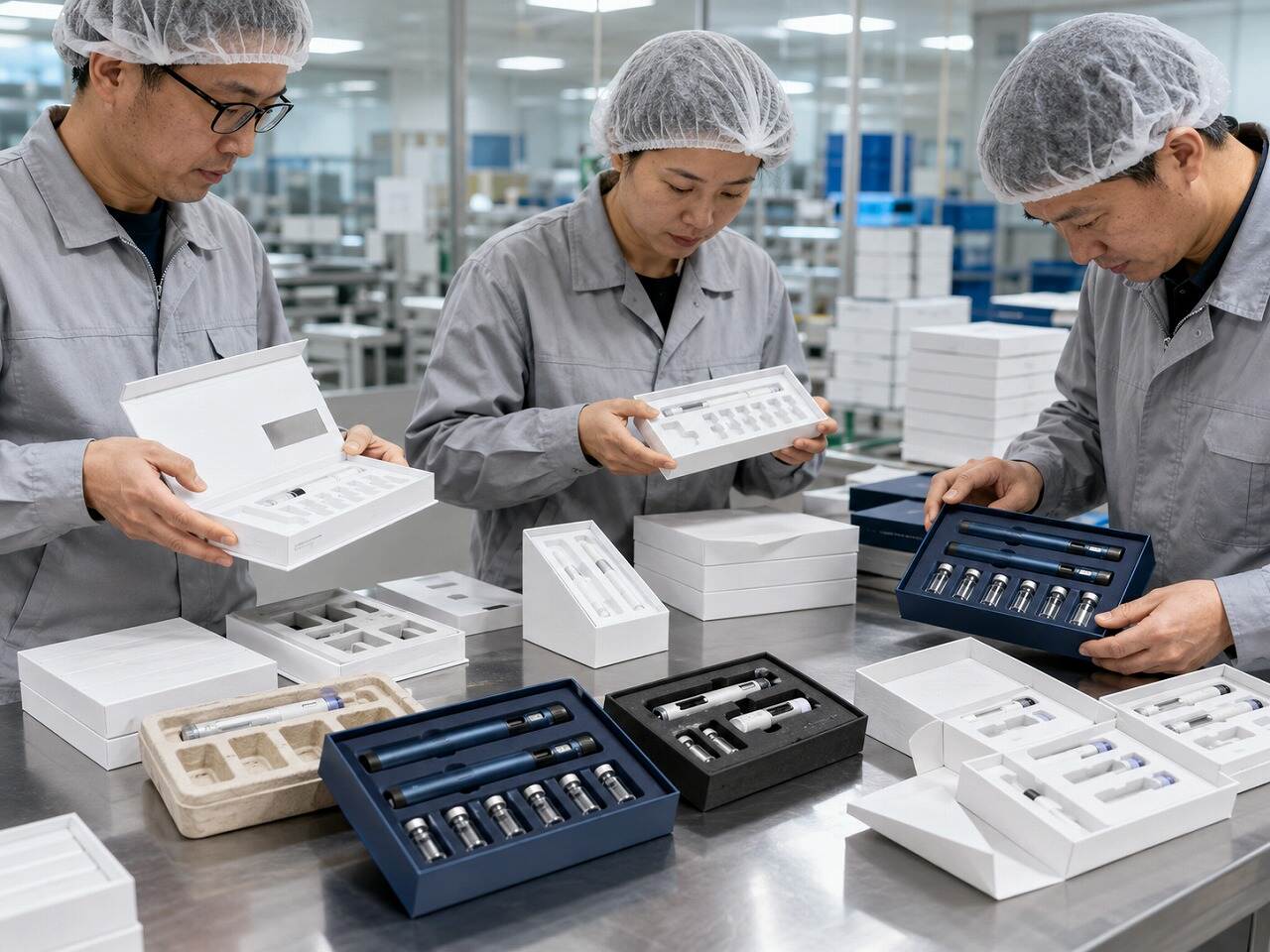
For peptide brands, research distributors, wellness product companies, and pharmaceutical-style packaging buyers, a peptide pen box is not simply a printed paper carton. It is a compact packaging system that must hold injection pens or vial kits securely, present product information clearly, support premium branding, and remain practical for sampling, storage, shipping, and scale production.
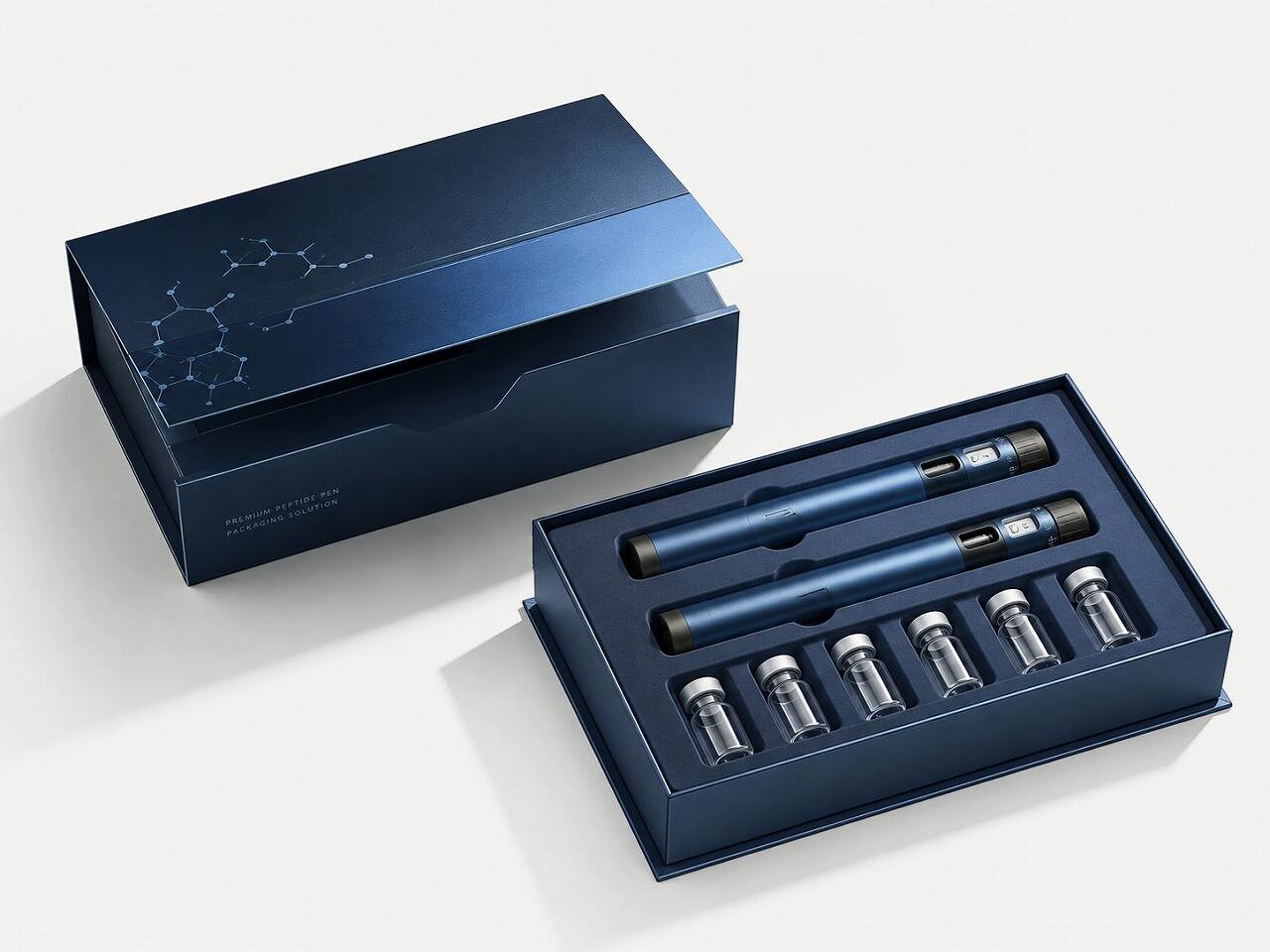
Why Peptide Pen Packaging Needs More Than a Standard Box
Peptide pen packaging sits between premium product presentation and highly practical secondary packaging. Whether the project is for research distribution, private-label wellness programs, sample kits, clinic-facing product sets, or brand presentation packs, the box must do more than carry a logo. It needs to organize delicate components, reduce movement during transportation, create a clean information hierarchy, and support a confident handover experience.
For B2B buyers searching for peptides injectable packaging box or peptide pen boxes, the real question is usually not “Can you print a box?” The deeper question is: “Can this supplier help us turn a sensitive, compact, information-heavy product into a professional packaging system that is protective, scalable, and brand-ready?”
That is where custom structural design matters. A peptide pen box may need to hold one pen, multiple pens, a vial, a dropper-style accessory, an instruction leaflet, a desiccant area, batch labeling, barcode placement, and a protective closure system. If these details are treated as afterthoughts, the final box may look acceptable in photos but fail during storage, shipping, packing, or customer use.
What B2B Buyers Usually Mean When They Search “Peptide Pen Boxes”
Search intent behind this keyword is usually commercial and technical. Buyers are often comparing packaging factories, reviewing examples, checking material options, and preparing a sourcing brief. They may not have final artwork yet, but they already know the box must look professional and protect the product inside.
Brand Owners
They need a premium box that makes a peptide pen or vial kit look reliable, clean, and market-ready without appearing overly decorative or unclear.
Distributors
They care about unit consistency, shipping efficiency, barcode readability, carton organization, and packaging that works across different SKUs.
Product Developers
They need help converting a concept into a feasible structure, including insert tolerance, board thickness, finish selection, and sample testing.
A strong blog should therefore speak to sourcing managers, packaging engineers, marketing teams, and founders at the same time. The content should explain design decisions clearly, avoid unsupported medical claims, and position the packaging as a business tool for protection, presentation, and production efficiency.
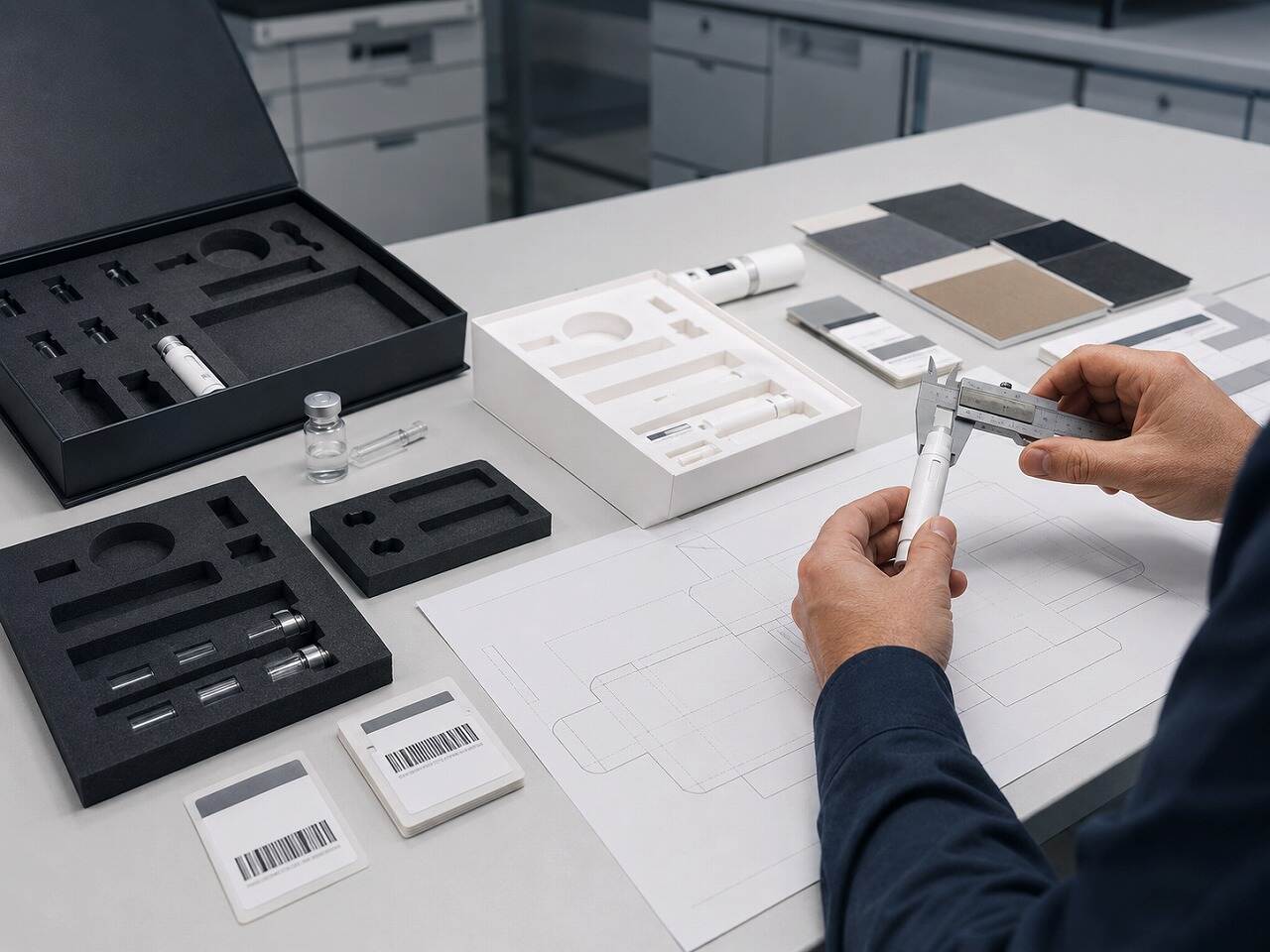
Best Box Structures for Premium Peptide Pen Packaging
There is no single “best” peptide pen box structure. The right choice depends on product value, quantity, retail or clinical-style use, shipping method, and whether the pack needs to hold only one pen or a full kit. Below are the most common premium structures for B2B projects.
Rigid Lid-and-Base Box
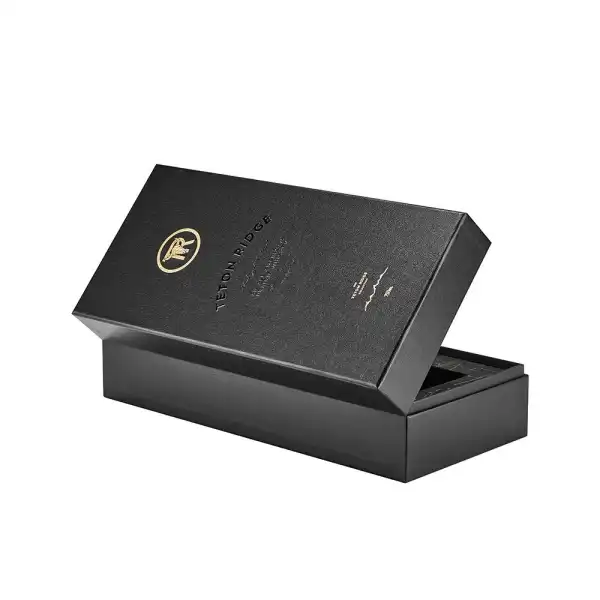
A rigid lid-and-base box is ideal when the brand wants a premium hand-feel and strong protection. It works well for starter kits, sample kits, and higher-value peptide pen sets. The box can be paired with EVA foam, paperboard insert, or molded pulp insert.
Best for: premium presentation, multi-piece kits, influencer kits, distributor sample sets, and high-end product launches.
Magnetic Closure Rigid Box
A magnetic closure box creates a clean opening experience and helps the package feel controlled and refined. It is often chosen when branding and unboxing experience are important. For peptide pens, the insert must be designed carefully so that the product remains fixed when the box opens.
Best for: premium sample presentations, brand kits, private-label launches, and products where first impression matters.
Drawer Box or Sleeve Box
A drawer-style structure can make the product feel organized and modern. It is especially useful for pen-and-leaflet layouts because the tray can slide out smoothly and present all components at once. However, the sleeve tolerance must be accurate to avoid a tray that is either too loose or too tight.
Best for: single-pen packaging, slim presentation kits, compact retail-style boxes, and elegant B2B sample packs.
Folding Carton
A folding carton is more efficient for larger production runs and lighter-weight packaging. It can still look professional when printed with clean medical-style graphics, but it provides less premium rigidity than a handmade rigid box. It works best when the product already has a strong primary container or when outer carton efficiency is the priority.
Best for: cost-sensitive programs, larger volume SKUs, retail cartons, and lightweight secondary packaging.
GPLPAK supports multiple custom structures, including rigid boxes, magnetic boxes, drawer boxes, lid-and-base boxes, tube boxes, and folding boxes. Buyers can explore more structure options on the GPLPAK custom packaging products page.
Material Selection: Balancing Protection, Clean Presentation, and Sustainability
Material choice affects everything: box strength, print result, insert stability, perceived value, recyclability, and cost. For peptide pen packaging, materials should be chosen with both appearance and function in mind.
Rigid Greyboard
Rigid greyboard is suitable for premium handmade boxes. It gives peptide pen packaging a stronger structure, better shelf presence, and a more substantial feel.
SBS or White Card Paper
White paperboard supports clean printing, medical-style minimalism, and readable information panels. It is commonly used for folding cartons and printed wraps.
Kraft and Recycled Paper
For brands that want a more natural or eco-conscious appearance, kraft and recycled paper options can create a responsible yet premium packaging direction.
Specialty Paper
Textured, soft-touch, linen, or fine-grain specialty papers can elevate the packaging without relying on heavy graphics or exaggerated decoration.
For most premium peptide pen box projects, a practical approach is to use rigid board for structural strength, a refined outer paper for branding, and a custom insert that matches the product’s weight and shape. If the product line includes multiple SKUs, the factory should also evaluate whether the same outer box size can be used with different insert layouts. This can help reduce tooling complexity and improve procurement efficiency.
GPLPAK focuses on high-end paper packaging and can support buyers with material selection, sample evaluation, and production feasibility. For projects that require a balance of premium presentation and eco-conscious materials, buyers can start with GPLPAK packaging services to discuss structure, paper options, insert concepts, and finishing direction.
Insert Engineering: The Hidden Detail That Decides Packaging Quality
For peptide pen boxes, the insert is often more important than the outer box. A beautiful box can still fail if the pen rattles, the vial touches the box wall, the leaflet bends, or the product is difficult to remove. Insert design should be based on exact product dimensions, tolerance, user handling, and the packing workflow.
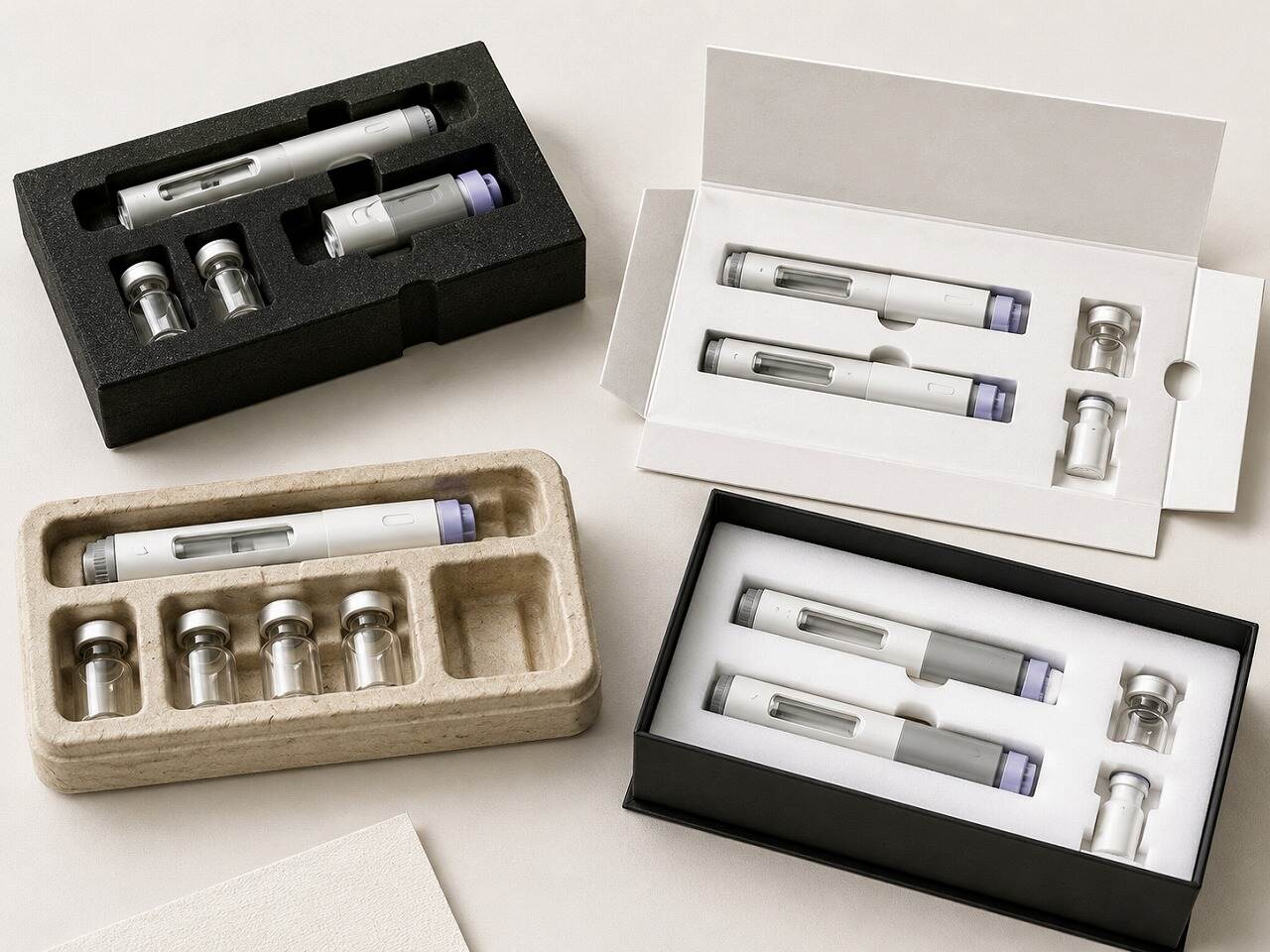
EVA Foam Insert
EVA foam provides a premium look and strong cushioning. It is useful for rigid peptide pen boxes where presentation and protection are both priorities. The cutout should be tested carefully to make sure the pen is easy to remove but not loose during transit.
Paperboard Insert
A paperboard insert is a more recyclable and lightweight option. It works well for brands that want a plastic-reduced packaging solution. Structural folds, locking tabs, and raised platforms can be designed to hold pens, vials, and leaflets in a tidy layout.
Molded Pulp Insert
Molded pulp is suitable for brands that want a stronger sustainability story. It can provide shaped cavities for pens and accessories while reducing the use of plastic. The texture, color, and tolerance should be evaluated through sampling.
Multi-Compartment Layout
Some peptide pen packaging requires a pen slot, vial cavity, leaflet pocket, QR code card area, or accessory space. A multi-compartment insert keeps the kit organized and improves the product experience, especially for sample sets and distribution packs.
During development, the insert should be tested with real product samples or accurate dummy models. Measurements should include pen length, diameter, cap size, vial height, vial diameter, label thickness, and any protective sleeve or cap variation. A packaging supplier should also check whether the insert affects closing pressure, box deformation, and packing speed.
Printing and Finishing: Clean, Premium, and Easy to Read
Peptide pen packaging often benefits from restrained design. Unlike fashion or confectionery packaging, this category usually needs to communicate clarity, precision, and trust. The best visual direction is often minimal, organized, and highly legible.
CMYK and Pantone Printing
CMYK is suitable for full-color graphics, while Pantone colors help maintain consistent brand tones across batches and product lines.
Matte or Soft-Touch Lamination
Matte and soft-touch finishes can create a refined, clinical-premium feel. They also reduce visual noise compared with high-gloss finishes.
Foil Stamping
Gold, silver, or subtle metallic foil can highlight a logo or product line. For this category, small and controlled foil areas usually look more professional.
Embossing and Debossing
Embossing or debossing adds tactile branding without making the packaging feel visually crowded. It works well on rigid boxes and specialty papers.
The most important printing principle is hierarchy. Product name, strength or variant, barcode, batch area, storage icons, warning area, and usage support content should not compete for attention. Even if the final information is provided by the customer’s regulatory or brand team, the packaging designer should create a layout that makes these zones easy to locate and easy to update.
For artwork preparation, vector files are preferred for sharp logos, clear lines, and precise printing. GPLPAK can help evaluate whether foil, embossing, spot UV, Pantone colors, or clean offset printing is the better route for your peptide pen packaging project. To understand more about production support, visit GPLPAK Factory Services.
Compliance-Ready Layouts: What Packaging Designers Should Prepare
A compliance-ready layout does not mean the packaging supplier approves or certifies the product. It means the box structure and artwork zones are prepared so that the brand owner, distributor, or regulatory team can add required information clearly and consistently.
This is especially important for peptide pen packaging because the box may need to carry product identification, batch information, barcodes, QR codes, storage guidance, caution statements, leaflet instructions, and market-specific labeling. The exact requirements depend on the product type, market, claim, channel, and regulatory classification. The customer should always confirm final content with qualified regulatory professionals.
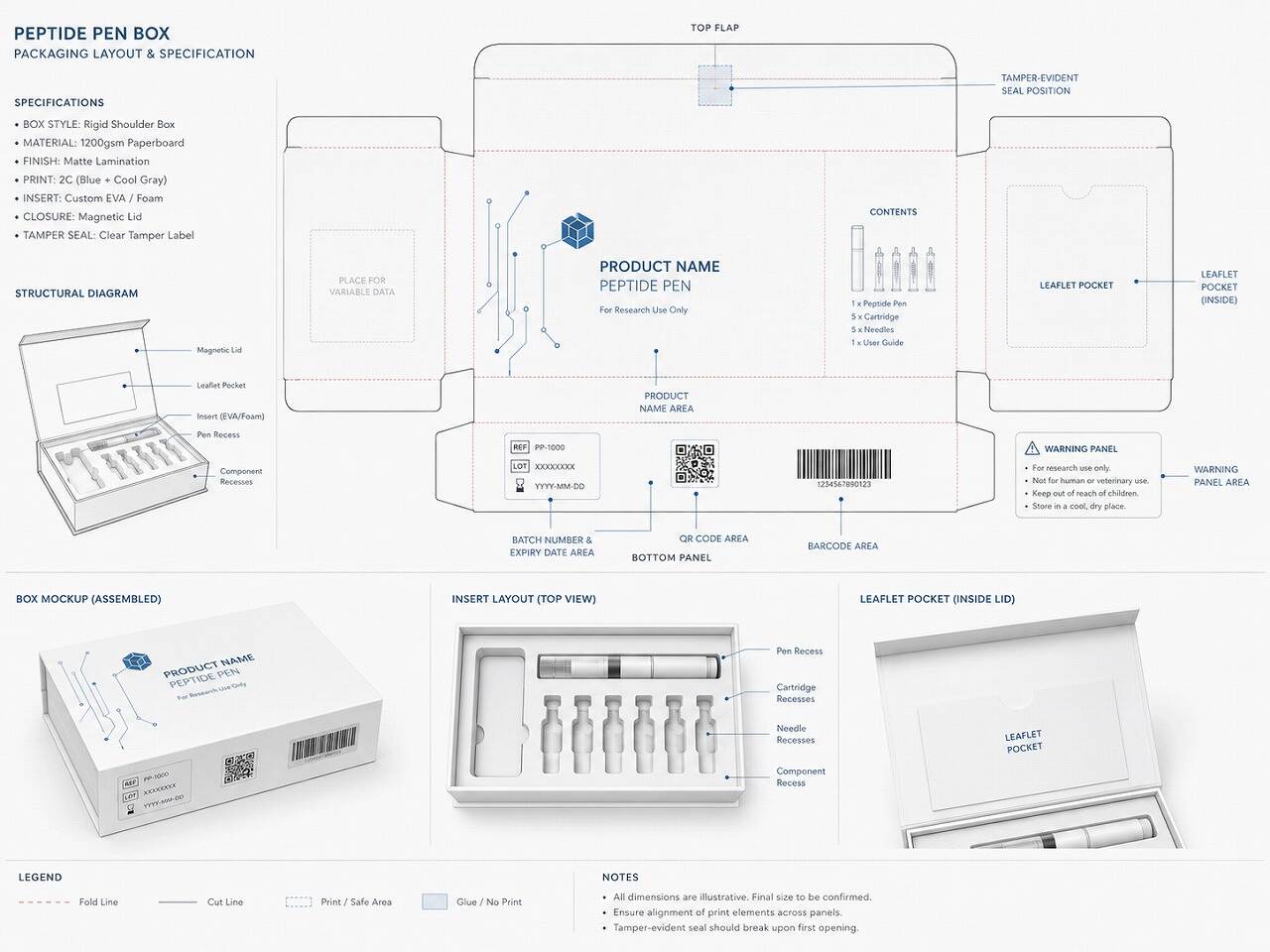
Recommended Layout Zones
Front panel: brand name, product line, clean visual identity
Side panel: barcode, SKU, QR code, batch or lot area
Back panel: instructions, caution text, distributor information
Interior: leaflet pocket, instruction card, or usage support area
Closure area: tamper-evident label position or sealing sticker zone
Shipping carton: outer label area, carton count, handling symbols
From a packaging production viewpoint, the layout should leave enough quiet space around barcodes and QR codes. It should avoid placing important information across folds, curves, edges, magnetic seams, or deep textures. If the box uses specialty paper, foil, or embossing, the designer should test whether small text remains readable after finishing.
For regulated or sensitive categories, GPLPAK’s role is to manufacture packaging according to the customer’s confirmed design, structure, material, and artwork requirements. GPLPAK can help create a clean and production-ready packaging layout, while the customer remains responsible for final legal, medical, and regulatory approval in the target market.
Sustainable Peptide Pen Packaging Without Losing Protection
Sustainability is no longer limited to consumer lifestyle products. Many healthcare-style, wellness, and premium research-related brands now want packaging that reduces unnecessary plastic while still protecting the product. For peptide pen boxes, the key is not simply choosing an eco-looking paper. The package must remain strong enough for storage, handling, and transit.
Right-Sized Box Design
A smaller, accurate structure reduces material waste and can improve shipping efficiency. Oversized boxes often look less professional and increase movement inside.
Paper-Based Inserts
Folded paperboard or molded pulp inserts can reduce plastic usage while still organizing pens, vials, and accessories.
Recyclable Paper Options
FSC-style, recycled, or responsibly sourced paper options can support a more responsible packaging message when matched with the right finish.
Low-Waste Production Thinking
Smart dieline planning, standardized outer sizes, and efficient insert layouts can reduce waste before mass production begins.
GPLPAK’s packaging philosophy combines premium presentation with responsible material thinking. For brands that want a more sustainable peptide pen packaging solution, the best starting point is a material and structure discussion during sampling, not after the artwork is already locked.
Recommended Development Workflow for Peptide Pen Boxes
A successful peptide pen packaging project usually follows a structured process. Skipping early measurement and sampling steps can lead to poor insert fit, printing changes, or delayed mass production.
Confirm Product Dimensions
Measure pen length, diameter, cap shape, vial size, leaflet size, accessory dimensions, and the required packing quantity per box.
Choose Box Structure
Decide whether the project needs a rigid box, magnetic box, drawer box, folding carton, or multi-component packaging kit.
Engineer the Insert
Test EVA, paperboard, molded pulp, or hybrid inserts based on product weight, protection needs, sustainability goals, and removal experience.
Prepare Artwork and Labeling Zones
Create a clean dieline with front branding, information panels, barcode area, QR code area, batch area, leaflet space, and sealing position.
Make a Pre-Production Sample
Check fit, color, finish, insert tolerance, closing feel, readability, packing efficiency, and overall presentation before mass production.
Scale to Mass Production
After sample approval, confirm print files, materials, finishing, QC standard, packing method, carton labels, and delivery schedule.
GPLPAK provides development sampling and manufacturing support for custom paper packaging projects. Buyers who need a new peptide pen box can begin with structural consultation, then move into sampling, artwork adjustment, and production planning. Learn more through GPLPAK factory services.
How to Choose a Peptide Pen Packaging Supplier
A good supplier should not only quote a unit price. For peptide pen packaging, the right partner should understand structural design, material selection, print accuracy, insert tolerance, and scalable production. Below are key questions B2B buyers should ask before choosing a factory.
Can the supplier design a custom insert based on real pen and vial dimensions?
Can they produce rigid boxes, drawer boxes, magnetic boxes, and folding cartons?
Can they support both premium finishes and clean medical-style printing?
Can they prepare a sample before mass production?
Can they help optimize box size for shipping, storage, and material efficiency?
Can they maintain color consistency and workmanship during bulk production?
Can they communicate clearly during artwork review, sampling, production, and delivery?
As one of the custom paper packaging suppliers serving premium brand projects, GPLPAK combines handmade box craftsmanship with factory-scale production capability. The company supports custom rigid boxes, magnetic boxes, drawer boxes, folding boxes, specialty paper packaging, insert solutions, sampling, manufacturing, and packing support for global buyers.
For peptide pen packaging projects, GPLPAK can help buyers turn a rough idea into a practical packaging structure: box size, paper selection, insert design, finishing, artwork layout, sample checking, and mass production planning. If your team is preparing a new peptide pen packaging program, you can contact GPLPAK for a custom packaging consultation.
Common Mistakes to Avoid in Peptide Pen Packaging
Many packaging problems appear small during the design stage but become expensive during production or after delivery. Here are the most common mistakes to avoid.
Using a Generic Insert
Generic cavities may not fit the product correctly. A pen that moves inside the box can damage the packaging and reduce customer confidence.
Crowding the Label Area
Too much text, small fonts, or poor barcode placement can make the packaging look unprofessional and difficult to use.
Ignoring Packing Efficiency
A beautiful box that is slow to assemble or difficult to pack can create labor problems during mass production.
Choosing Finish Before Structure
Foil, embossing, or specialty paper should support the structure and message. They should not distract from product information or usability.
The safest approach is to develop the structure first, then validate insert fit, then refine material and finish, and finally lock the artwork. This sequence helps reduce revision costs and improves production reliability.
FAQ: Peptide Pen Packaging Boxes
What is a peptide pen box?
A peptide pen box is a custom secondary packaging box designed to hold injection pen-style products, vials, accessories, leaflets, or sample kit components. It usually requires a precise insert and clear information layout.
Which material is best for premium peptide pen packaging?
For premium projects, rigid greyboard with specialty paper is often preferred. For lightweight or high-volume programs, folding cartons may be more efficient. The final choice depends on product weight, target price, order quantity, and presentation needs.
Can peptide pen boxes use paper inserts instead of foam?
Yes. Paperboard inserts and molded pulp inserts can be designed for many peptide pen packaging projects. They are useful when the brand wants a more recyclable or plastic-reduced solution. Sampling is recommended to confirm fit and protection.
What information should be considered in a compliance-ready layout?
A compliance-ready layout may reserve space for product identification, batch or lot code, barcode, QR code, instructions, caution text, storage guidance, distributor information, and leaflet placement. The final approved content should always be confirmed by the customer’s regulatory team.
Can GPLPAK help with custom peptide pen box samples?
Yes. GPLPAK supports custom paper packaging development, including structure planning, material selection, insert solutions, sampling, and mass production. Buyers can send product dimensions, quantity, artwork, and target packaging style for evaluation.
Build a Peptide Pen Box That Looks Premium and Works in Production
A well-designed peptide pen packaging box should protect the product, organize the kit, support clear labeling, express the brand, and remain feasible for manufacturing. The best results come from early collaboration between the brand team, packaging designer, regulatory reviewer, and factory.
If you are developing peptide pen boxes, vial kits, sample sets, or premium injectable-style product packaging, GPLPAK can help you evaluate structure, materials, inserts, printing, finishing, and production details before mass production begins.
 Hot News
.jpg)
