
 EN
EN  EN
EN  RU
RU  ES
ES  KO
KO  JA
JA  PT
PT  IT
IT  DE
DE  FR
FR  NL
NL Quick Links
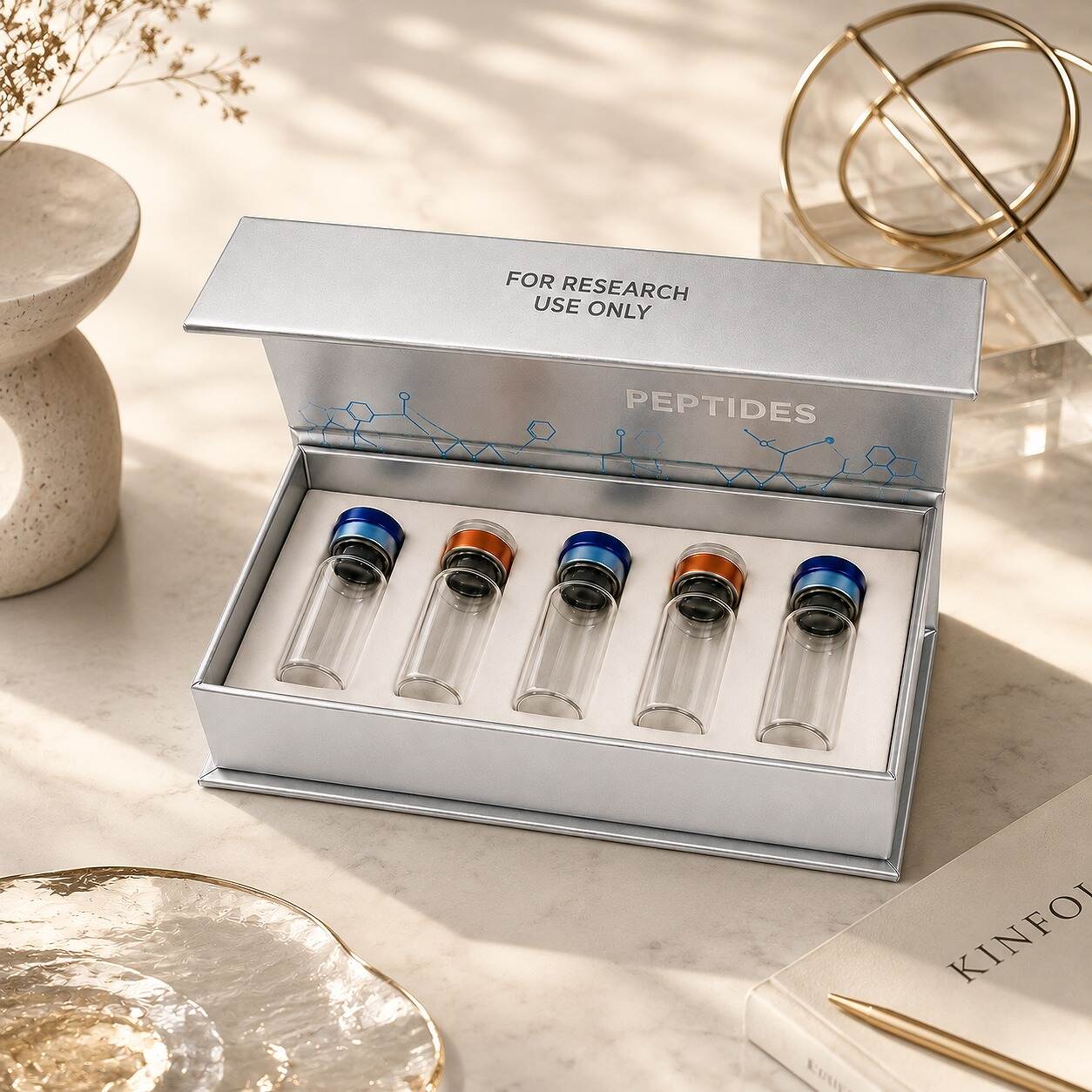
Peptide packaging refers to the protective, brand-centric packaging solutions designed specifically for peptide products-including peptide vials, pens, powder sachets, and multi-unit kits. In the custom packaging manufacturing space, peptide packaging has evolved far beyond a mere "box that holds the product." It is now a strategic triad of brand value delivery, product protection & compliance, and supply chain efficiency.
Whether you are sourcing peptide packaging for the first time or looking to upgrade your current solution, this guide breaks down everything you need to know-from material selection and structural design to compliance standards, cost breakdowns, and supplier evaluation-to help you make an informed procurement decision in 2026.
Peptide packaging is a customized packaging system designed for bioactive peptide products. Because peptides are sensitive to temperature, humidity, light, and oxygen-and because the end users are often clinical professionals, medical spas, or specialized distribution channels-peptide packaging must meet far higher standards than typical consumer goods packaging.
💡 In one sentence: Peptide packaging is a custom-engineered system designed to protect product integrity, communicate brand value, and satisfy regulatory requirements across global markets.
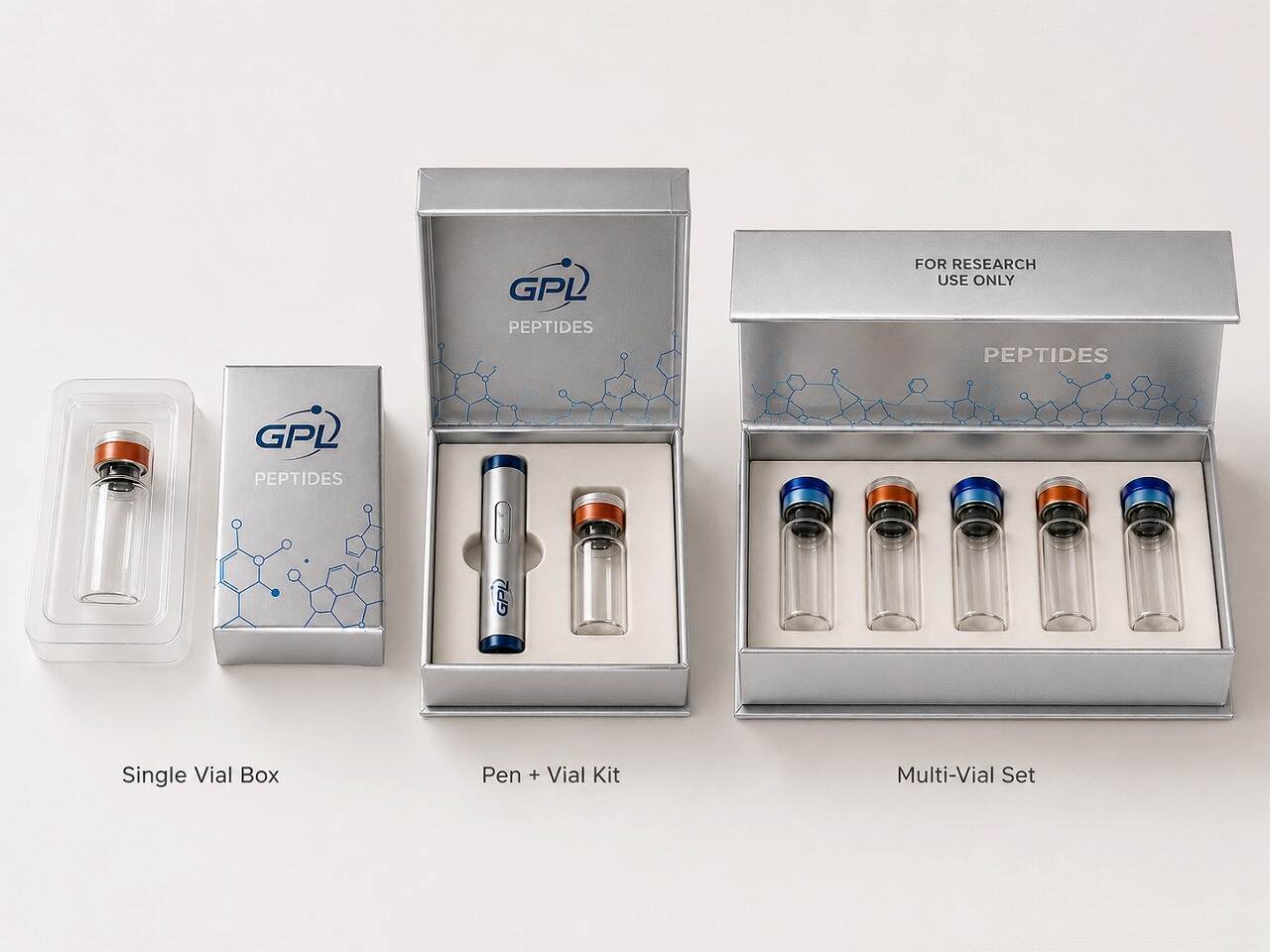
Different peptide product formats demand very different packaging approaches:
| Format | Typical Packaging | Key Requirements | Recommended Structure |
|---|---|---|---|
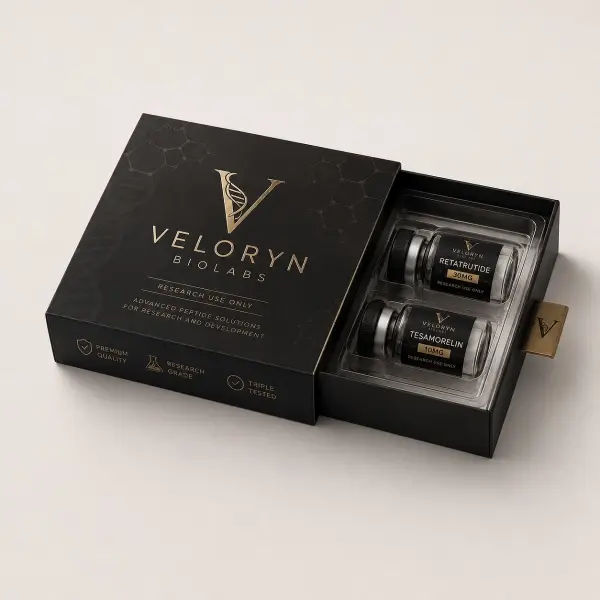
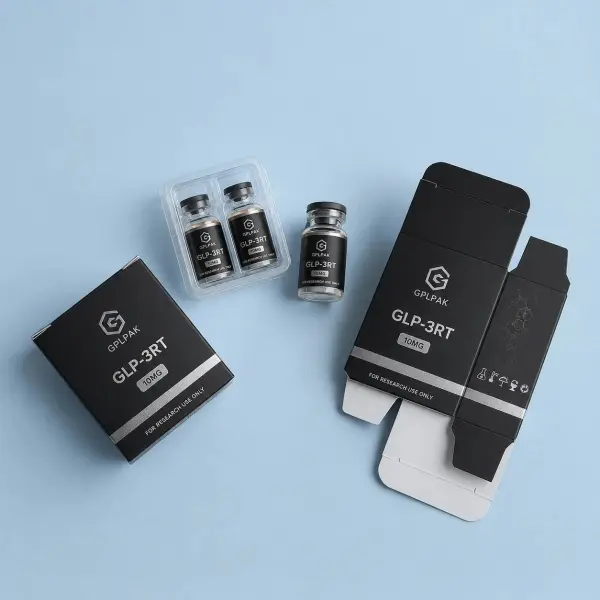
| Peptide Vial | Flip-top box + EVA/foam insert | Glass protection · shock absorption · label window | Magnetic flip-top / lid & base |
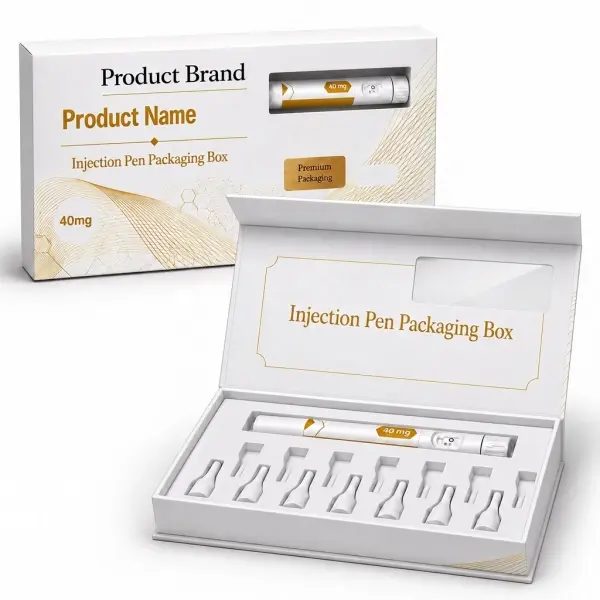
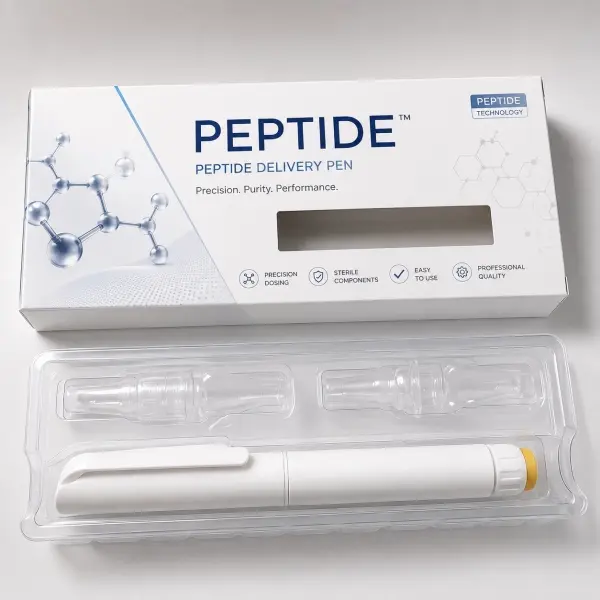
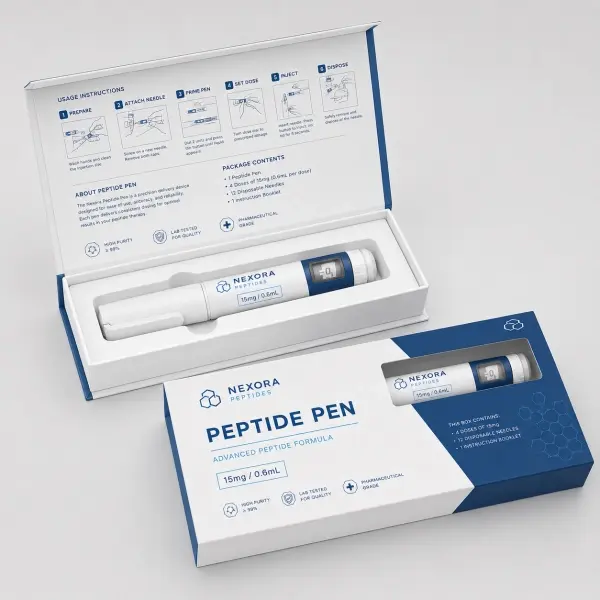
| Peptide Pen | Flip-top box + custom insert slot | Precision instrument fixation · pen-shaped reveal | Book-style / drawer box |
| Peptide Powder / Lyophilized | Sealed pouch + outer box | Moisture barrier · airtight · light protection | Flip-top box + aluminum foil bag |
| Multi-Unit Kit | Multi-compartment layered insert | Zoning · display · retail-shelf ready | Magnetic book box / bi-fold box |
The global peptide therapeutics market is projected to exceed USD 75 billion by 2028 (Grand View Research). As competition intensifies, packaging is no longer just a container-it's a direct lever for product valuation, user trust, and channel efficiency.
Peptide molecules are sensitive to heat, moisture, light, and oxygen. Professional moisture barriers and light-blocking design can significantly extend shelf life.
Premium peptide packaging can lift perceived product value by 30-50%. The unboxing experience directly influences distributor confidence and end-user retention.
Different markets impose specific requirements for labeling, tamper-evidence, and child-resistant packaging. Compliant packaging reduces legal risk and returns.
Smart packaging design optimizes warehouse space utilization and reduces shipping damage rates from 5-8% to below 1%, directly lowering total cost of ownership.
Material selection is one of the most consequential decisions in peptide packaging design. It directly impacts protection performance, brand expression, and cost. Here is a side-by-side comparison of the most commonly used materials:
| Material | Best For | Protection | Brand Feel | Relative Cost |
|---|---|---|---|---|
| Rigid (Grey Board + Wrap) | Premium vials, pen kits | ⭐⭐⭐⭐⭐ | ⭐⭐⭐⭐⭐ | Medium-High |
| Corrugated Board | Shipping boxes, multi-packs | ⭐⭐⭐⭐⭐ | ⭐⭐ | Low |
| Folding Carton (Paperboard) | Volume production, retail shelf | ⭐⭐⭐ | ⭐⭐⭐ | Low-Medium |
| EVA / Foam Insert | Precision nesting & fixation | ⭐⭐⭐⭐⭐ | ⭐⭐⭐⭐ | Medium |
| Molded Pulp | Eco-friendly / biodegradable | ⭐⭐⭐ | ⭐⭐⭐ | Medium |
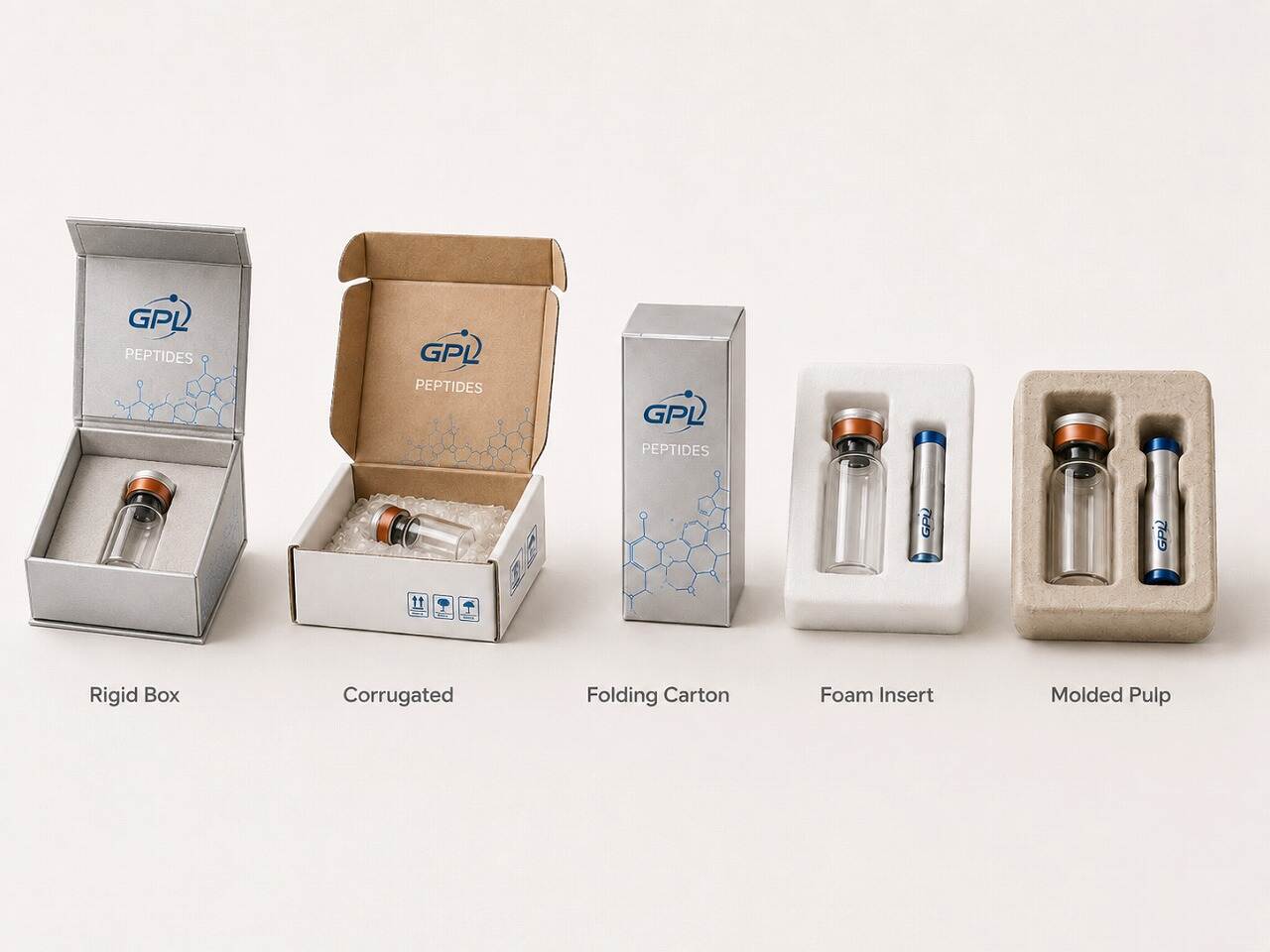
💡 GPLPAK recommendation: For most peptide brands, we recommend the rigid box + EVA foam insert combination. It strikes the optimal balance between protection (glass vial shock absorption), brand experience (magnetic flip-top unboxing), and cost. Browse our Rigid Box Series and Magnetic Box Series for inspiration.
Peptide products typically use one of the following three box structures. Each has distinct advantages depending on your product format and brand positioning:
The most popular structure for peptide vials. Magnets embedded in the lid and body create a smooth, silent open-close action that delivers a premium unboxing ritual. Ideal for 2-6 vial kits. GPLPAK uses high-density neodymium magnets rated for 10,000+ open-close cycles.
→ Related: Lid & Base Boxes
The inner tray slides out from an outer sleeve, revealing a layered layout that works beautifully for peptide pen + vial combo kits. Strong visual impact, though slightly higher structural cost than flip-top boxes.
Opens like a hardcover book. Ideal for ultra-premium peptide presentations. The interior pages can carry brand storytelling, usage instructions, or clinical references-turning the package into an educational tool as well as a container.
Peptide products are regulated differently across markets. Compliant packaging is not just a legal requirement-it is a brand responsibility signal. Here are the key compliance touchpoints:
FDA (United States): Labels must include ingredients, usage instructions, batch number, and expiry date. Packaging materials must be FDA-approved for direct or indirect contact.
EU CE / REACH: Materials must comply with REACH regulations (no SVHCs). Food-contact materials must meet EU 10/2011 standards.
Tamper-Evidence: At least one of the following is expected-shrink band, tamper-evident seal, tear-strip carton, or holographic security label.
Child-Resistant Packaging (select markets): Special opening mechanisms may be required to prevent accidental access.
⚠️ Important: Compliance requirements vary by product use case (research / clinical / cosmetic). Always confirm requirements for your target market during the design phase. GPLPAK offers free packaging compliance consultation to help ensure your design meets applicable standards.
Understanding where your packaging budget goes helps you make smarter sourcing decisions. Below is a typical cost breakdown for a standard peptide vial kit box:
| Cost Item | % of Total | Details |
|---|---|---|
| Materials | 45-55% | Board, wrapping paper, insert material, magnets, hardware |
| Printing & Finishing | 15-25% | Hot foil stamping, embossing/debossing, spot UV, lamination, screen printing |
| Tooling & Dies | 5-10% | One-time investment; amortizes to ~0.5-2% over production volume |
| Assembly Labor | 10-15% | Wrapping, assembly, quality inspection |
| Packaging & Logistics | 5-10% | Secondary packaging, sea freight / air freight |
📌 Cost advantage of sourcing from China: Compared to local suppliers in North America or Europe, Chinese manufacturers typically offer 30-50% lower total landed costs. The gap widens at higher volumes (5,000+ units). Beyond pure cost, Chinese suppliers like GPLPAK also bring deep expertise in finishing techniques (foil stamping, UV, embossing) and structural innovation, allowing you to achieve higher quality at the same price point.
Selecting the right peptide packaging supplier is critical to product quality and supply chain reliability. Based on 15+ years in the industry, here is GPLPAK's 5-Step Supplier Evaluation Framework:
Step 1: Credential Check - ISO 9001, BSCI, FDA registration, FSC certification. Request full certificate copies.
Step 2: Sample Evaluation - Request samples of similar peptide packaging projects. Inspect edge precision, print registration, insert fit, and magnetic strength.
Step 3: Factory Audit (On-site or Video) - Verify production lines, cleanroom conditions, and QC workflows. A video audit is highly effective if you cannot visit in person.
Step 4: Communication Quality - Response speed, technical comprehension, and problem-solving ability often matter more than price.
Step 5: Client References - Have they served brands in your industry? What do their existing clients say?
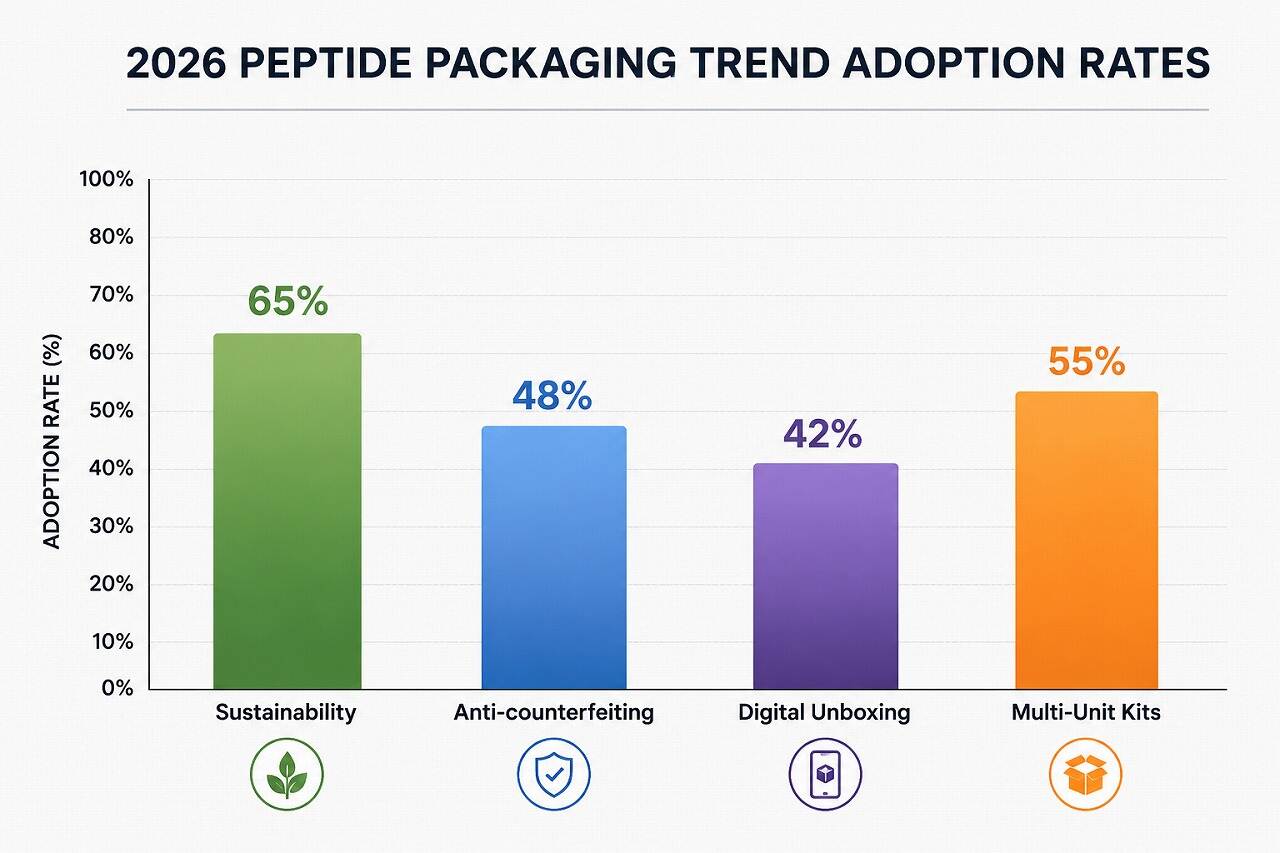
Recycled board, FSC-certified paper, molded pulp inserts, and plastic reduction are becoming table stakes rather than differentiators.
NFC chips, track-and-trace QR codes, holographic labels, and invisible inks are increasingly adopted by peptide brands to protect their supply chain.
AR usage guides, product traceability videos, and QR-code authentication turn the package into a digital gateway.
The shift from single-vial boxes to 4-12 week treatment kit packaging is driving demand for multi-compartment insert systems.
With 15+ years of experience in China's custom packaging manufacturing industry, GPLPAK serves peptide brands in 30+ countries. From design consultation to sampling verification and mass production, we deliver end-to-end peptide packaging solutions.
© 2026 GPLPAK - China's Professional Custom Packaging Manufacturer
 Hot News
2026-09-09
2026-08-31
2026-08-26
2026-08-21
2026-08-13
2026-08-12
2026-08-07
2026-08-04
2026-07-22
2026-07-22
Discover premium packaging solutions from Dongguan Xinglan Packaging Products Co., Ltd. Specializing in innovative, durable, and custom packaging products for diverse industries.
GPLPAK is committed to delivering manufacturing excellence.


.jpg)