
 EN
EN  EN
EN  RU
RU  ES
ES  KO
KO  JA
JA  PT
PT  IT
IT  DE
DE  FR
FR  NL
NL Schnell-Links
Die richtige Wahl treffencigarette pack materials, printing technology and finishing options is one of the most important sourcing decisions a brand can make. The substrate decides how the pack feels and how well it protects the product; the printing method determines color accuracy and detail; and finishing turns an ordinary carton into a premium, shelf-ready package. This guide explains each layer in plain B2B language so you can brief suppliers with confidence and get exactly the pack your brand needs.
For tobacco and nicotine brands, the pack is far more than a container. In many markets it is the primary piece of brand communication a consumer sees before purchase, and in plain-packaging markets it is often the only surface where the brand name can appear at all. That puts enormous pressure on the packaging specification: the material must protect freshness, the print must reproduce brand colors precisely, and the finish must deliver the premium feel that justifies the retail price.
From a procurement perspective, every layer of the specification has a cost consequence. Upgrading from clay-coated newsback to solid bleached sulfate board can lift unit cost noticeably, but it also improves print sharpness and perceived quality. Choosing gravure over digital printing only makes sense at very high volumes. Understanding these trade-offs before you approach a supplier is what separates a smooth sourcing project from a cycle of expensive revisions.
This guide walks through the four decisions every buyer has to make: material, structure, printing method and finishing. If you already know your requirements and want a quote, you can send your specification to our packaging engineers at any time.
The material you choose defines the pack's stiffness, print surface and cost. The four most common paperboard families used for cigarette packs are SBS, CCNB, FBB and kraft, plus greyboard for rigid structures. Each has a specific role.
SBS is the premium choice. Its bright white, clay-coated surface reproduces fine detail and rich color better than any other folding-carton board, which is why most high-end cigarette packs use it. It is available in FSC-certified grades for brands that need a sustainability story.
CCNB, with its grey back, is the workhorse option for cost-sensitive programs. Folding box board (FBB) offers a lighter, stronger alternative with good stiffness-to-weight ratio, which can reduce shipping weight on large orders.
Natural kraft delivers an eco, unbleached look that suits sustainable brand positioning. Greyboard (chipboard) from 1.5 mm to 3.0 mm thick is the core material for rigid boxes, wrapped with printed SBS paper for the visible surface.
| Material | Typical Weight | Am besten für | Kostenstufe | Öko-Optionen |
|---|---|---|---|---|
| SBS | 250–400 gsm | Premium folding cartons, crisp printing | Hoch | FSC-certified grades |
| CCNB | 250–350 gsm | Cost-effective cartons | Niedrig | Recycled content |
| FBB | 230–350 gsm | Lightweight strong cartons | Mittel | FSC-certified grades |
| Kraft paperboard | 200–400 gsm | Natural, eco positioning | Mittel | Recycled kraft |
| Greyboard (rigid board) | 1.5–3.0 mm thick | Rigid boxes, hinged-lid packs | Hoch | Recycled greyboard |
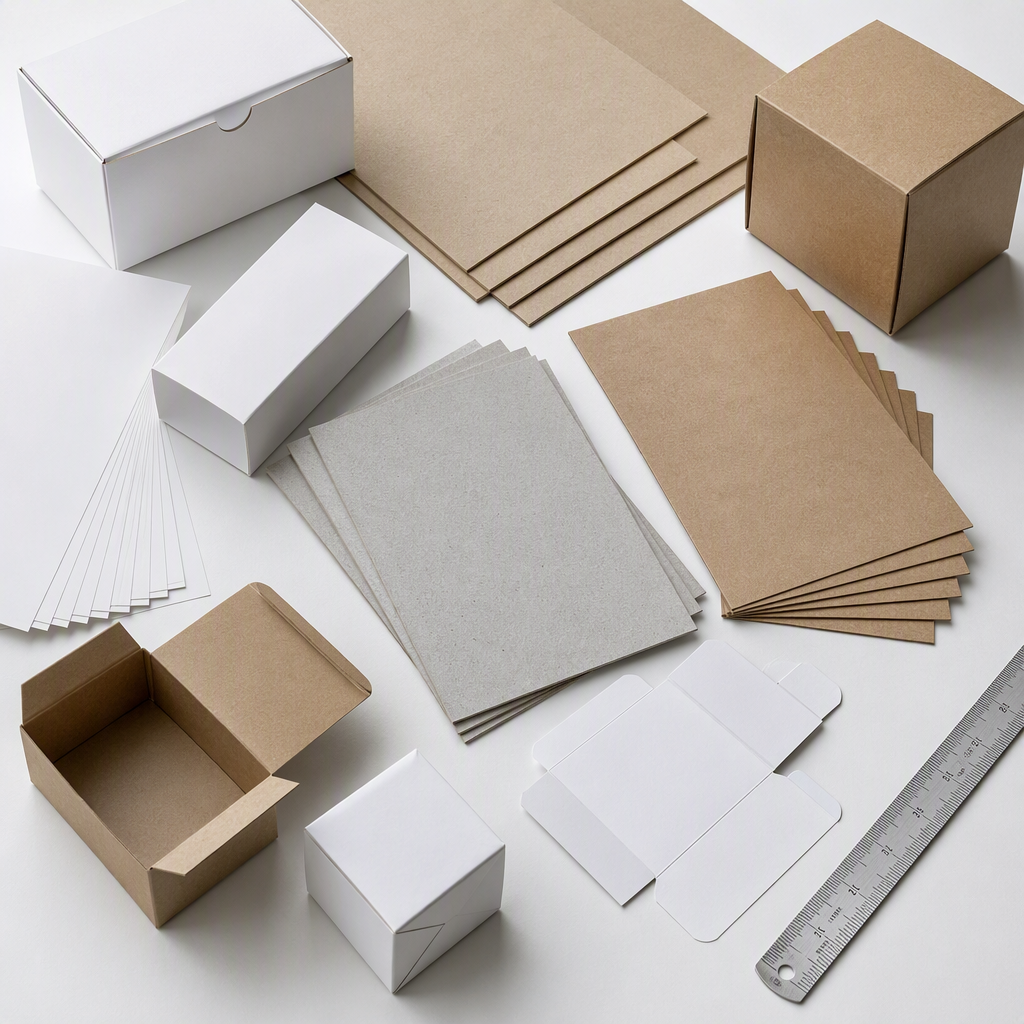
Paperboard families used in cigarette pack production: SBS, kraft, FBB and greyboard.
Key properties to compare when evaluating materials:
Printability — brightness and coating smoothness determine color accuracy and detail.
Stiffness — a stiffer board survives handling and feels more substantial in hand.
Foldability — high-weight boards need precise creasing to avoid cracking on the fold.
Moisture resistance — important for humid markets and long warehouse storage.
Certification — FSC or recycled grades support sustainability claims at retail.
Structure is the second major decision. The classic cigarette pack is a hinged-lid folding carton; the classic soft pack is a flexible paperboard wrap; and premium or limited editions increasingly use starre Kästen. The right structure depends on positioning, volume and budget.
| Struktur | Beschreibung | Typical Use | Relative Cost | MOQ |
|---|---|---|---|---|
| Soft pack | Flexible paperboard wrap, no rigid hinge | Classic format, budget lines | Niedrig | Hoch |
| Hinged-lid carton | Standard folding cigarette box with flip-top lid | Most common mainstream format | Mittel | Mittel |
| Starre Box | Thick greyboard core wrapped in printed paper | Premium and limited editions | Hoch | Low–medium |
Rigid boxes command higher perceived value and are increasingly chosen for gifting programs and collector editions, while hinged-lid cartons remain the most efficient structure for high-volume retail distribution. For more detail, see our comparison of starre Kästenundfaltbare Kartons.
Printing technology determines color fidelity, consistency across long runs, and the unit cost at your order volume. Four technologies dominate cigarette pack production.
Offset is the default for folding cartons. It delivers excellent color reproduction, fine hairlines and smooth gradients, with per-unit cost dropping quickly as volume rises. Most premium cigarette packs with complex artwork are produced offset.
Gravure offers the lowest per-unit cost at very high volumes and exceptional run-to-run consistency, which is why multinational brands use it for massive national campaigns. The trade-off is high plate cost and slow setup, so it only pays off above certain quantities.
Flexo suits large runs of simpler designs with lower cost per impression. Digital printing is the right tool for short runs, market tests, samples and variable-data elements such as serial numbers, because there are no plates and no setup cost.
| Technologie | Am besten für | Run Size | Quality | Cost per Unit |
|---|---|---|---|---|
| Offset | Folding cartons, complex artwork | Mittel-hoch | Excellent | Low at scale |
| Gravure | Ultra-high volume campaigns | Sehr hoch | Excellent consistency | Lowest at huge scale |
| Flexo | Large runs, simpler designs | Hoch | Good | Niedrig |
| Digital | Samples, short runs, variable data | Niedrig | Very good | Higher per unit |
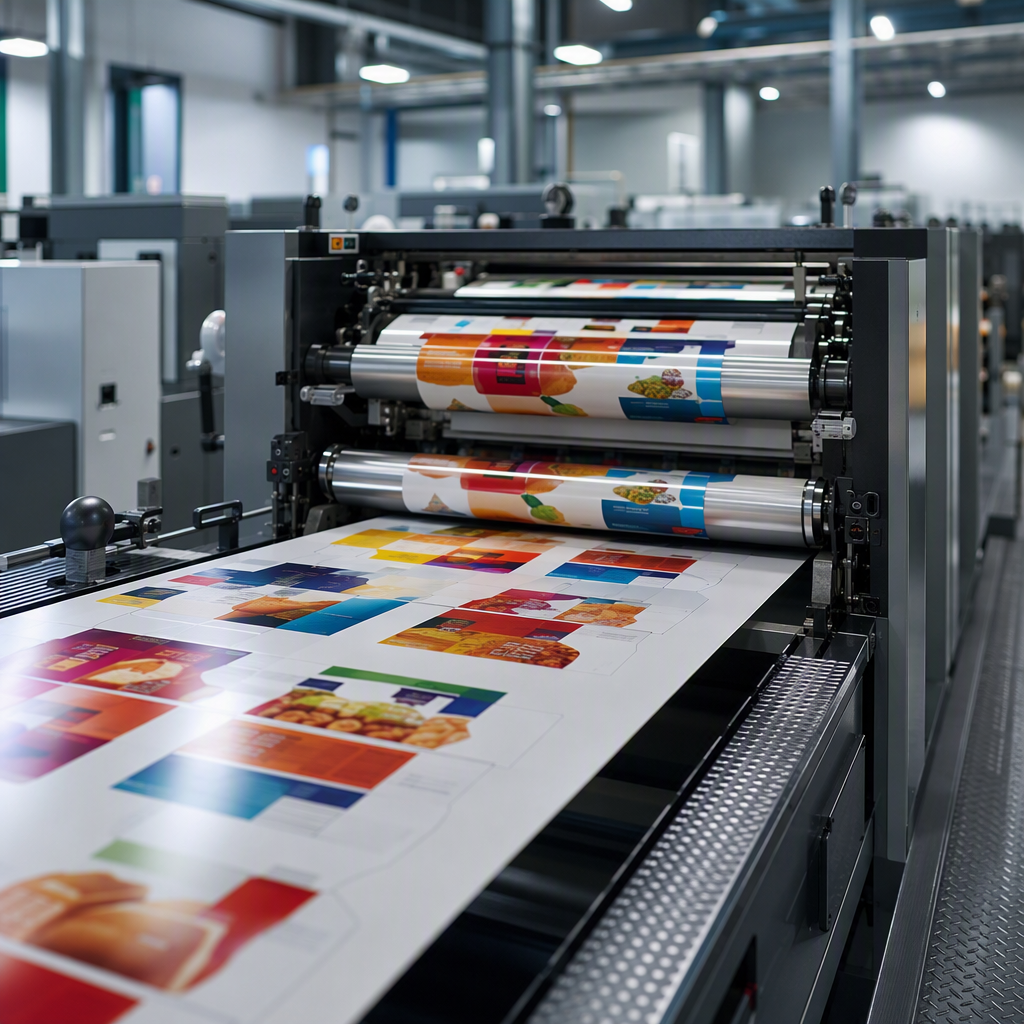
Offset printing in production: the standard choice for high-detail cigarette pack artwork.
Finishing is where a cigarette pack moves from functional to premium. Applied after printing, these treatments add texture, gloss and protection, and they are the fastest way to differentiate a brand on the shelf.
Gold, silver or holographic metallic foil applied to logos and borders. The classic signal of a premium pack.
Raised or recessed patterns add a tactile, collectible quality that photography cannot capture.
High-gloss coating on selected areas against a matte background creates striking contrast.
A velvet-feel matte film that signals luxury and resists fingerprints.
Protective films that add durability and control the final sheen of the pack.
Holographic foils and micro-text deter counterfeiting and support tax-stamp integration.
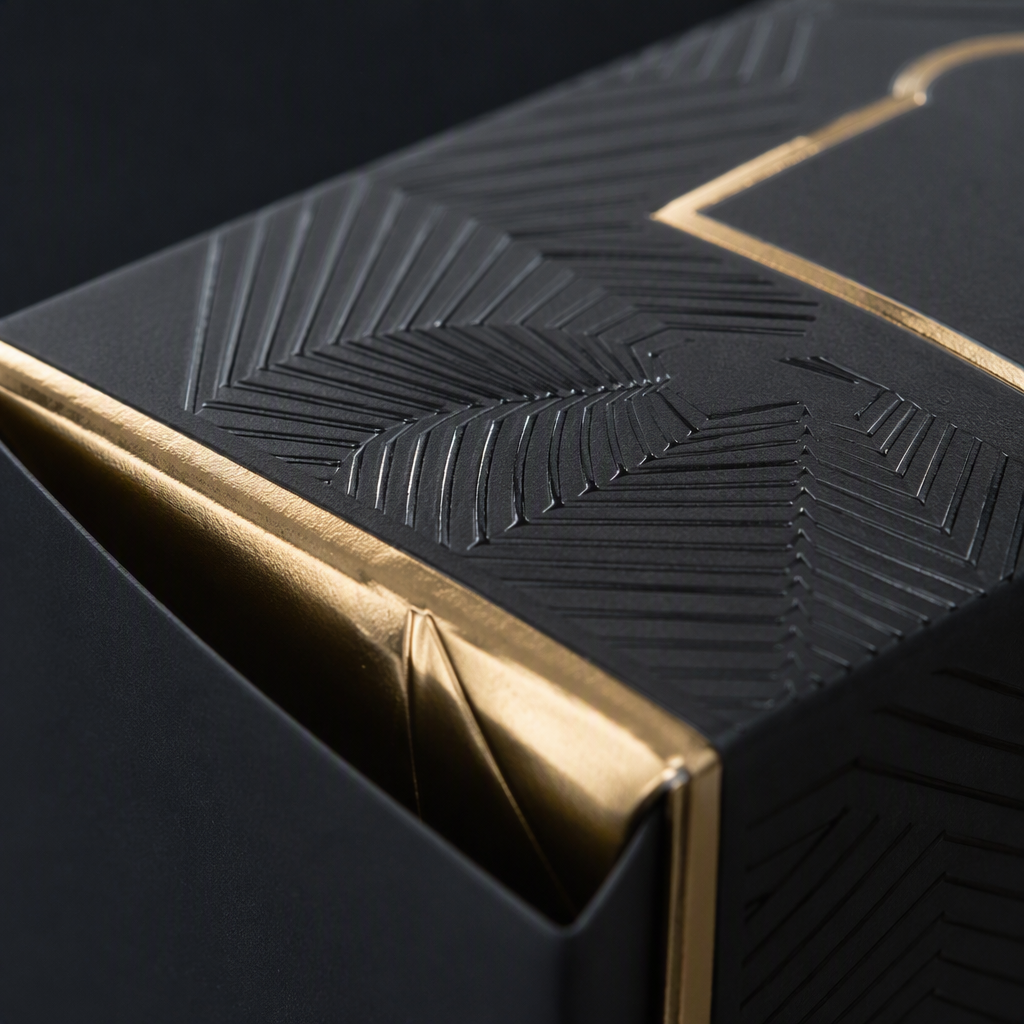
Finishing detail: gold foil stamping, embossing and spot UV on a premium pack surface.
A common mistake is layering too many finishes. Each additional process adds cost and extends lead time, and competing effects can cancel each other out. A disciplined approach — one metallic element, one tactile effect, one sheen contrast — usually reads as more premium than a busy combination.
Tobacco packaging is among the most regulated packaging categories in the world. Compliance failures can stop an entire shipment at customs, so the packaging spec must be validated against destination-market rules before production starts.
Warning labels — graphic health warnings and text sizes are mandated with exact dimensions and placement rules in most markets.
Plain packaging — some markets restrict brand elements to a standard drab color with limited typefaces, which changes the whole design brief.
Tax stamps — many jurisdictions require a fiscal stamp area or a die-cut window where the stamp is applied.
Anti-counterfeit — serial numbers, QR codes and holographic features are increasingly expected by regulators and retailers.
Child-resistant features — certain nicotine product categories require CR closures or opening mechanisms.
⚠️ Important: Packaging regulations differ by country and change frequently. Always confirm the latest requirements for your destination market with legal counsel before finalizing artwork and tooling.
💡 Tip: Ordering a pre-production sample with the actual warning-label layout printed at full size is the cheapest way to catch compliance errors before tooling is cut.
Most brands work within one of three budget tiers. The table below maps a balanced specification for each, so you can see where the money goes and where to trade off.
| Budget Tier | Struktur | Material | Veredelung | |
|---|---|---|---|---|
| Entry | Hinged-lid carton | CCNB 300 gsm | Offset or flexo, 4 colors | Matte lamination |
| Mid | Hinged-lid carton | SBS 320 gsm | Offset, 4–6 colors | Soft touch + spot UV |
| Premium | Starre Box | Greyboard 2.0 mm + SBS wrap | Offset + foil pass | Embossing + gold foil |
Five steps to a clean specification:
Decide between soft pack, hinged-lid carton or rigid box before anything else — it drives tooling and cost.
Match the board grade to your print complexity and the feel you want in hand.
Estimate your annual quantity, then pick offset, gravure, flexo or digital accordingly.
One metallic, one tactile, one sheen contrast is the sweet spot for premium perception.
Always run a pre-production sample with real materials and finishes before committing to tooling.
→ Related: Request a sample
GPLPAK is a custom packaging manufacturer based in Dongguan, China, with years of export experience serving brands across Europe and North America. Our production floor combines offset printing, rigid box assembly and a full finishing line under one roof, which means your cigarette pack project stays under a single quality manager from artwork to container loading.
We work from your existing artwork or from a concept: our engineers advise on material grades, structural design and finish combinations before a single tool is cut. Every project follows a multi-point inspection routine — incoming material checks, press-side color approval, first-article inspection and final random inspection before packing.
Printing, lamination, foil, embossing and assembly controlled in one facility.
Structural and printed samples let you validate design, compliance and feel first.
Color approval, first-article inspection and final random inspection on every order.
FSC-certified and recycled board grades available for sustainability-focused brands.
From your artwork to full design service, including structural and finishing guidance.
Export packaging and shipping documentation handled for markets worldwide.
Browse our packaging product rangeodercontact our team with your target quantity and market, and we will come back with a material and finish recommendation within one business day.
Send us your cigarette pack requirements — structure, quantity, target market and budget — and get a material and finishing recommendation with a free quotation within one business day.
© 2026 GPLPAK - China's Professional Custom Packaging Manufacturer
 Heiße Nachrichten
2026-10-12
2026-10-07
2026-09-30
2026-09-23
2026-09-22
2026-09-21
2026-09-18
2026-09-17
2026-09-17
2026-09-16
Discover premium packaging solutions from Dongguan Xinglan Packaging Products Co., Ltd. Specializing in innovative, durable, and custom packaging products for diverse industries.
GPLPAK hat sich der Herstellungsexzellenz verschrieben.







.jpg)