
 EN
EN  EN
EN  RU
RU  ES
ES  KO
KO  JA
JA  PT
PT  IT
IT  DE
DE  FR
FR  NL
NL Schnell-Links
If you sell peptide vials, pens, or kits, your packaging is not a decoration — it is part of the product. Professional peptide packaging protects sensitive, high-value formulations from light, moisture, and shock, while signaling to clinics, med-spas, and end customers that your brand takes quality and compliance seriously. This guide explains exactly why packaging deserves your attention and walks you through a practical, step-by-step path to getting it right.
Peptides are among the most sensitive products on the market: they degrade with heat, humidity, light exposure, and oxygen, and they are typically purchased by customers who are making a health decision. Generic mailer boxes and flimsy cartons simply cannot carry that responsibility — or that brand promise.
Peptides are bioactive molecules that are unusually fragile. Most peptide products — lyophilized powders, reconstituted vials, and injection pens — must stay dry, cool, and shielded from light to remain stable. That makes packaging a functional component of the product itself, not just a marketing expense. If a shipment arrives with a cracked vial, a popped lid, or a bent pen, the customer does not blame shipping: they blame your brand.
Beyond protection, there is a trust problem. Peptide customers are often medical professionals, clinic buyers, or health-conscious end users making repeat purchases. They evaluate a brand in the first ten seconds of unboxing. A crumpled carton says "discount supplier." A rigid box with a precision insert, foil-stamped logo, and tamper-evident closure says "regulated, professional, worth the price." In a category where buyers cannot see the product before purchase, packaging is the visible proof of quality.
Foam and EVA inserts lock vials and pens in place, while moisture-resistant boards and tight seals protect sensitive formulations during transit and storage.
Label areas, lot and expiry panels, barcode placement, and tamper-evident features make it easier to meet pharmaceutical and nutraceutical labeling requirements.
Premium materials, consistent logo placement, and professional finishing make your brand look established — which matters enormously in a health-related category.
Magnetic closures, reveal-style openings, and organized multi-compartment layouts turn delivery into a moment customers photograph and share.
If you are still evaluating whether peptide-specific packaging is worth it, start with the fundamentals: read What Is Peptide Packaging? Everything Brand Owners Need to Know, then browse the custom peptide packaging solutions GPLPAK builds for brands worldwide.
A professional peptide box is an engineered system, not a printed carton. It combines four layers: structural design, material selection, inserts and trays, and printing and finishing. Each layer has a job — and each one affects how your product survives the journey from factory to clinic or customer door.
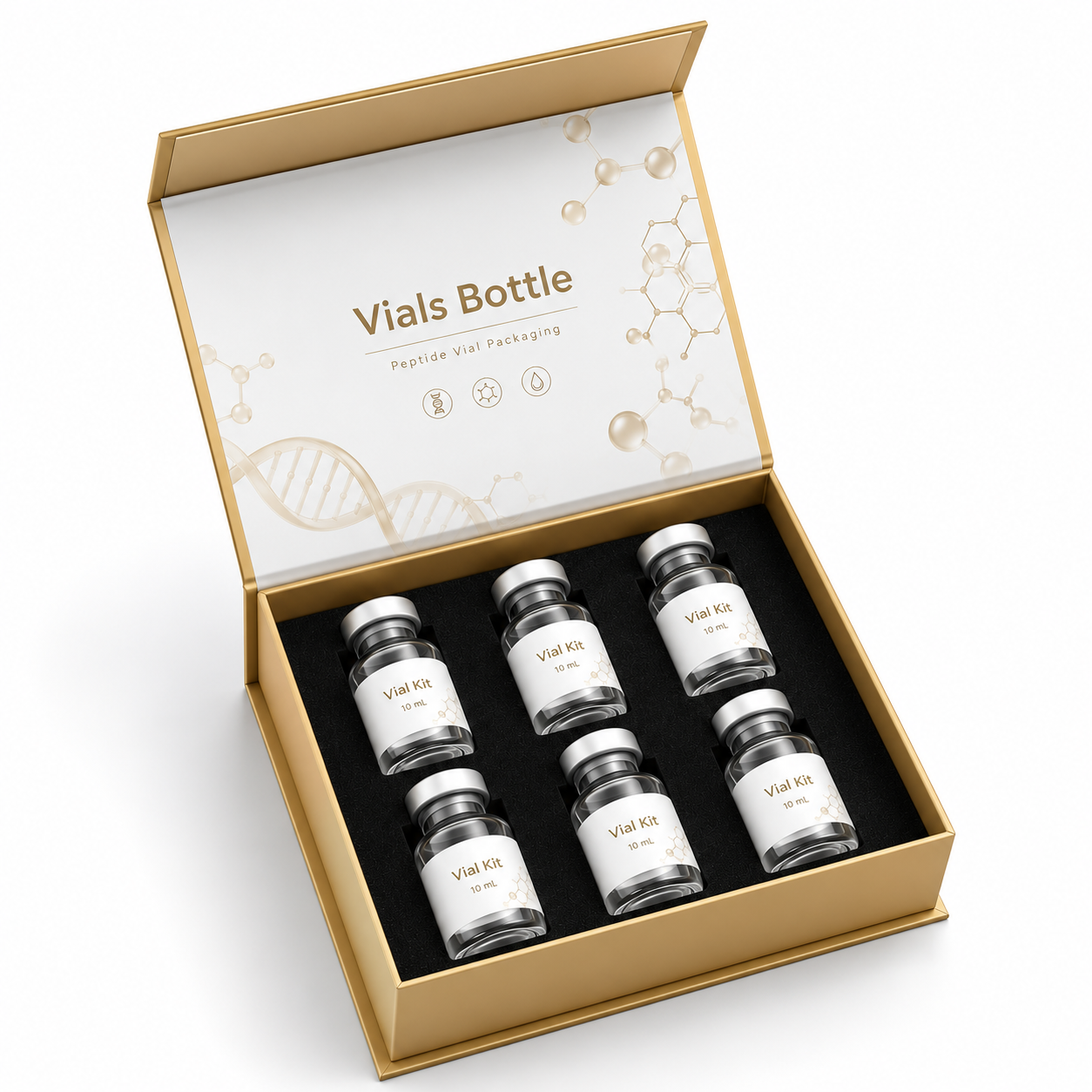
A typical rigid peptide vial box: magnetic flip-top lid, custom EVA foam insert, and gold foil branding.
Different peptide formats demand different structures. A 5ml vial needs shock absorption and a label window; an injection pen needs a precision slot that holds the device upright; a multi-unit kit needs zoning so vials, syringes, and alcohol wipes do not rattle together. The table below shows the standard pairing used across the industry:
| Product Format | Typical Packaging | Key Requirements | Recommended Structure |
|---|---|---|---|
| Peptide Vial | Flip-top box + EVA/foam insert | Glass protection, shock absorption, label window | Magnetic flip-top / lid and base |
| Peptide Pen | Flip-top box + custom insert slot | Precision fixation, pen-shaped reveal | Book-style / drawer box |
| Powder / Lyophilized | Sealed pouch + outer box | Moisture barrier, airtight seal, light protection | Flip-top box + foil pouch |
| Multi-Unit Kit | Multi-compartment layered insert | Zoning, display, retail-shelf ready | Magnetic book box / bi-fold box |
For a deeper breakdown of dimensions, materials, and pricing across formats, see the Peptide Vial Packaging Box: Design, Materials, Sizes and Cost Guide.
Saving $0.30 per box on a cheap folding carton can look smart on a spreadsheet — until you count what actually happens downstream. The real cost of under-engineered packaging shows up in places that never appear on the purchase order:
Damage claims and replacements. Glass vials that shift in oversized cavities crack in transit; every claim eats margin and adds re-shipping cost.
Chargebacks from distributors. Retail and clinic buyers penalize brands whose packaging fails arrival-quality checks.
Lost trust and reviews. A damaged or cheap-feeling first impression converts one-time buyers into negative reviews.
Counterfeit exposure. Packaging without tamper-evidence and serialization-friendly label areas is easier to copy, which damages both revenue and patient safety.
Reordering and redesign churn. Fixing a bad structure later costs more than doing it right the first time.
⚠️ Important: Peptide products are often temperature- and light-sensitive. Before you finalize any box design, confirm that your packaging plan matches your shipping lanes and storage conditions — a beautiful box that lets humidity in is worse than no box at all.
Budget-conscious brands should still invest intelligently. Our guide on whether eco-friendly paper boxes are more expensive and our breakdown of custom rigid box pricing will help you plan spend where it creates the most value.
Starting from zero can feel overwhelming, but the process is well-defined. Here is the exact sequence GPLPAK walks every new peptide brand through:
List every SKU: vial sizes (3ml, 5ml, 10ml), pens, powders, and kits. Note annual volume and sales channels — they determine box structure, material grade, and MOQ.
→ Related: Peptide Vial Packaging Design Guide
Understand how structure, materials, and finishing move the unit price, then ask for itemized quotes instead of a single number.
→ Related: How Much Does a Custom Rigid Box Cost?
Rigid boxes for flagship lines and premium kits; folding cartons for high-volume, cost-sensitive SKUs; drawer and magnetic closures for reveal experiences.
→ Related: Starre Boxen · Folding Cartons
Plan panels for ingredients, storage instructions, lot/expiry, barcodes, and warnings before print, so nothing gets squeezed in at the last minute.
→ Related: How to Design a Premium Peptide Vial Box
Never skip sampling. Drop-test the insert with real vials, check closure torque, and confirm the design is manufacturable at scale.
→ Related: Development and Sampling · Design Validierung für die Fertigung
Agree on QC checkpoints, packaging tolerances, and lead times before the mass run, and keep one golden sample as your reference.
→ Related: Peptide Packaging: From Design to Delivery
💡 Tip: If you are sourcing for the first time, ask your supplier for a packaging consultation before you commit to a structure — it is far cheaper to adjust a die line than a production run. GPLPAK offers free packaging consultations for new projects.
Material and finish choices do double duty: they protect the product and they communicate price positioning. The same structural design can read as "clinical" or "luxury" depending on the paper stock and finishing you choose.
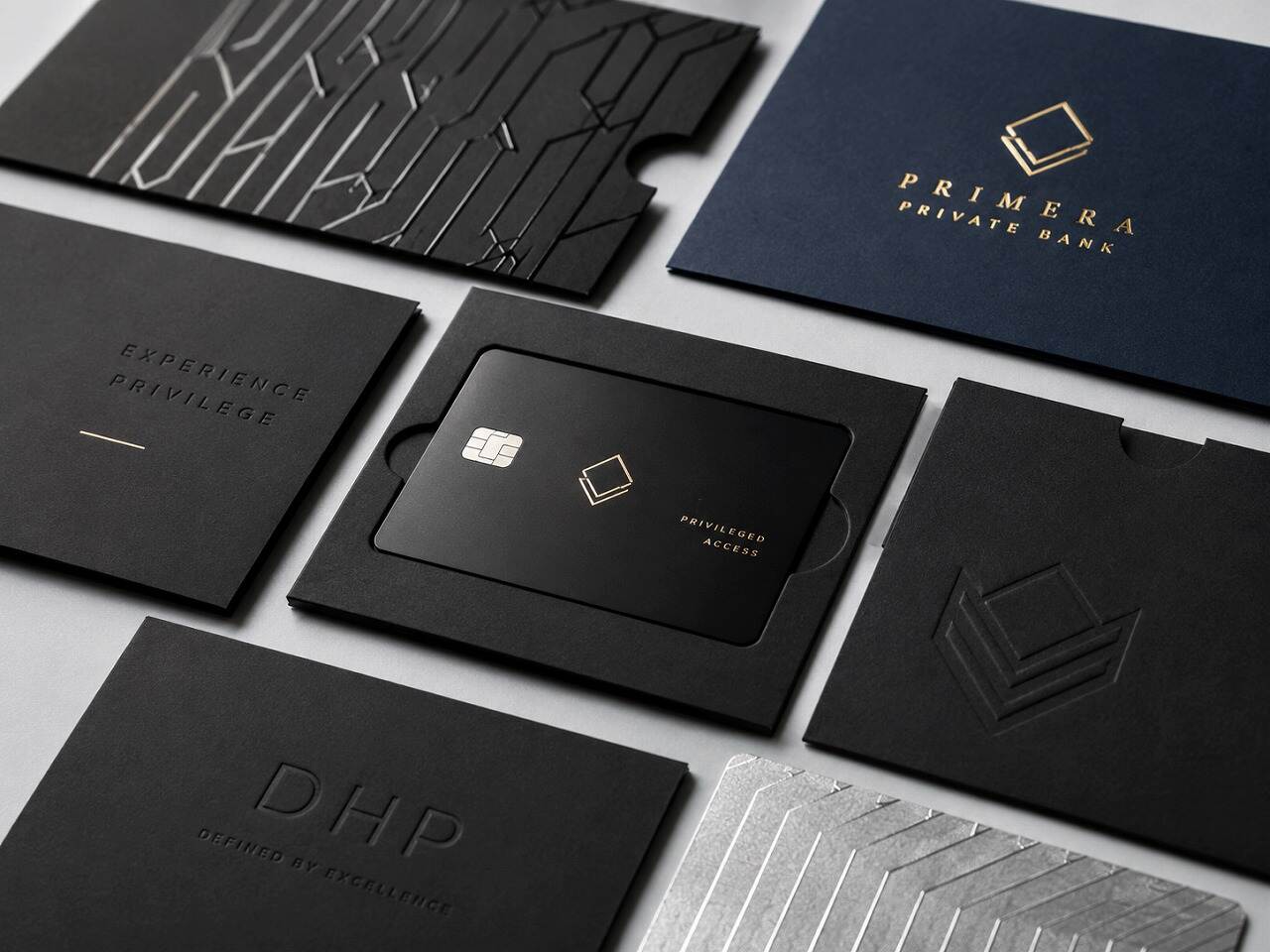
Material and finishing samples: greyboard cores, art paper, gold foil stamping, embossing, and soft-touch laminate.
| Material / Finish | Look & Feel | Am besten für | Relative Cost |
|---|---|---|---|
| Rigid greyboard + art paper | Solid, heavy, premium | Flagship vials, pens, kits | $$$ |
| Folding carton (artboard) | Light, clean, cost-effective | High-volume single vials | $ |
| Soft-Touch Laminierung | Velvet matte texture | Medical-luxury positioning | $$ |
| Gold / silver foil stamping | Metallic, reflective logo | Logo, brand marks, borders | $$ |
| Embossing / debossing | Tactile raised / recessed detail | Premium logos and patterns | $$ |
| Spot-UV | Glossy contrast on matte | Highlights, text, icons | $ |
| EVA / foam inserts | Precision, protection | Vials, pens, syringes, kits | $$ |
A common winning combination for peptide brands is a rigid or magnetic box wrapped in soft-touch lamination, with foil-stamped logo, an embossed brand mark, and a custom EVA insert. If sustainability is part of your positioning, ask your supplier about recycled artboard options — see our analysis of eco-friendly paper box costs to compare.
Not every box factory can handle peptide projects well. The products are small, precise, and compliance-sensitive, so the supplier you choose matters as much as the design. Evaluate candidates on these criteria:
Proven peptide experience. Ask for case studies and photos of vial, pen, and kit packaging they have produced — not just generic boxes.
In-house sampling and QC. A factory that can produce samples fast and inspect against a golden sample will save you weeks of back-and-forth.
Material traceability. You should be able to verify board grades, adhesives, and ink systems used in your packaging.
Flexible MOQs. Peptide brands often start small; the right partner grows with you instead of forcing a 10,000-piece first order.
Clear communication and lead times. Transparent milestones from die line approval to container loading prevent surprise delays.
GPLPAK is a direct custom packaging manufacturer with an in-house design team, development sampling, and factory-based QC. Start by reviewing our factory profile, and read our guide on finding reliable packaging suppliers for a broader checklist before you compare quotes.
Once you know the fundamentals, it helps to see real-world configurations. The following are among the most requested peptide packaging builds we produce:
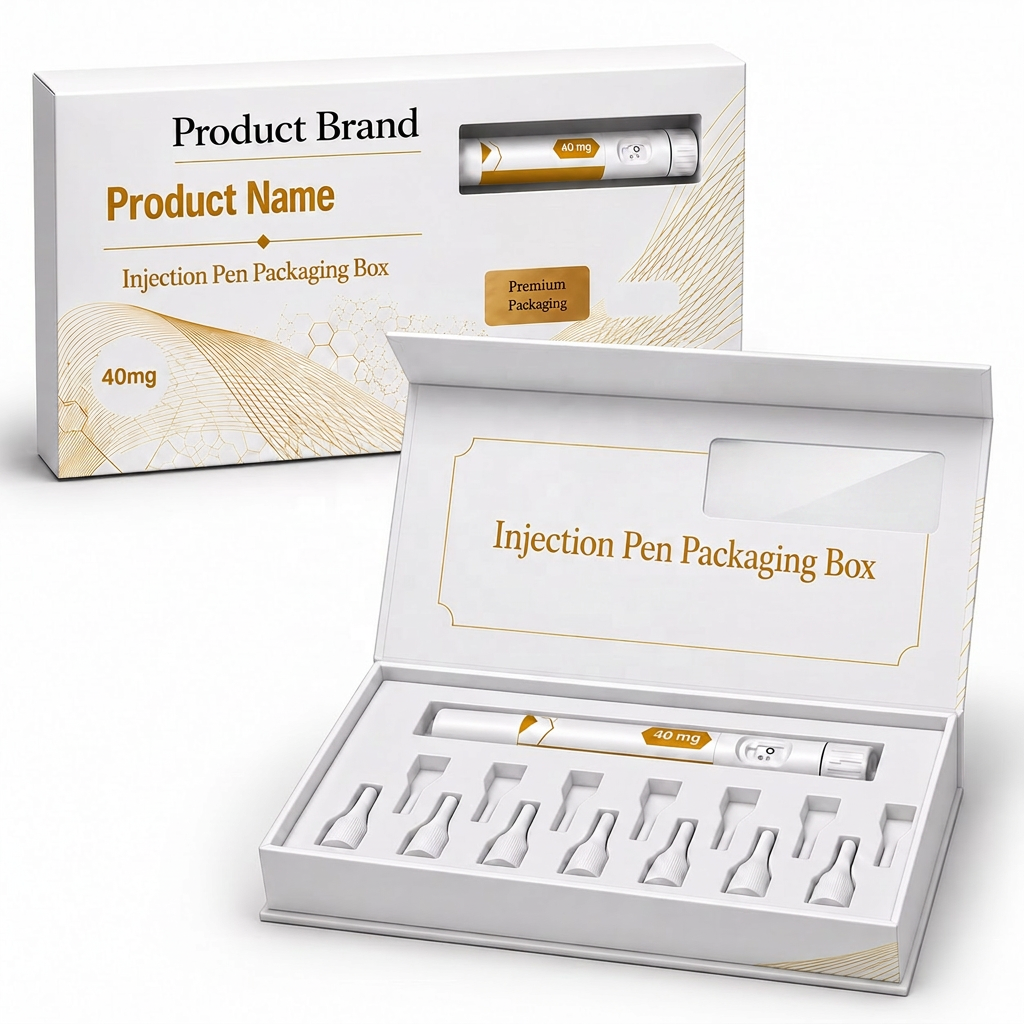
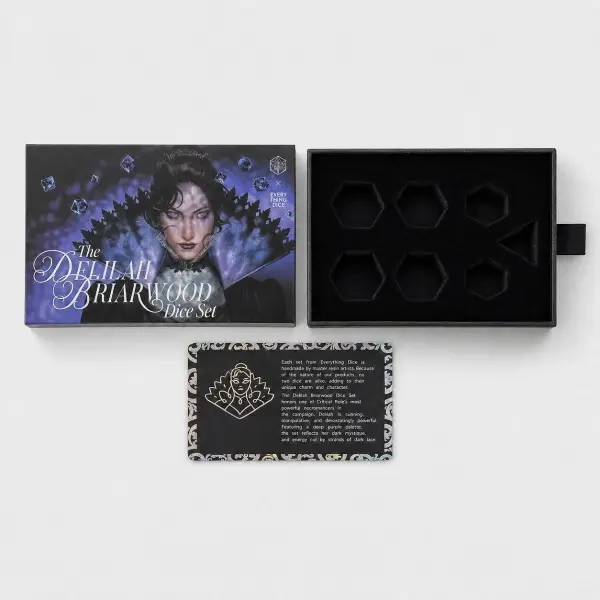
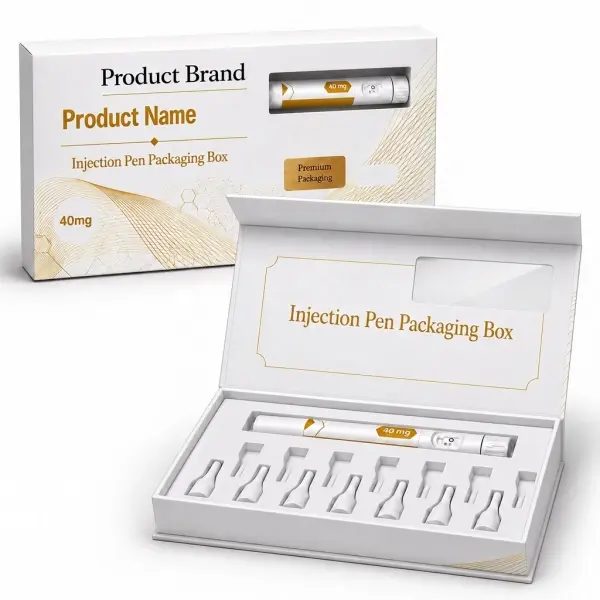
Book-style magnetic box with a precision insert for a peptide injection pen.
Two-vial rigid sets with plastic trays — see the custom 2-vial box with plastic tray build.
Window cartons that show the vial without exposing it — explore peptide vial boxes with windows.
Cost-efficient folding cartons for high-volume single vials — check the custom printed folding carton for 2 peptide vials.
Luxury pen boxes for injectable peptide pens — see the premium peptide pen packaging design guide and the rigid injection pen box case study.
Holographic and specialty finishes that make vials stand out on the shelf — like our holographic silver vial boxes for 3ml/5ml/10ml.
💡 Tip: Standardize your insert design across vial sizes (3ml, 5ml, 10ml) so you can consolidate orders and keep unit costs down while still offering a premium unboxing.
From structural design and foam inserts to foil stamping and factory QC, we handle your entire packaging project — with samples before you commit. Tell us about your vials, pens, or kits and get a free proposal.
© 2026 GPLPAK - China's Professional Custom Packaging Manufacturer
 Heiße Nachrichten
2026-09-22
2026-09-21
2026-09-18
2026-09-17
2026-09-17
2026-09-16
2026-09-09
2026-08-31
2026-08-26
2026-08-21
Discover premium packaging solutions from Dongguan Xinglan Packaging Products Co., Ltd. Specializing in innovative, durable, and custom packaging products for diverse industries.
GPLPAK hat sich der Herstellungsexzellenz verschrieben.


.jpg)